These glass furnaces in the Swedish forest have not gone cold for nearly 300 years, and they still cook herring in the cooling ovens overnight.
About Kingdom of Crystal (Glasriket)
Glassmaking began in Smaland in the 18th century, taking advantage of abundant forest fuel. Kosta was founded in 1742, Orrefors in 1898. Swedish glass from these factories gained international recognition in the 20th century for its design quality. The tradition of hyttsill (furnace-cooked herring) dates back to the workers' practice of using the residual heat.
What this is
The Kingdom of Crystal is a region in the forests of Smaland, southern Sweden, where glassworks have operated continuously since the 18th century. Factories like Kosta Boda and Orrefors produce mouth-blown, hand-etched art glass and crystal using furnaces that have burned without interruption for nearly 300 years. The region contains over a dozen active glassworks where visitors can watch master blowers at work.
“The Kingdom of Crystal is a region in the forests of Smaland, southern Sweden, where glassworks have operated continuously since the 18th century.”
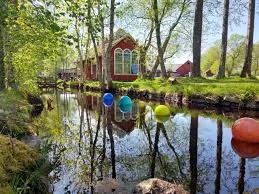
Kingdom of Crystal (Glasriket), Sweden
Furnaces That Have Not Gone Cold for 300 Years
Glassmaking arrived in Smaland because the forests provided the enormous quantities of wood needed to fuel the furnaces, and the region's isolation kept the craft traditions intact when industrialisation changed glassmaking elsewhere. Kosta, founded in 1742, is the oldest continuously operating glassworks in Sweden. The master blowers work in teams of four or five around a furnace that runs at approximately 1,150 degrees Celsius, and the process has not changed fundamentally in centuries: gather molten glass on a blowpipe, shape it with breath and hand tools, cut it and etch it by hand. The heat from the furnaces is intense, and watching from the visitor gallery it on your face from several metres away. Each glassworks has its own design character, and the region holds outlet shops selling pieces at factory prices. The tradition of "hyttsill," where herring is cooked in the cooling furnace overnight and served with aquavit, continues at several glassworks.
The Experience
The entrance leads into the glassworks through the shop and reach the blowing hall, where the heat hits immediately. The team works around the furnace with practised coordination: one gathers the molten glass, another holds the pontil, a third shapes with wet newspaper or wooden tools. The glass glows orange and transitions through yellow to clear as it cools. The smell is of hot metal and burning wood. In the evenings, several glassworks host hyttsill evenings where herring is served from the cooling furnace with potatoes and aquavit.
Why It Matters
The Kingdom of Crystal preserves one of the longest-running craft traditions in Scandinavia. The continuous operation of furnaces since the 18th century and the unbroken transmission of glassblowing skills make it a living industrial heritage site without parallel in Northern Europe.
Why Visit
300-year-old glassworks in the Swedish forest, where master blowers still shape molten glass by hand and the furnaces have never gone cold.
Insider Tips
- 1
Watch a blowing demonstration; the heat and skill are impressive.
- 2
Book a hyttsill evening for furnace-cooked herring and aquavit.
- 3
Kosta Boda and Orrefors have the largest factory outlets.