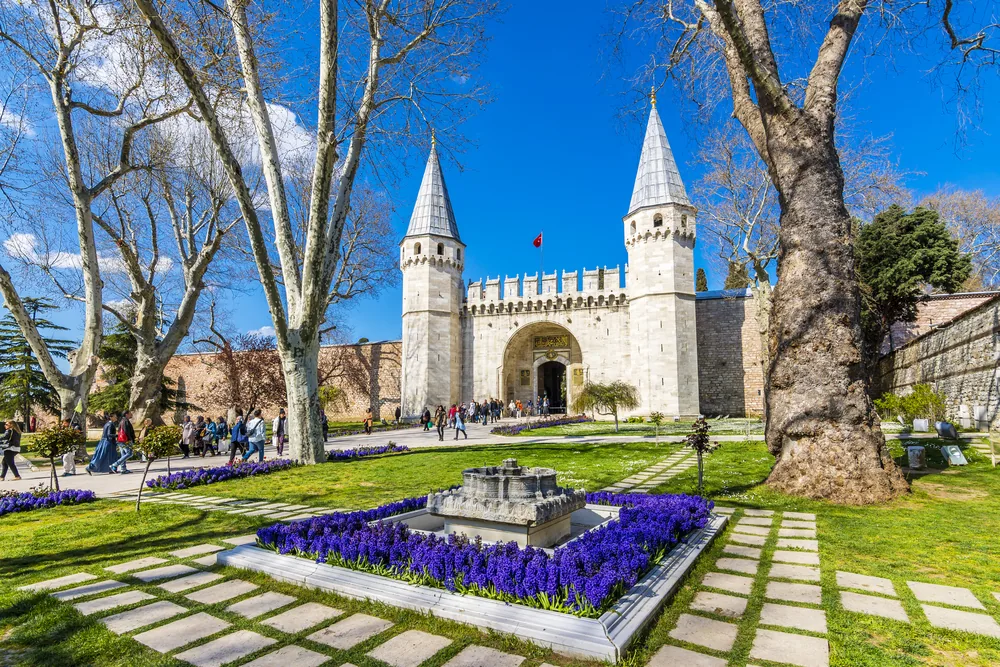
While the rest of the world built upward, the people of Cappadocia spent a thousand years carving their civilization deep into the volcanic belly of the earth.
About Cappadocia
The Hittites were among the first to utilize the caves for storage, but it was the Christian monks of the 4th to 12th centuries who turned the region into a spiritual powerhouse. They founded the 'Land of the Beautiful Horses' (the Persian name for the region) as a center for asceticism and theology. The underground cities were largely forgotten by the outside world until a local man in 1963 knocked down a wall in his basement and discovered a tunnel leading into the lost city of Derinkuyu. Today, the balance of preservation is delicate, as the very soft rock that allowed for such creativity is slowly eroding under the pressure of the elements.
What Cappadocia actually is
Nature and history collided in Central Anatolia to produce a landscape like a shared dream. Volcanic eruptions millions of years ago blanketed the region in soft tuff rock, which wind and water then sculpted into the bizarre, towering 'fairy chimneys' that define the horizon. But the true wonder of Cappadocia lies in what humans did with this pliable stone. Over centuries, they carved entire cities underground and hollowed out cathedrals in the cliffs, creating a subterranean world of living rooms, wine cellars, and stables. Above ground, hundreds of hot air balloons rise with the sun each morning, their colorful canopies drifting over honey-colored valleys and hidden monastic retreats.
“Nature and history collided in Central Anatolia to produce a landscape like a shared dream.”
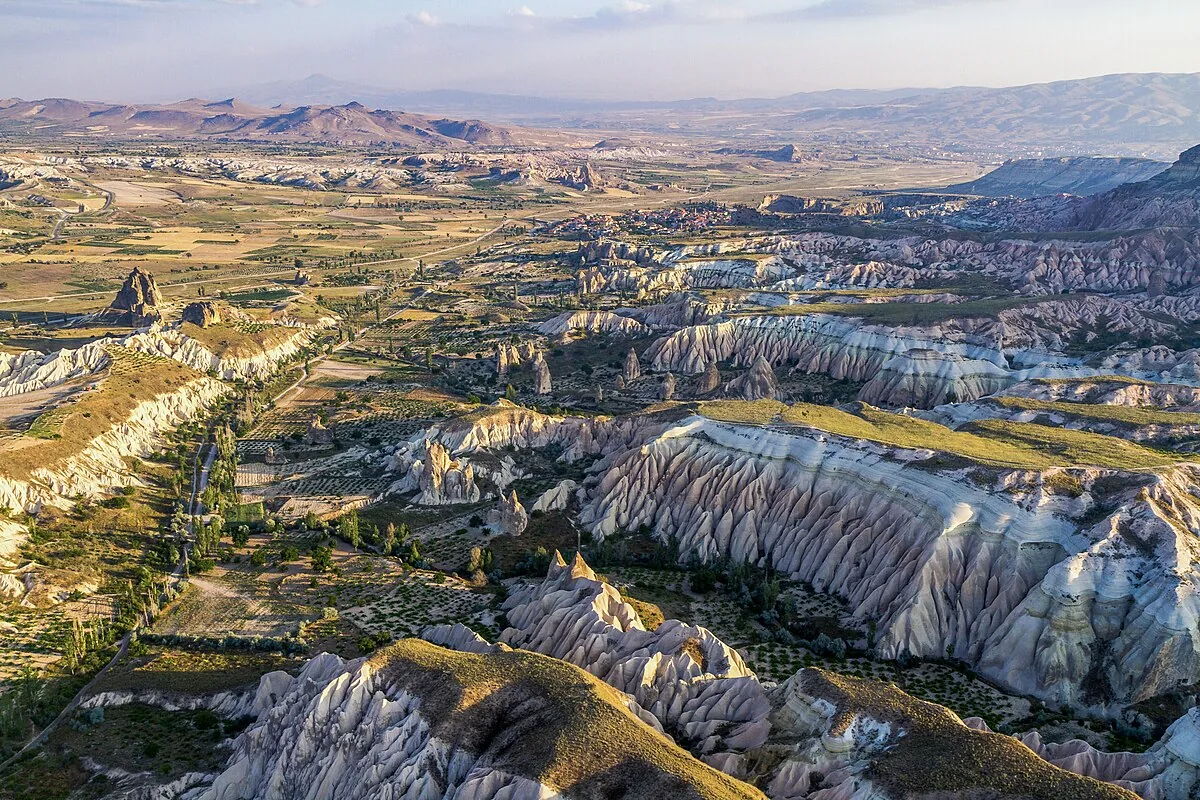
Cappadocia, Turkey
The region’s unique geology was shaped
The region’s unique geology was shaped by the ancient volcanoes of Erciyes, Hasandağ, and Güllüdağ. During the Roman and Byzantine eras, Cappadocia became a refuge for early Christians fleeing persecution. These communities discovered that the soft volcanic rock could be easily excavated, leading to the creation of the Göreme Open Air Museum’s rock-cut churches, decorated with vibrant frescoes. Even more remarkable are the underground cities like Derinkuyu, which could house up to 20,000 people across multiple levels, complete with ventilation shafts and massive rolling stone doors to block out invaders. This was a civilization built on the principle of concealment, where the hills themselves were the safest place to hide.
The air is crisp and dry
The air is crisp and dry, often carrying a trace of wood smoke from the cave hotels in the early morning. The sound is the low, rhythmic roar of hot air balloon burners echoing through the valleys just before dawn breaks. Through the Red Valley, The crumbly texture of the tuff beneath your boots, a stone so soft it feels like hardened sand. The way the light turns the landscape from a pale grey to a deep, glowing rose as the sun sets over the Uchisar Castle. Inside the cave churches, the silence is heavy and cool, punctuated only by the sight of 10th-century saints staring down from the darkened ceilings.
Most visitors fly into either Kayseri
Most visitors fly into either Kayseri or Nevşehir airports, followed by a one-hour shuttle to the main hub of Göreme. The region is well-connected by overnight buses from Istanbul and Antalya, though the distances are significant. Once in the valleys, renting a car or hiring a local driver is the best way to reach the more isolated trailheads and the deeper underground cities that public transport doesn't cover.
The Experience
An odd mix of claustrophobia and awe as you crouch through the narrow tunnels of an underground city, realizing people lived here for months at a time. Audibly, the of your own breathing is the only thing you hear until you emerge back into the bright Anatolian light. The pigeon houses carved into the high cliffs, their entrances painted with white markings to attract birds whose guano was used as fertilizer for the region's famous vineyards. The piece that stays with you is standing on a terrace in Göreme at 5:00 AM, watching the sky fill with a hundred balloons, a silent parade that makes the bizarre landscape look even more like a painting by Dalí.
Why It Matters
Cappadocia is a UNESCO World Heritage site that protects one of the world's most significant examples of troglodyte architecture. It represents a unique human adaptation to a difficult environment and preserves some of the best-preserved Byzantine frescoes in existence, hidden for centuries from the light of the sun.
Why Visit
Cappadocia is the only place on earth where you can sleep in a luxury cave, hike through a valley of pink stone, and watch the sunrise from 2,000 feet in the air all before breakfast. It is a destination that defies the logic of geography and offers a sense of wonder that is impossible to replicate in a city of glass and steel.
Insider Tips
- 1
Book your hot air balloon flight for your first available morning, as cancellations due to wind are common and you’ll want backup days.
- 2
Bring a headlamp for exploring the deeper corners of the underground cities; the built-in lighting is often dim and misses the best carvings.
- 3
Hike the Love Valley to see the most famous fairy chimneys away from the main road crowds.
- 4
Look for the 'Evil Eye' trees in the Pigeon Valley, where locals hang thousands of blue glass amulets for good luck.
- 5
Sample the local 'Testi Kebab,' a stew cooked in a clay pot that is ceremoniously cracked open at your table.