Snow-white cliffs that never melt and ancient Roman sarcophagi share the same hillside in a place where the water has been considered medicine for over two millennia.
About Pamukkale
Hierapolis was once home to a significant Jewish community and was a major center for the early Christian church, believed to be the site of the martyrdom of Saint Philip the Apostle. The city was repeatedly destroyed by earthquakes and rebuilt, leading to a fascinating mix of architectural styles. The 'Plutonium' or Gate to the Underworld was a particularly famous site in antiquity, where carbon dioxide vapors would kill small animals sacrificed by priests, a phenomenon that still occurs today. The site was designated a UNESCO World Heritage site in 1988, ensuring the protection of both the thermal pools and the massive Roman ruins.
Cascading down a hillside in southwestern Turkey
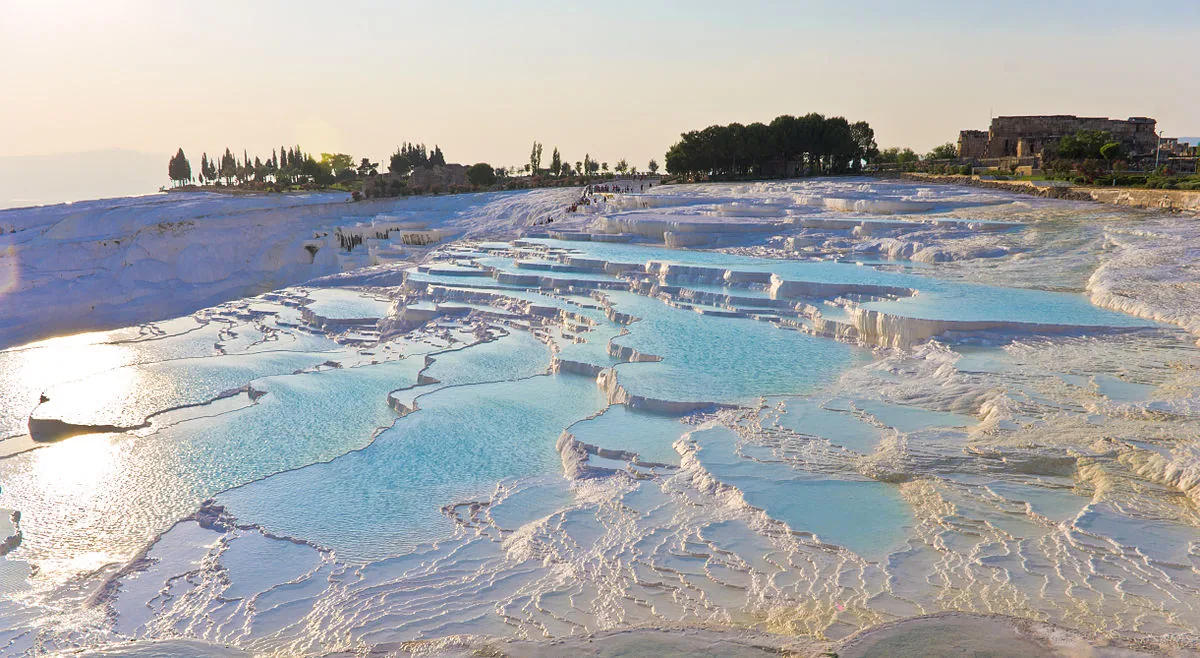
Cascading down a hillside in southwestern Turkey, a series of brilliant white terraces look like a frozen waterfall or a mountain made of cotton. This is Pamukkale, a geological phenomenon created by calcium-rich thermal waters that have been depositing carbonate minerals for thousands of years. The resulting travertines form turquoise pools that spill into one another, reflecting the sky with a luminous clarity. Perched directly above this white wonder lies the ancient city of Hierapolis, a Roman spa town where emperors and commoners alike came to heal their ailments in the warm, mineral-heavy springs. It is a rare site where a natural marvel and an archaeological treasure are literally fused together.
“Cascading down a hillside in southwestern Turkey, a series of brilliant white terraces look like a frozen waterfall or a mountain made of cotton.”
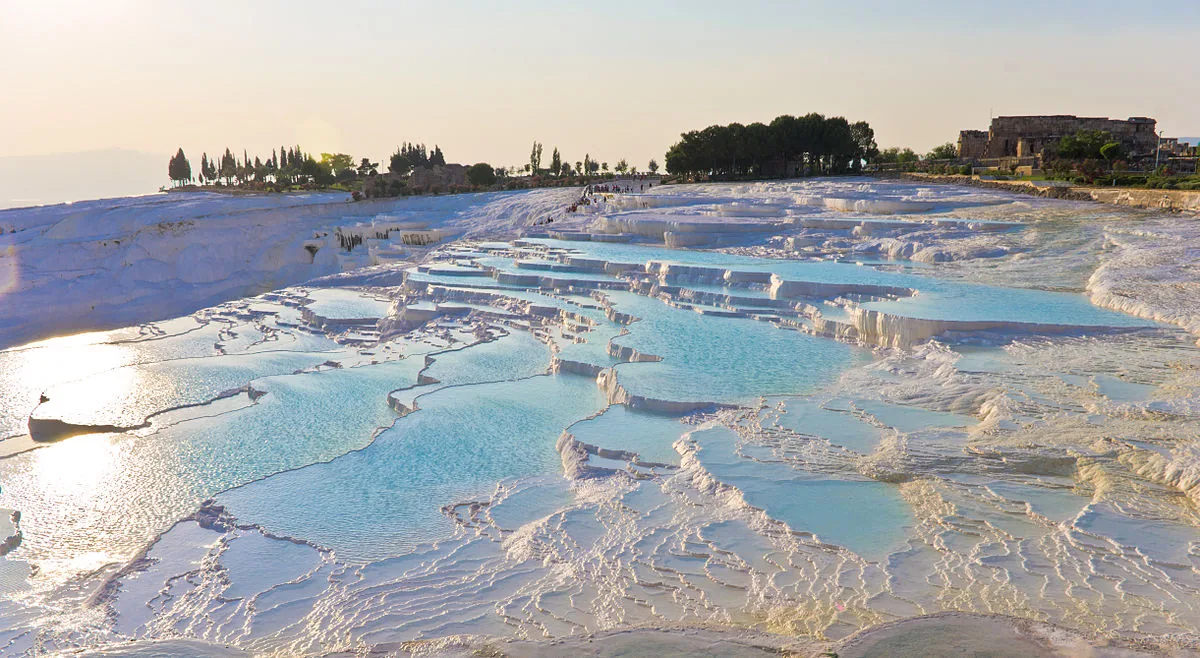
Pamukkale, Turkey
The past
The springs of Pamukkale have been famous since the 2nd century BC, when the kings of Pergamum founded Hierapolis as a thermal health center. The Romans later expanded the city, building massive baths, a grand theater, and a vast necropolis that remains one of the best-preserved in the world. The water emerges from the earth at a constant 35°C, carrying dissolved calcium bicarbonate; as it hits the air, the gas escapes and the calcium carbonate precipitates to form the hard white stone. For years in the 20th century, hotels were built directly on the terraces, causing significant damage. However, a major restoration project in the 1990s removed the buildings and restored the flow of water, allowing the 'Cotton Castle' to regain its snowy luster.
Visiting Pamukkale
The air is warm and carries a faint, chalky scent from the minerals. The constant, gentle rush of water flowing over the ridges of the travertines, a sound that masks the chatter of the crowds. Walking barefoot on the white stone, the strange, grippy texture of the calcium deposits, not slippery like ice, but surprisingly firm and slightly abrasive. First, the water temperature change from pleasantly lukewarm to hot moving toward the source of the springs. The light at sunset is transformative, turning the white cliffs into a canvas of pink, orange, and deep gold that reflects off the still pools like polished silk. Most travelers arrive via the city of Denizli, which is well-served by flights from Istanbul and buses from all over the country. From Denizli, small minibuses (dolmuş) depart every fifteen minutes for the twenty-minute ride to the village of Pamukkale. Entering through the South Gate allows you to walk through the ruins of Hierapolis first before descending the terraces toward the village below.
The Experience
A wash of of timelessness swimming in the 'Antique Pool,' where you glide over authentic fluted marble columns that fell into the water during an earthquake in the 7th century. Sound-wise of the wind through the massive Roman theater nearby adds a layer of solemnity to the otherwise playful atmosphere of the pools. The standout is the sheer scale of the necropolis, where over 1,200 tombs stretch into the distance, a sobering reminder of the people who came here seeking a cure they didn't always find. The most vivid moment is the walk down the main travertine path as the sun dips below the horizon, making the entire mountain look like it is glowing from within.
Why It Matters
Pamukkale is a unique intersection of hydrology and history. It demonstrates the ancient world’s sophisticated understanding of thermal therapy and serves as a vital example of how natural monuments require active human intervention to survive modern tourism. It remains one of the few places on earth where you can physically interact with an active geological process.
Why Visit
Pamukkale is a landscape that doesn't make sense to the eyes until you touch it. It offers a combination of natural beauty and historical depth that you won't find at any other spa or archaeological site. It is a place where you can soak in the same water as Roman senators while looking out over a valley of 'cotton'.
Insider Tips
- 1
Shoes are strictly forbidden on the white travertines to prevent staining, so bring a bag to carry yours as you walk the full length of the site.
- 2
Arrive at the South Gate early in the morning to see the ruins of Hierapolis in the cool air before the midday heat hits the white cliffs.
- 3
The Antique Pool (Cleopatra's Pool) requires a separate entrance fee but is the only place you can swim among genuine ancient ruins.
- 4
Walk to the very end of the necropolis to find the Tomb of Philip the Apostle; it is much quieter and offers a great view back over the city.
- 5
Bring polarized sunglasses, as the glare off the white terraces can be incredibly intense, much like being on a glacier.