“Roman elite once walked these streets on marble heated by subterranean pipes, enjoying a level of luxury that wouldn't be seen again in the West for over a millennium.”
About Ephesus
Ephesus was a city of transition, moving from a Greek colony to a Roman capital and finally a Christian pilgrimage site. It housed the Temple of Artemis, one of the Seven Wonders of the Ancient World, though only a single lonely column remains of that massive structure today. The city was a hotbed of early Christian thought, famously being the site where the silversmiths rioted against Saint Paul for threatening their trade in idols. The meticulous reconstruction seen today began in the late 1800s and continues as a massive international effort to stabilize the crumbling facades against the region's frequent seismic activity.
What Ephesus actually is
White marble streets polished to a mirror shine by the sun stretch across a valley where the Aegean once met the shore. Ephesus was the second largest city in the Roman Empire, a busy metropolis of quarter of a million people who lived in a collection of public baths, grand theaters, and one of the ancient world's greatest libraries. Today, the ruins are so well-preserved that it requires very little imagination to see the city as it was two thousand years ago. From the towering facade of the Celsus Library to the communal latrines where citizens discussed politics, the site offers a startlingly intimate look at the daily machinery of Roman life. It remains a place where the grandeur of the past feels entirely tangible under the Mediterranean sun.
White marble streets polished to a mirror shine by the sun stretch across a valley where the Aegean once met the shore.
Legend credits the Amazon warriors
Legend credits the Amazon warriors with the city's founding, but its historical peak arrived under Roman rule in the 1st century AD. As a vital port city and a center for the cult of Artemis, it attracted merchants, pilgrims, and early Christian apostles like Paul and John. The Library of Celsus, the site's most famous landmark, was built in 110 AD as a funerary monument for a Roman senator, housing over 12,000 parchment scrolls. Eventually, the Kaystros River silted up the harbor, pushing the sea miles away and causing the city's slow decline. By the medieval period, the once-great port was abandoned, left to be reclaimed by the silt and dust until 19th-century excavations brought its marble bones back to light.
Visiting Ephesus
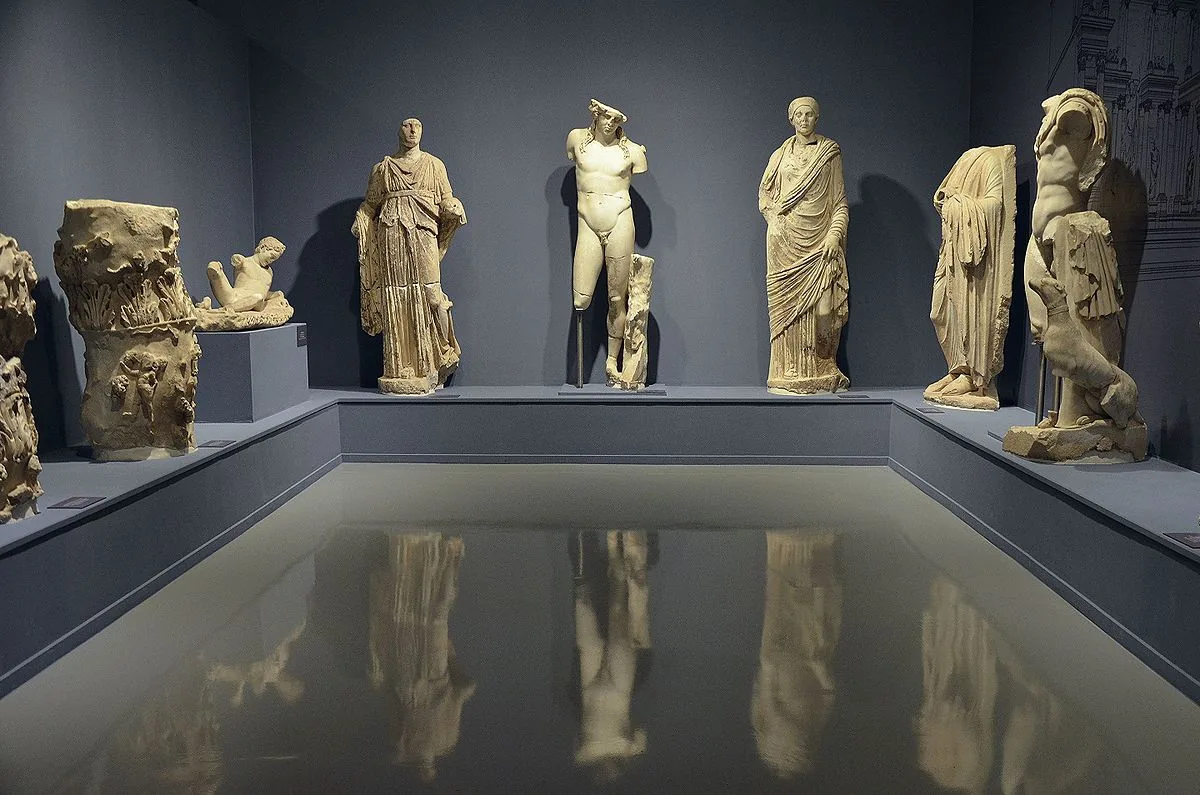
A scent of dry wild thyme and warm dust, typical of the Anatolian coast. The crunch of gravel and the occasional call of a kestrel nesting in the high stone crevices of the Great Theater. The walk down the Curetes Way, the heat radiating from the white stone, reflecting the intense coastal light. The intricate mosaic floors of the Terrace Houses, where the colors remain as vivid as the day they were laid for the city’s elite. The silence of the library at dusk is particularly moving, as the shadows lengthen across the statues of Sophia and Arete, suggesting a quiet dignity that centuries of ruin haven't managed to dim.
archaeological site
The town of Selçuk is the base for most visitors, located just three kilometers from the archaeological site. Frequent minibuses (dolmuş) run from the town center to the lower gate, though many travelers prefer the scenic walk through the peach orchards. Those arriving from Izmir can take the regional train, which offers a comfortable and inexpensive two-hour walk through the Turkish countryside.
The town of Selçuk is the base for most visitors, located just three kilometers from the archaeological site.
The Experience
You feel the scale of Roman ambition as you stand on the stage of the Great Theater, realizing it could hold 25,000 spectators for gladiatorial combat and drama alike. In your ears of the wind whistling through the columns of the Library of Celsus creates a hollow, haunting music that follows you through the ruins. The deep grooves in the stone streets made by chariot wheels, a physical record of the thousands of journeys made during the city's prime. The most surprising detail is the 'advertisement' carved into the pavement near the library, purportedly directing sailors to the local brothel, a reminder that Roman life was as much about vice as it was about philosophy.
Why It Matters
Ephesus is the most complete Greco-Roman city in the Eastern Mediterranean. It provides essential insights into urban planning, ancient sanitation, and the transition of the Roman world from paganism to Christianity. It functions as a monument to the fragility of coastal civilizations and the enduring power of stone to tell a story.
Why Visit
Ephesus offers a 'lived-in' feeling that the Roman Forum lacks. Because so much of the streetscape remains intact, you aren't just looking at isolated monuments; you are walking through a neighborhood. It is the closest thing to a time machine available on the Anatolian coast.
✦ Insider Tips
- 1
Enter through the Upper Gate and walk downhill toward the Lower Gate to save your legs and get the best unfolding views of the library.
- 2
Pay the extra fee for the Terrace Houses; the protection of the roof has kept the frescoes and mosaics in nearly perfect condition.
- 3
Bring a full bottle of water, as there are no shops inside the archaeological zone and the marble acts like a giant oven in the afternoon sun.
- 4
Look for the footprints and symbols carved into the marble along the main road; these served as ancient signage for the city's visitors.
- 5
Visit the Ephesus Museum in nearby Selçuk after your walk to see the incredible statues of Artemis discovered at the site.