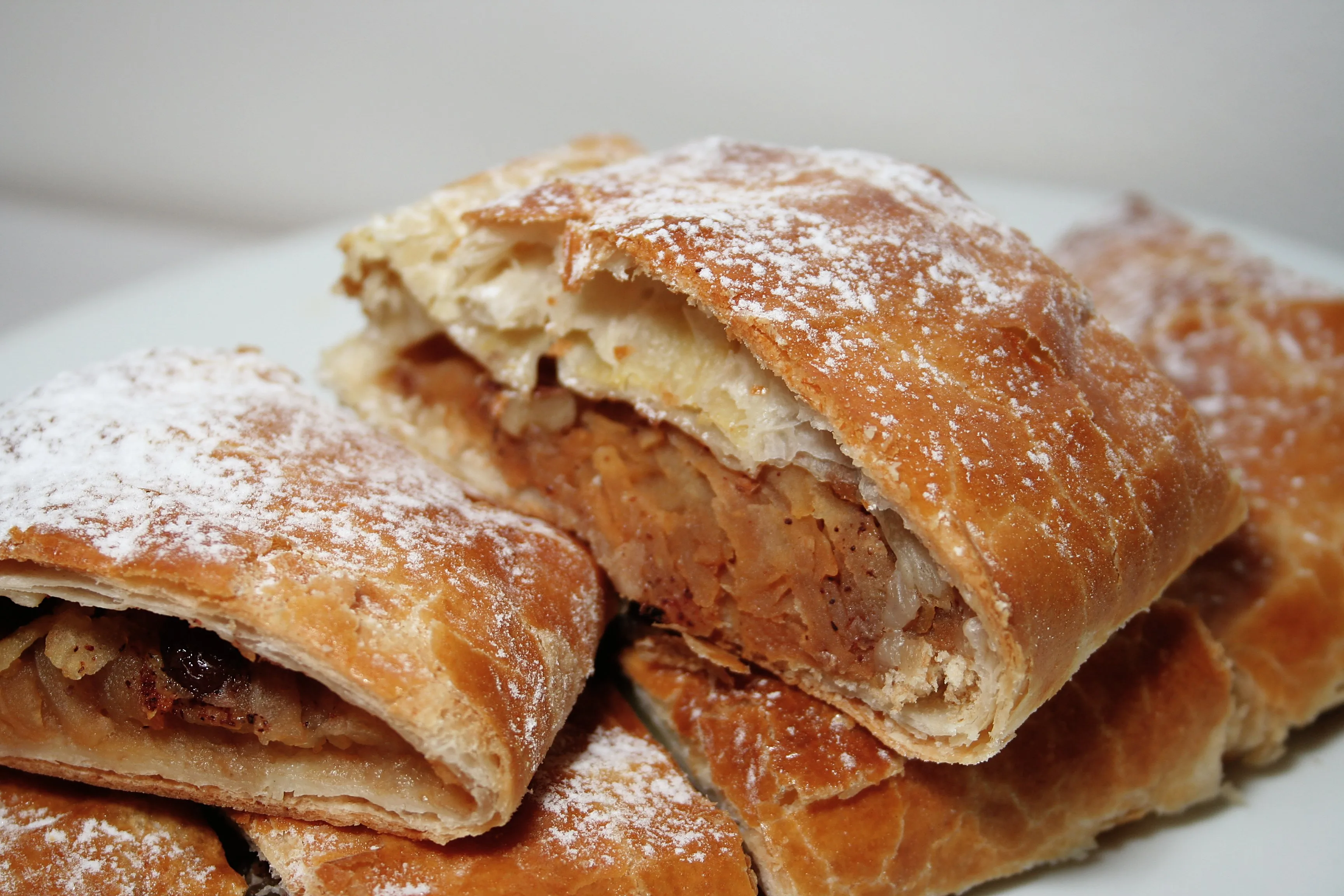
"Austria's most beloved pastry is made from dough stretched by hand until transparent, one small tear and the process starts over. The result is worth the discipline."
About Apfelstrudel
Austria's most beloved pastry: paper-thin strudel dough stretched by hand until it is literally transparent, filled with tart Viennese apples, cinnamon, raisins and breadcrumbs, then rolled and baked to a golden, flaky shell; served warm with vanilla sauce at every Viennese coffeehouse since the 17th century.
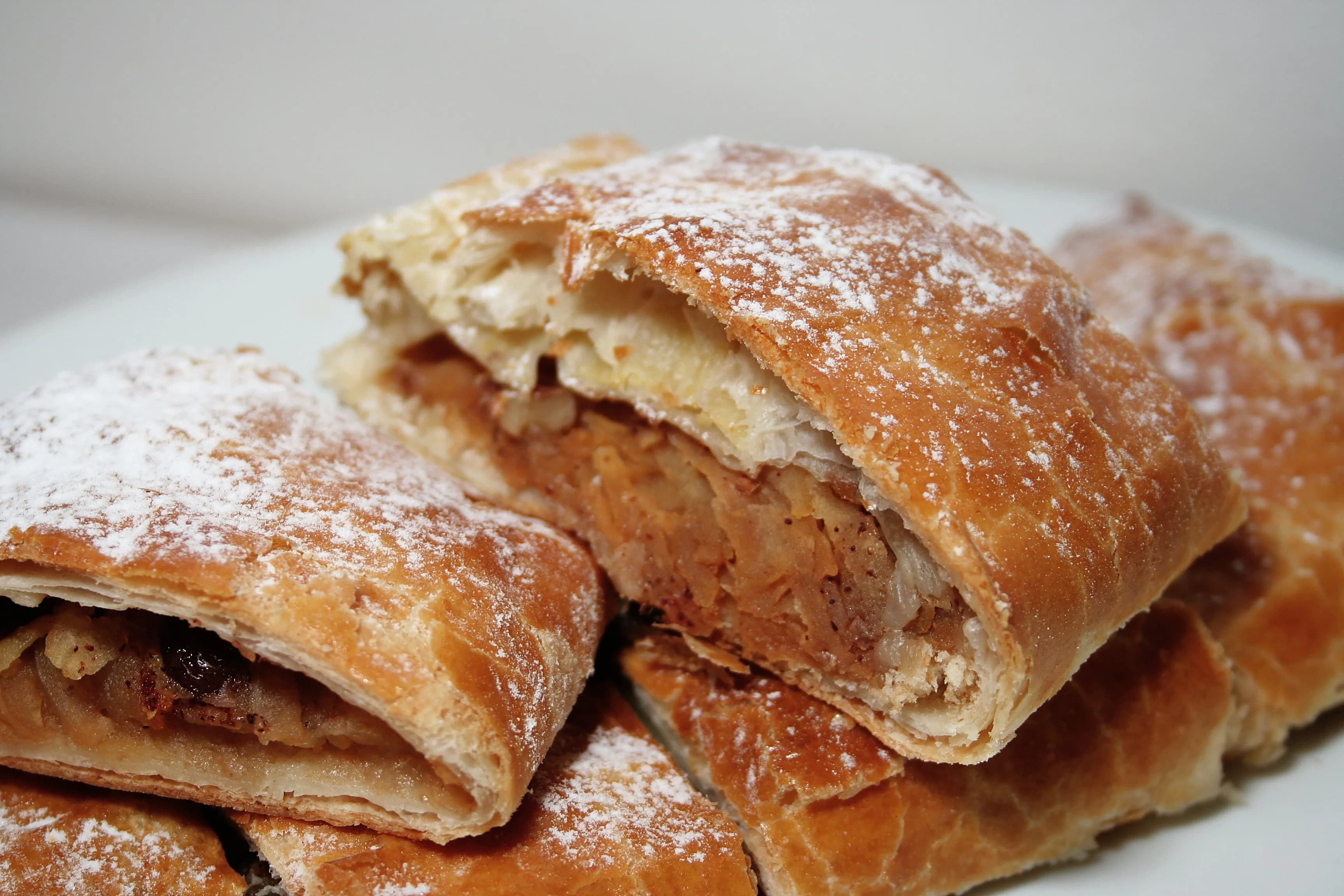
Apfelstrudel, a staple of Austria's cuisine
The Pastry
Apfelstrudel is Austria's most beloved pastry, and it demands a technique home bakers spend years mastering. The dough, just flour, water, oil and a little vinegar, is kneaded until silky, rested, then stretched by hand over a large floured cloth until it is almost transparent. A Viennese test holds that it should be thin enough to read a newspaper through. One small tear and the stretching begins again.
The Stretch and Roll
The skill is all in the handling. The dough is coaxed outward from the centre with the backs of the hands until it covers the whole table in a single gossamer sheet, then rolled up using the cloth rather than touched directly. That careful rolling is what gives the strudel its characteristic spiral of fine layers. It is as much craft as cooking.
The Filling
The filling is simple but considered: tart Viennese apples, cinnamon, raisins plumped in rum, and fine toasted breadcrumbs to soak up the juices so the pastry stays crisp. A little sugar balances the tart fruit. Baked until pale gold, the strudel fills the kitchen with the smell of cinnamon and butter.
The Coffeehouse
Apfelstrudel belongs to the Viennese coffeehouse, served warm with vanilla sauce or ice cream alongside a milky Melange coffee. The grand cafes of Vienna have made it a fixture of the mid-morning ritual, a slice of strudel and a coffee at a marble table. No amount of global coffee-chain expansion has displaced that tradition.
What to Expect
The Apfelstrudel arrives on the plate still slightly warm, the pastry layers visible at the cut edge, dozens of translucent sheets compressed into a half-centimetre crust. The vanilla sauce pools at the base. The first forkful breaks through to apple and cinnamon and the faint sharpness of rum. It tastes like every Austrian grandmother's kitchen.
Why Try It
Apfelstrudel is the dish that most accurately represents what Austrian baking is: technically demanding, ingredient-focused and deeply traditional. A good version, eaten in a Viennese coffeehouse in winter, is one of Central Europe's great simple pleasures.
✦ Photo Gallery
Insider Tips
Café Central on Herrengasse serves a reliable version in a genuinely magnificent room, the right setting.
Ask for the vanilla sauce on the side to control the ratio.
The strudel should be served slightly warm, not room temperature. If it arrives cold, it's been sitting.
The version at Strudel-Café Residenz in Schönbrunn Palace is a tourist experience but the pastry is actually good.