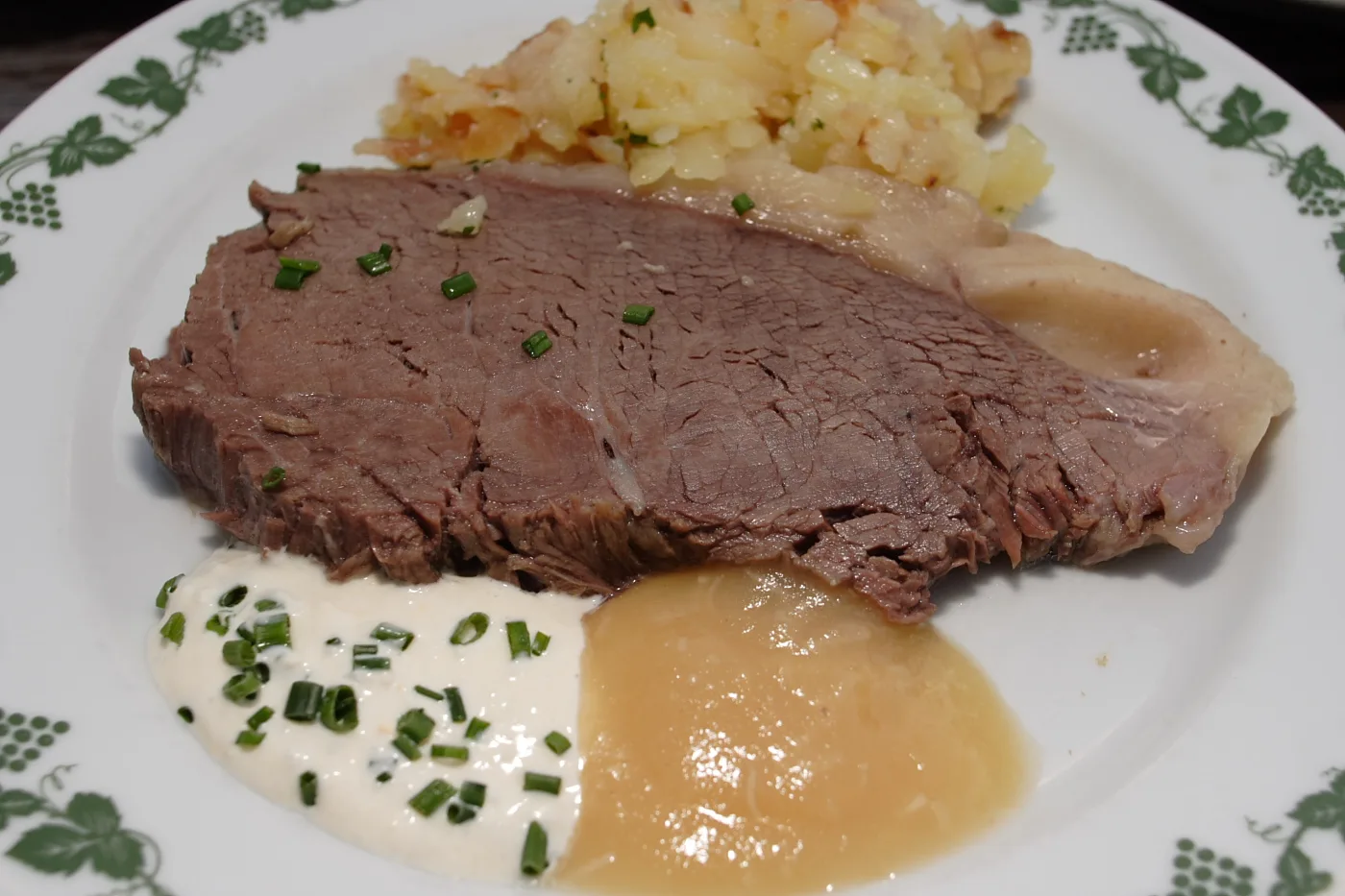
Emperor Franz Joseph's daily lunch for 68 years, a slow-simmered top rump of beef with its own broth served first, then the meat with apple horseradish.
About Tafelspitz
Emperor Franz Joseph's favourite, the top rump of beef simmered for hours in a court bouillon of root vegetables and bone marrow until it reaches a fork-tender perfection; served with its own broth as a first course, then sliced at the table with apple horseradish and chive sauce.
The Emperor's Dish
Emperor Franz Joseph ate Tafelspitz for lunch almost every day of his long reign, which says as much about his habits as about the dish. The top rump of beef, a lean and flavourful cut that rewards slow cooking, is simmered in a court bouillon of root vegetables, leek, bone marrow and bay leaf for two to three hours until it reaches a fork-tender state. The cut itself gives the dish its name.
“Emperor Franz Joseph ate Tafelspitz for lunch almost every day of his long reign, which says as much about his habits as about the dish.”
The Service
Tafelspitz is a two-course meal in one pot. The broth comes first, served in a cup with a beef marrow dumpling or a scattering of chives. Then the sliced beef arrives, pale, juicy and deeply flavoured from the vegetables it cooked with, alongside apple horseradish, Apfelkren, and a creamed sauce. The horseradish is the dish's brightest moment, its cold sharp bite set against the soft warm meat.
A Cut Above
Viennese tradition treats the various boiling cuts of beef with real seriousness, and the best restaurants list several by name, each with a slightly different texture and fat content. The broth that results from the long simmer is prized in its own right, the foundation of the meal rather than a by-product. Accompaniments such as roast potatoes, creamed spinach and chive sauce round out the plate.
The Austrian Table
Tafelspitz is the dish that separates Viennese cooking from German, restrained and elegant, built on the quality of the beef rather than on bold seasoning. It belongs to a slow, classical style of dining that the city still keeps alive in its older restaurants. To eat it properly, broth first and meat second, is to understand the unhurried Austrian approach to the table.
What to Expect
Tafelspitz comes to the table in stages: first a bowl of the cooking broth with bone marrow, then the sliced beef on a separate plate. The apple horseradish arrives cold in a small bowl alongside. The diner eats the broth first, then the meat with generous portions of the Apfelkren. The combination of warm, soft beef and cold, sharp horseradish is one of Vienna's great flavour contrasts.
Why Try It
Tafelspitz is the dish that separates Viennese cooking from German cooking. It's restrained, elegant and built on quality ingredients rather than bold seasoning. Understanding it means understanding the Austrian approach to the table: precise, classical and unhurried.
Insider Tips
- Plachutta Wollzeile is the city's most respected Tafelspitz restaurant, its ten-cut menu offering a comparison of different parts of the same animal.
- The Apfelkren (apple horseradish) should be used generously, not sparingly.
- Ask for extra marrow with the broth course, most restaurants will oblige.