Cornwall's protected pastry, crimped along the top, never the side, contains raw beef skirt, potato, swede and onion that cook inside the pastry as it bakes.
About Cornish Pasty
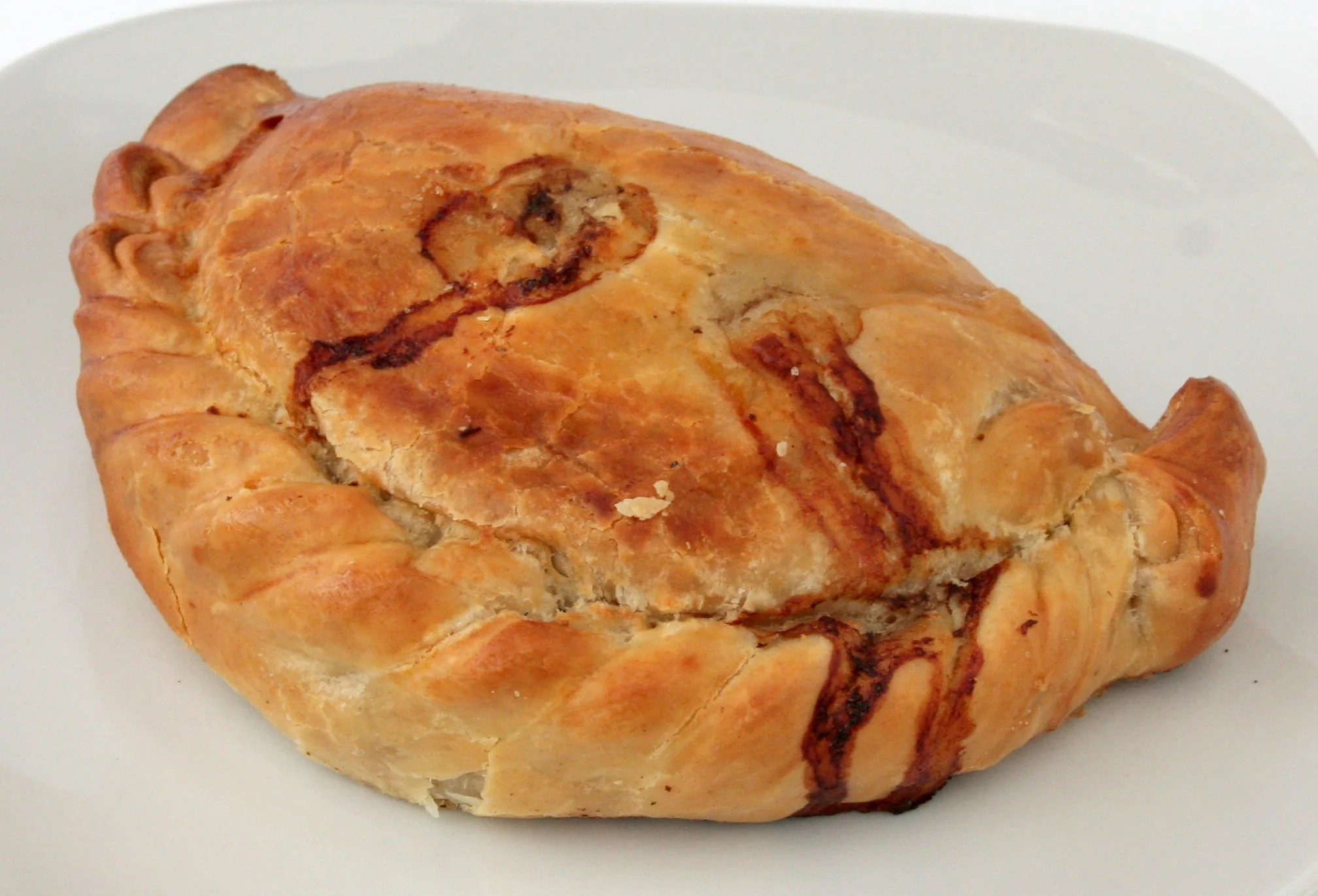
Cornwall's protected working-class masterpiece: a D-shaped shortcrust pastry crimped along the top (not the side) encasing raw beef skirt, sliced potato, swede and onion, seasoned with white pepper; baked until the pastry turns from gold to pale amber; the thick crimped edge was historically held by tin miners with arsenic-stained fingers then discarded.
The Original
The Cornish pasty is a D-shaped shortcrust shell crimped along one edge and filled with raw beef skirt, sliced potato, swede and onion seasoned with plenty of pepper. The filling cooks inside the sealed pastry as it bakes, the meat juices steaming the vegetables. A true Cornish pasty is crimped along the side, the top crimp marking it out from the Devon version.
“The Cornish pasty is a D-shaped shortcrust shell crimped along one edge and filled with raw beef skirt, sliced potato, swede and onion seasoned with plenty of pepper.”
A Miner's Meal
The pasty was the portable lunch of Cornwall's tin miners, a complete meal sealed in pastry that could be carried underground and eaten by hand. The thick crimped edge served as a handle to be held and discarded by men whose hands were dirty from the mine. Some were even made with savoury at one end and fruit at the other, a full meal in a single crust.
Protected by Name
The Cornish pasty holds protected geographical status, meaning it must be prepared in Cornwall to the traditional recipe, with the vegetables and beef raw when the pastry is sealed. The protection exists precisely because the name had been borrowed so widely. It ties the pasty firmly to its place and method.
The Filling and Crimp
The classic filling is beef skirt, valued for its flavour over minced beef, with potato, swede and onion, and nothing more elaborate. The slow bake melds them into a savoury, peppery whole bound by the pastry. Held by the thick crimp, which stays hot longest, it is hearty hand food built for a working day.
What to Expect
At a Cornish bakery the pasty comes out of the oven with a pale amber crust, the crimp along the top edge. The diner holds it by the thick crimp end. The filling inside has steamed in its own juice.
Why Try It
The Cornish pasty is the most specific regional food in England, the geographical indication and the specific technique (raw filling into raw pastry) make it irreplaceable.
Insider Tips
- Only buy pasties made in Cornwall from accredited producers, the PGI status exists for a reason.
- Hold it by the crimp end as the miners did. It stays hotter longer from the thick end.
- The beef skirt cut has more flavour than minced beef. Ask about the cut.