Lamb or octopus under a clay bell covered with embers, slow-cooked for three hours, Dalmatia's greatest cooking method must be ordered a day in advance.
About Peka
Dalmatia's most revered cooking method: lamb, veal or octopus with potatoes, vegetables and olive oil placed in a clay or iron bell (peka), covered with embers and slow-cooked for two to three hours until the meat is falling-tender and the bottom forms a crisp golden crust; must be ordered 24 hours in advance; worth every minute of the wait.
The Method
Peka is Dalmatia's most revered way of cooking: meat such as lamb, veal or octopus, with potatoes, vegetables and olive oil, placed in a shallow pan, covered with a domed iron or clay bell, the peka, and buried under glowing embers. Over two to three hours the sealed bell traps steam and circulates heat, so the fat bastes everything and the base crisps. It is slow, communal cooking.
“Over two to three hours the sealed bell traps steam and circulates heat, so the fat bastes everything and the base crisps.”
Ordered a Day Ahead
Peka is not a dish to order on a whim. Restaurants need to prepare the ingredients and build the fire, so it is typically ordered a day in advance and for a group. Turning up and asking for it on the spot marks a first-timer. The waiting is part of the ritual.
Under the Bell
The bell, the peka itself, is the whole technique. Embers heaped on top and around it create an oven with no dry draft, so the meat stays moist while the surface colours and the juices gather beneath. No conventional oven reproduces the effect, which is why the method, not the ingredients, defines the dish.
A Shared Feast
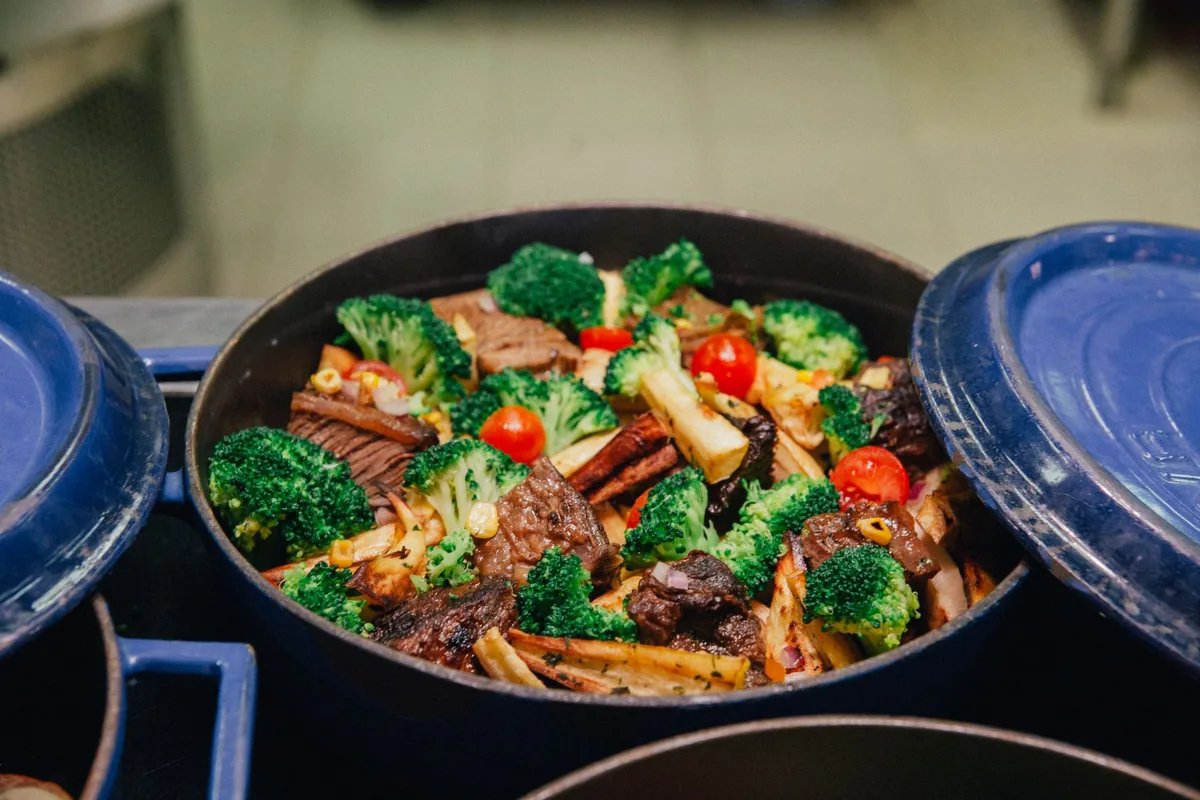
When the bell is lifted at the table, steam rises off falling-tender meat, golden potatoes and a pool of herb-scented juices. Peka is food for sharing, unhurried and generous, tied to gatherings and celebrations along the coast. The octopus version, with its rich pan juices, is for many the finest of all.
What to Expect
The peka arrives at the table in the bell, still sealed. The server lifts the lid and steam rises. The lamb inside is falling-tender, the potatoes golden at the base, the juices pooled and fragrant with herbs.
Why Try It
Peka is the cooking method that makes Dalmatian food distinctive: not the ingredients, which are shared across the Mediterranean, but the technique that produces a flavour no oven can replicate.
Insider Tips
- Book 24 hours ahead, not optional.
- Octopus peka is the best version. The juice that accumulates in the bell is the dish's finest element.
- Dalmatian olive oil should be used generously, the oil is part of the cooking medium.