Hakarl is fermented Greenland shark - eaten only because the fresh meat is toxic, the flesh is buried, pressed and dried for months until it is safe, if startlingly pungent.
About Hákarl
An ancestral high-gravity delicacy of Greenland shark; buried in gravel to ferment for months before being air-dried to neutralize high-intensity ammonia; 'insiders' follow the pungent; blue-cheese-like cubes with a high-precision shot of Brennivín to cut through the umami-rich; gelatinous texture.
Fermented Shark
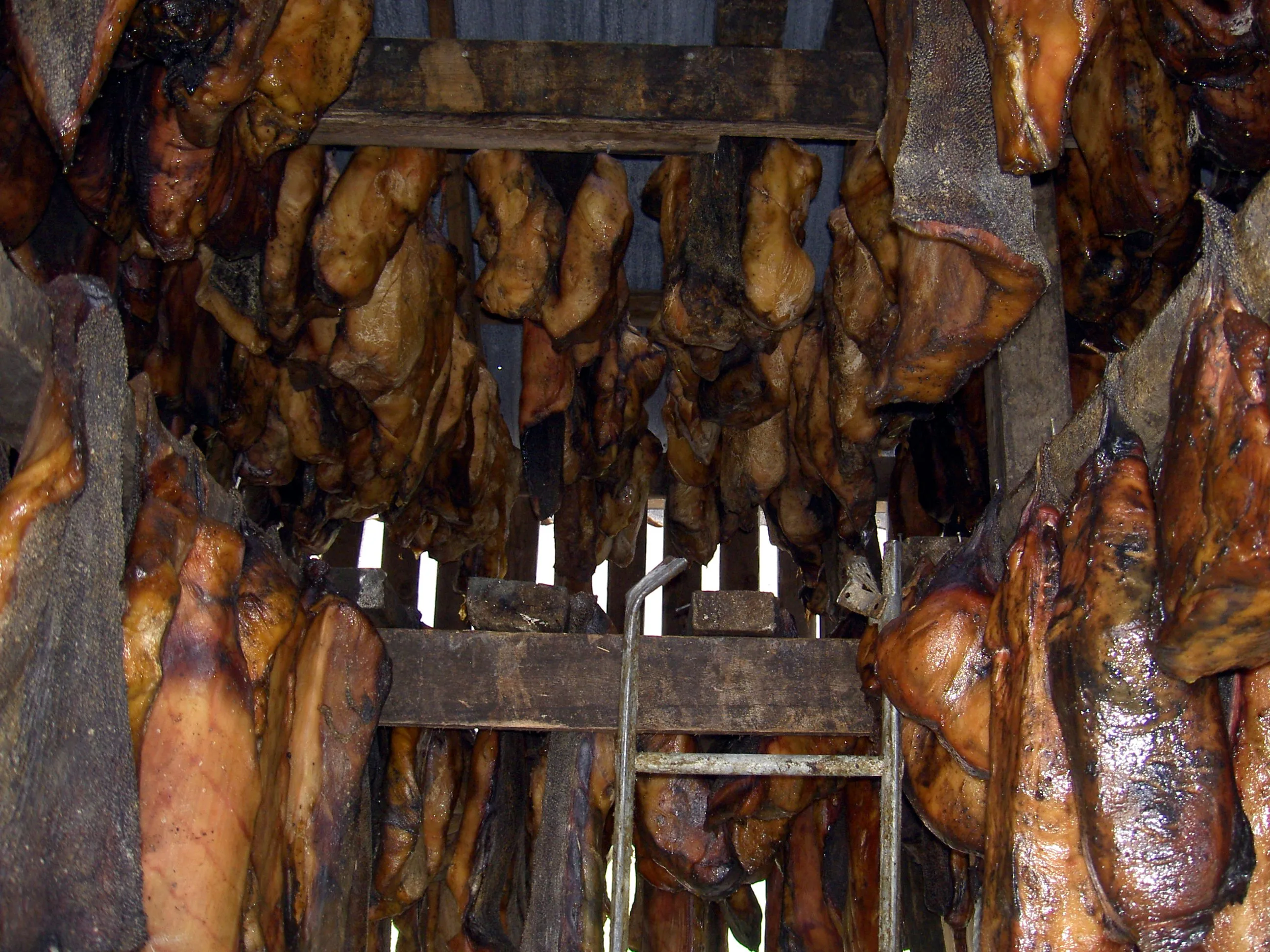
Hakarl is fermented Greenland shark, and it exists because the fresh meat is poisonous. The flesh carries high levels of urea and other compounds that must be broken down before it can be eaten. Traditionally the shark is buried and pressed for weeks to ferment, then hung to dry for months, leaving cubes of pale, pungent meat with a powerful smell of ammonia.
“Hakarl is fermented Greenland shark, and it exists because the fresh meat is poisonous.”
Why It Is Made
Hakarl is a product of necessity on a harsh island where no food could be wasted. The Greenland shark was abundant but inedible fresh, so Icelanders found a way to make it safe through long fermentation and drying. It is a striking example of how the island fed itself from unpromising materials. The method has barely changed in centuries.
A Test of Nerve
For visitors, hakarl is the dish to be dared into trying, and its ammonia reputation precedes it. For Icelanders it is a traditional delicacy, eaten with a measure of national pride. It is chased with a shot of Brennivin, the caraway spirit nicknamed Black Death, which cuts through the intensity.
Thorrablot
Hakarl is most associated with Thorrablot, the midwinter feast that revives old Icelandic foods, where it appears alongside other cured and preserved dishes. Eating it there, among locals, is to share in a deliberate celebration of the island's hard-won food heritage. A small piece, breathed through the mouth rather than the nose, is the usual way in.
What to Expect
Trying hakarl is a rite of passage: a small cube of pale meat with an intense ammonia smell, traditionally washed down with a shot of Brennivin schnapps. Icelanders eat it with genuine relish, especially at the Thorrablot midwinter feasts.
Why Try It
It is the most notorious food in Iceland and a direct taste of how islanders made even a poisonous shark edible, a true test of culinary nerve.
Insider Tips
- Take a small piece first and breathe through the mouth, since the ammonia smell is the hard part.
- Chase it with a shot of Brennivin, the traditional caraway spirit, as Icelanders do.
- Look for it around the midwinter Thorrablot festival, when it is most widely served.