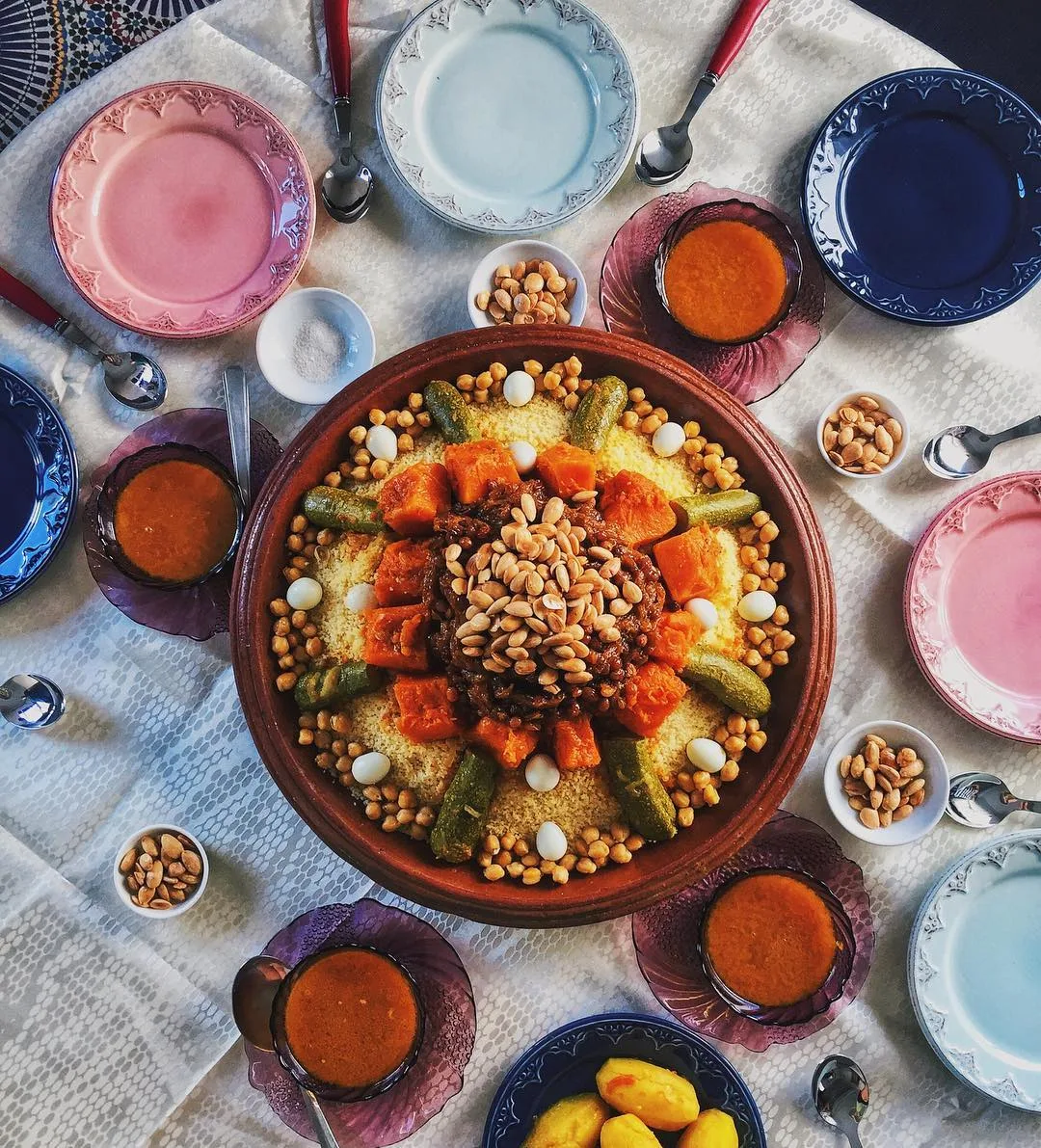
"Morocco's Friday dish after prayer, hand-rolled semolina steamed three times, topped with lamb and seven vegetables arranged by colour. UNESCO-listed. The technique cannot be rushed."
About Couscous
Morocco's Friday meal and its most culturally significant dish: hand-rolled semolina grains steamed three times in a couscoussier above a broth of lamb, seven vegetables (turnip, carrot, pumpkin, courgette, cabbage, potato and onion) and aromatic herbs; served on a platter with the vegetables arranged by colour; the UNESCO-listed tradition of couscous-making in the Maghreb.
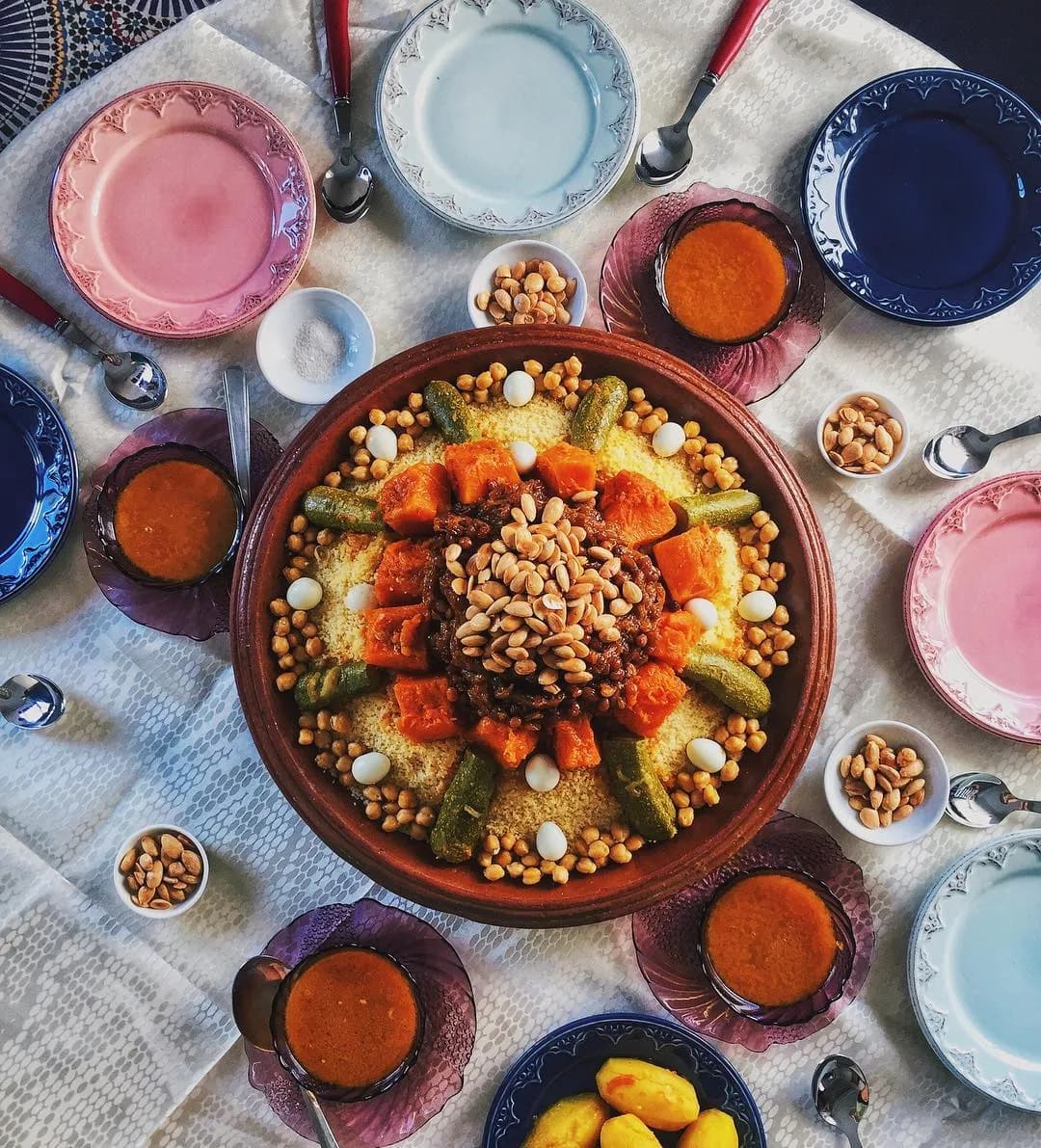
Couscous, a staple of Morocco's cuisine
The Friday Dish
Couscous is Morocco's most culturally significant dish, eaten above all on Fridays after midday prayer. Hand-rolled semolina is steamed over a broth of meat and vegetables, then mounded on a platter and topped with lamb or chicken and an array of vegetables. The Maghrebi tradition of making it is recognised as cultural heritage.
The Steaming
Proper couscous is steamed, not soaked. The grain is set in the top of a couscoussier above the simmering broth, then taken out, oiled and fluffed, and steamed again, two or three times, so each grain stays separate and light. The quick-cook couscous made by pouring on boiling water is a different and inferior thing.
The Topping
Over the steamed grain go the slow-cooked meat and a generous selection of vegetables, often carrot, turnip, pumpkin, courgette and chickpeas, arranged around the mound. The broth that cooked them is served alongside to moisten the grain. The variety of vegetables is part of the dish's generosity.
A Communal Meal
Couscous is shared from a single large platter, eaten with the right hand by rolling the grain into a ball, each diner working the section in front of them. It is the dish that most ties Moroccan home life to the rhythm of the week and to celebration. Made fresh each Friday, it is food built for gathering.
What to Expect
The couscous arrives on a large communal platter, the grain mounded and the vegetables arranged around the edges. Locals eat with their right hand from the section in front of them, rolling the grain into a ball. The broth is poured separately.
Why Try It
Couscous is the dish that most connects Morocco's domestic life to its religious rhythm. It appears every Friday and at every celebration.
✦ Photo Gallery
Insider Tips
Restaurant Al Fassia in Marrakech serves one of the most reliable versions for visitors.
Friday lunch is the correct time, the dish is made fresh each week for the post-prayer meal.
Hand-rolled couscous (not commercial) has a fundamentally different texture, seek it out.