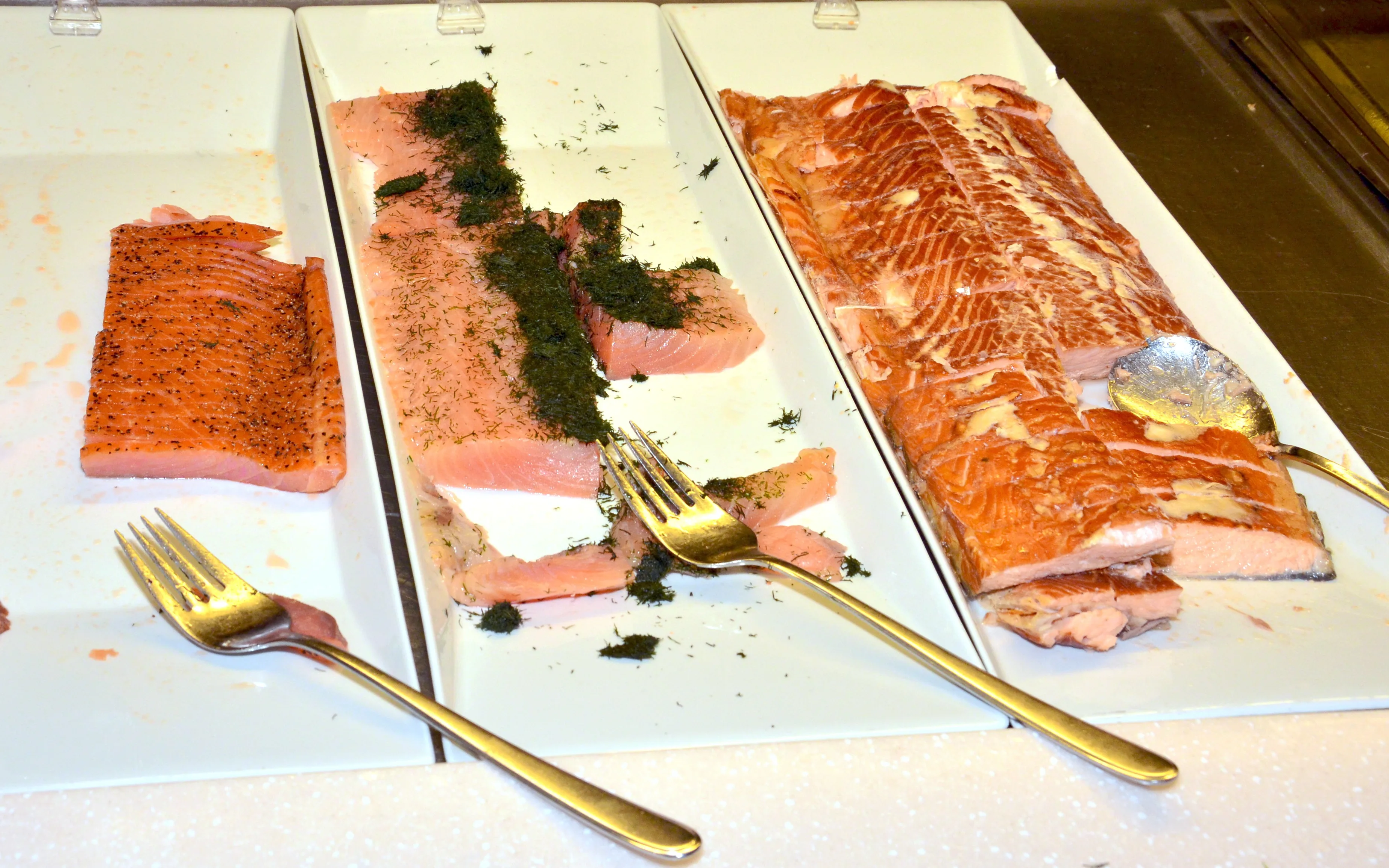
"Salmon buried in salt, sugar and dill for 48 hours. 'gravlaks' means buried salmon. Sliced paper-thin, eaten on rye bread with mustard-dill sauce."
About Gravlaks
Scandinavia's ancient curing method at its purest: fresh Atlantic salmon fillets buried under a mixture of salt, sugar, white pepper and dill and left to cure for 48 hours until the flesh firms and the flavour concentrates into a silky, delicate, translucent pink slice; served on rugbrød with mustard-dill sauce; the gravlaks tradition predates refrigeration by centuries.
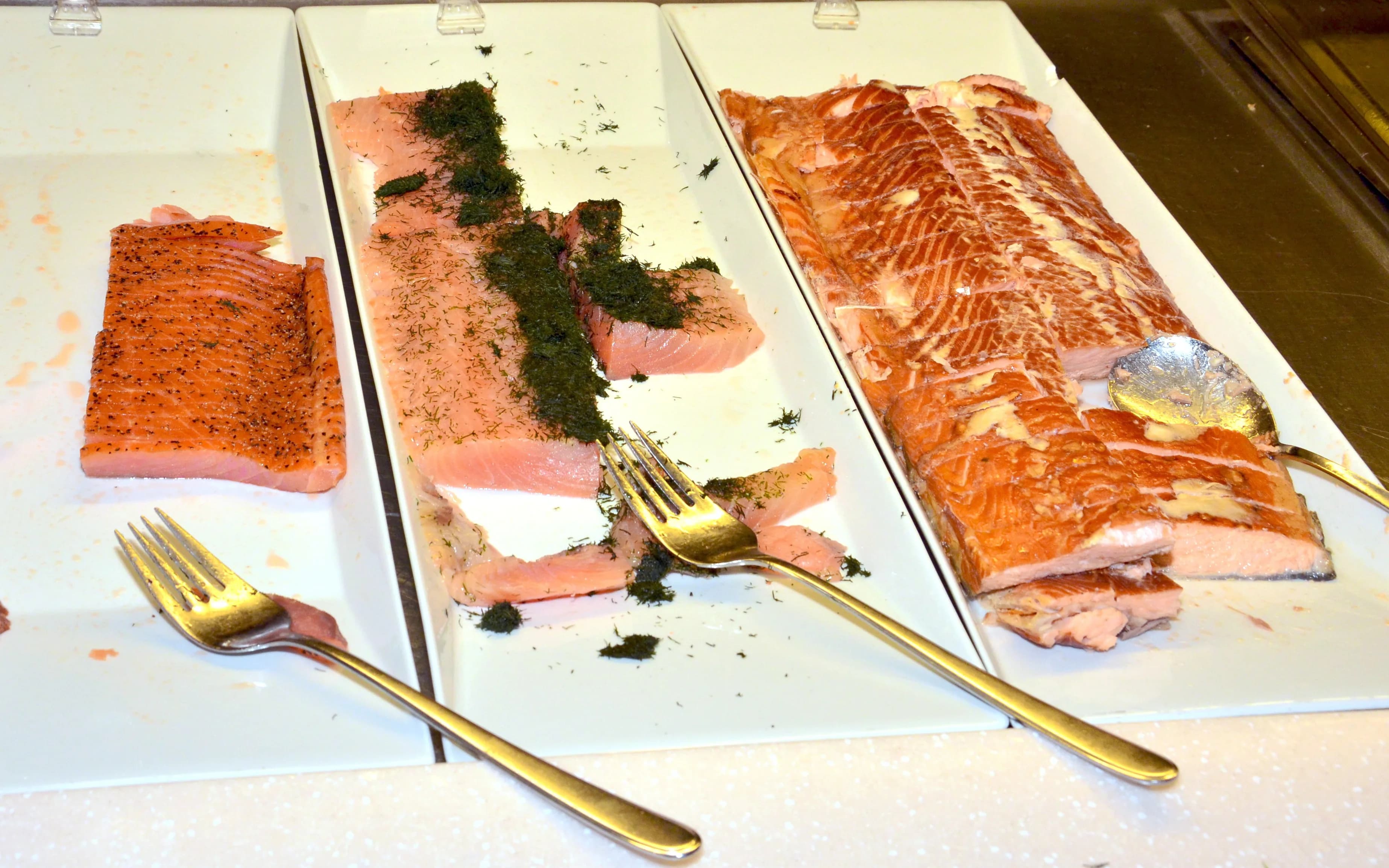
Gravlaks, a staple of Norway's cuisine
Cured Salmon
Gravlaks is Scandinavia's classic cured salmon: fresh fillets buried under a mix of salt, sugar, pepper and a great quantity of fresh dill, then left for a day or two until the flesh firms, turns translucent and concentrates in flavour. It is sliced paper-thin with a long, slanted knife. The curing is gentle, so the salmon stays silky rather than salty.
The Name
The name gravlaks means buried salmon, a nod to the original method, in which the salted fish was buried in the ground to ferment lightly. The modern version, cured in the refrigerator, is salt-cured rather than fermented, but the name and the principle survive. It is one of the oldest preservation techniques still in everyday use.
The Cure
The balance of the cure is what matters: roughly equal salt and sugar to draw out moisture and firm the flesh, with pepper and masses of dill for flavour. Weighted down and turned as it cures, the salmon takes on a deep, even colour and a dense, sliceable texture. The technique is simple enough to do well at home.
How It Is Eaten
Gravlaks is served in thin slices, traditionally on dark rye bread with a sweet mustard-and-dill sauce. The slices should be cut thin enough to see light through; thick-cut gravlaks is poorly served. Clean, firm and herb-scented, it is Scandinavian preservation at its most elegant, better than almost any cooked salmon dish.
What to Expect
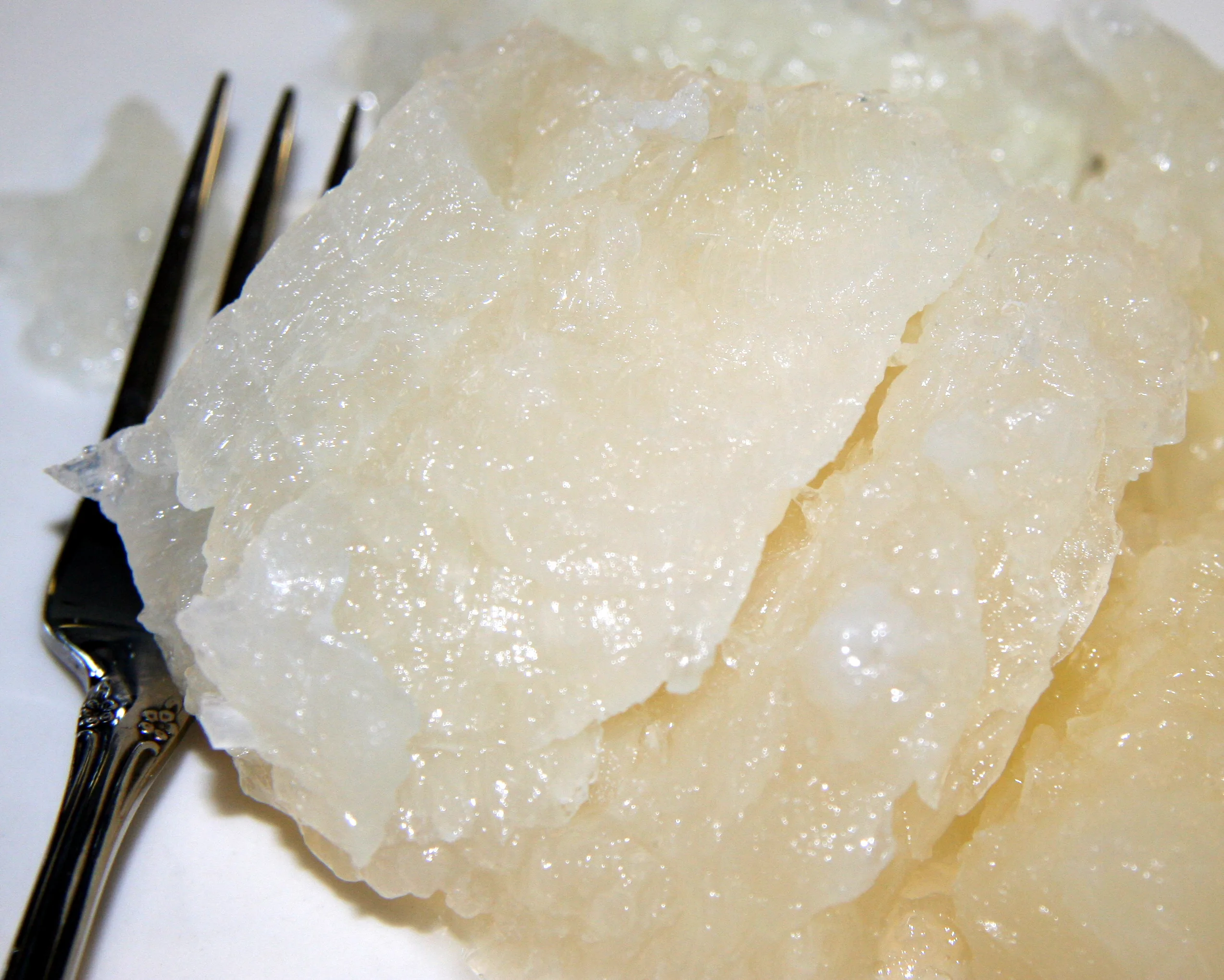
The gravlaks arrives already sliced, the pink flesh translucent and firm, the dill visible in the curing. On a piece of rugbrød with mustard-dill sauce, it is one of Scandinavia's clearest pleasures.
Why Try It
Gravlaks is Norwegian food preservation at its most elegant, a technique that predates refrigeration by centuries and still produces the best result.
✦ Photo Gallery
Insider Tips
The slice must be thin enough to see light through, thick-cut gravlaks is improperly served.
Mustard-dill sauce (hovmästarsås) is the canonical accompaniment. Don't substitute with plain mustard.
Make it at home, the technique is simple and the result is better than any shop version.