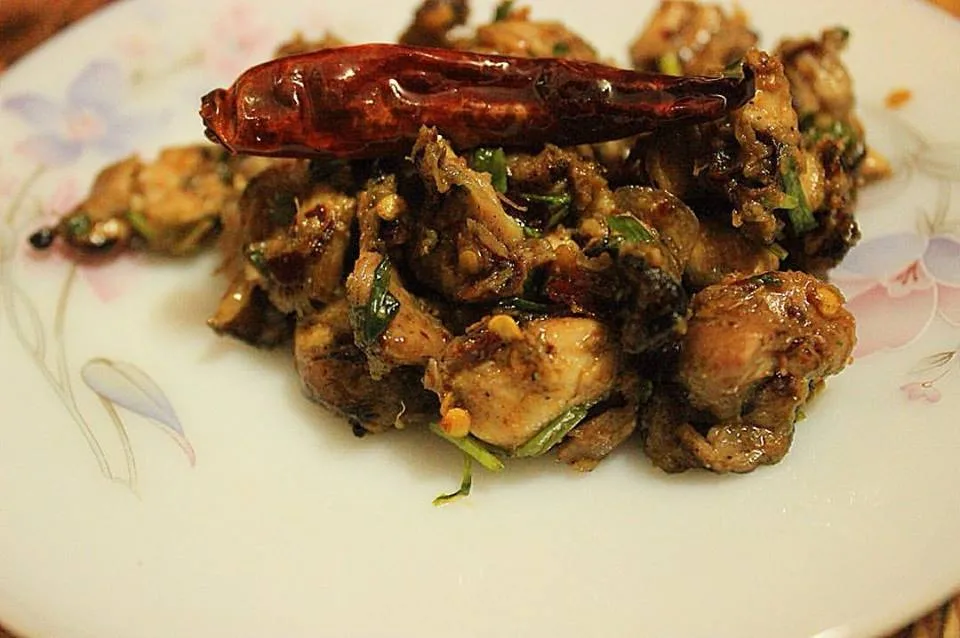
Charred over an open fire and dressed while still warm in mustard oil and Himalayan timur pepper, choila is the Newar feast dish that turns buffalo into something fierce and smoky.
About Choila
A high-intensity Newari delicacy of water buffalo meat charred over rice straw fires; the smoky 'shatter-crisp' exterior is tossed in a potent marinade of mustard oil; toasted fenugreek; and sun-dried chilies; it is an ancestral 'insider' favorite best paired with 'aila' (local rice spirit).
A Newar Classic
Choila is spiced grilled meat from the Newar kitchen of the Kathmandu Valley, made most traditionally with water buffalo. Pieces of meat are grilled or seared over a flame until the edges char, then chopped and tossed with a pungent dressing. The result is served at room temperature rather than hot.
“Choila is spiced grilled meat from the Newar kitchen of the Kathmandu Valley, made most traditionally with water buffalo.”
The Dressing Does the Work
The defining flavours come from raw mustard oil, dried red chilli, garlic, ginger and timur, the citrusy Sichuan-style pepper of the Nepali hills. Fresh garlic and sometimes a scatter of fenugreek seeds bloomed in hot oil round it out. The seasoning is bold and direct, built to stand up to the smoke of the grill.
Part of the Feast
Choila almost always appears as part of samay baji, the Newar ceremonial platter, spooned alongside beaten rice, black-eyed beans and aila, the local rice spirit. It is a fixture of festivals and family gatherings, where it is eaten with the fingers. Duck and chicken versions exist, but buffalo choila is the benchmark.
Variations Across the Valley
Some cooks make a boiled-then-fried style, while the most prized version keeps the open-flame char that gives the dish its name and its smoke. Heat levels swing widely from house to house. What stays constant is the cool serving temperature, which lets the mustard oil and timur sharpen as the meat rests.
“Some cooks make a boiled-then-fried style, while the most prized version keeps the open-flame char that gives the dish its name and its smoke.”