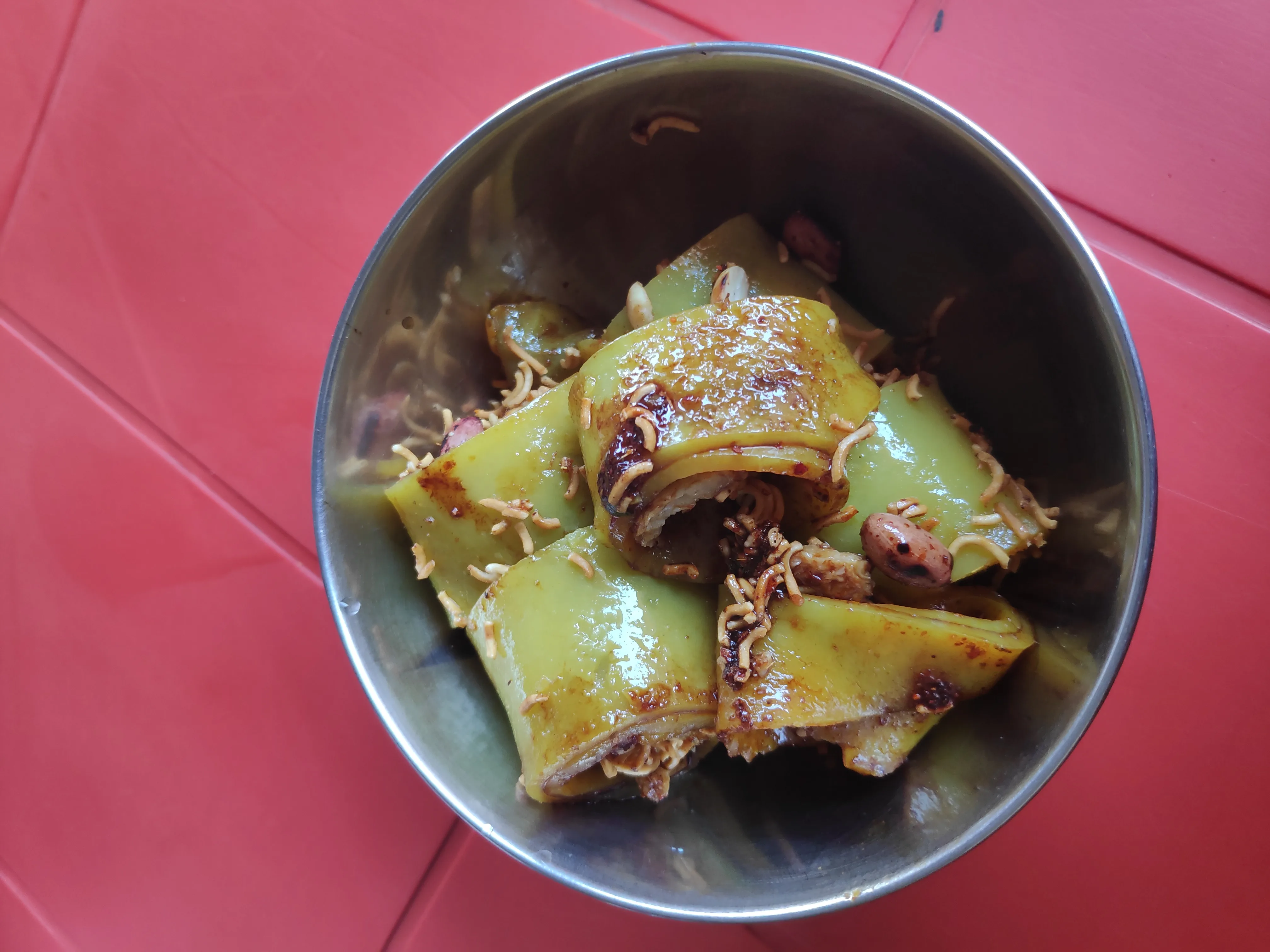
Slippery, cold and aggressively spiced, laping is the Tibetan mung-bean noodle that has become a cult street snack in Nepal's Himalayan neighbourhoods.
About Laping
An avant-garde Tibetan-style slippery noodle dish made from mung bean starch; these cold; gelatinous rolls are doused in a high-intensity sauce of soy; vinegar; and house-made chili oil; providing a numbing 'timur' kick that has become a cult favorite in the Boudhanath stupa district.
A Noodle Made From Starch
Laping is made from mung-bean starch set into a soft, gelatinous sheet or noodle. The starch is cooked into a paste, spread thin and allowed to firm up, then cut or rolled. The texture is the whole point: cool, smooth and slippery, unlike any wheat or rice noodle.
“Laping is made from mung-bean starch set into a soft, gelatinous sheet or noodle.”
Tibetan Roots in Nepal
The dish is Tibetan in origin and arrived in Nepal with Tibetan communities, taking hold in neighbourhoods such as Boudha and in the hill towns. It is sold from small stalls as a quick, cheap snack rather than a sit-down meal. Its popularity has spread well beyond the Tibetan community to become a general street favourite.
Hot Sauce on a Cold Base
What makes laping memorable is the contrast between the cool noodle and a fierce dressing of chilli oil, garlic, soy and vinegar, often with a sesame or Sichuan-pepper note. Some versions are served flat and soupy, others rolled around a spiced filling and sliced. The heat is deliberately high.
A Street-Food Cult
Laping has a devoted following among those who like their snacks cold and punishingly spicy. It is eaten standing at the stall, the dressing pooling at the bottom of the bowl. For many it is an acquired taste, which only adds to its street-food appeal.
“Laping has a devoted following among those who like their snacks cold and punishingly spicy.”