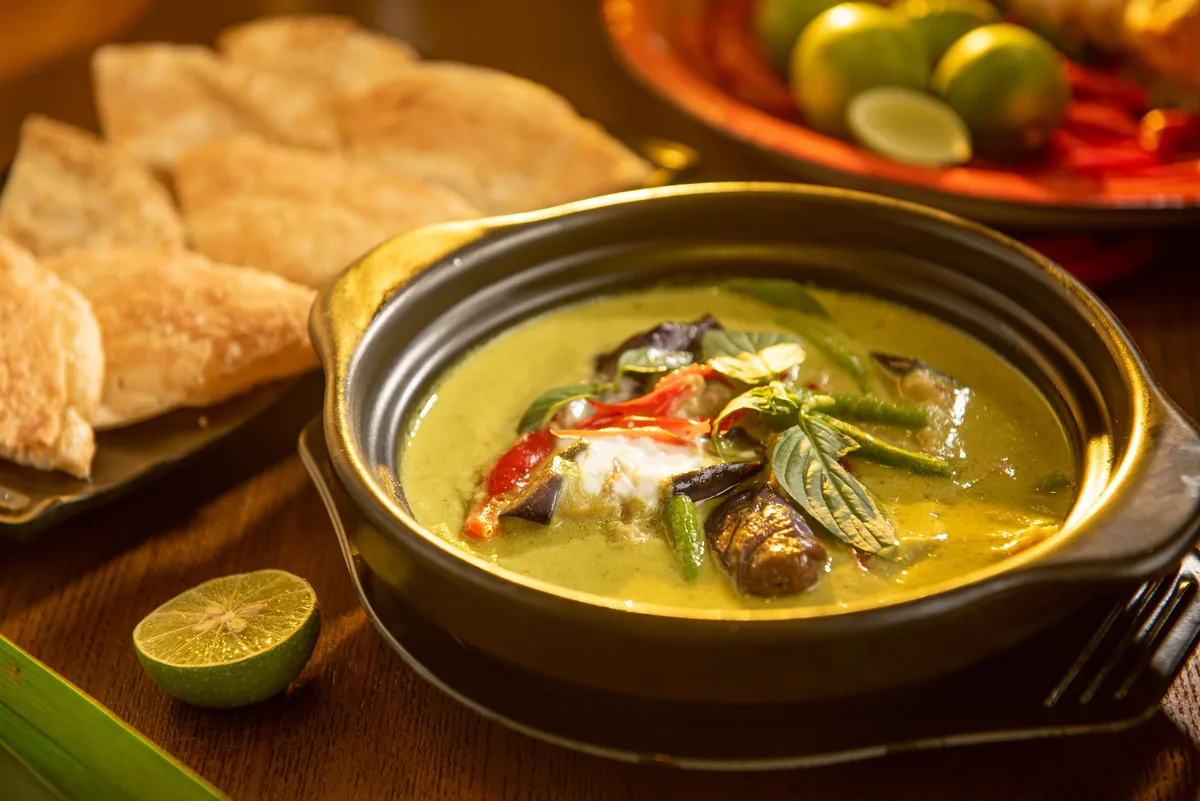
"Thailand's green curry paste, ground fresh daily, is fried in coconut cream until the fat splits, releasing all the aromatics. The colour should be deep moss, not bright lime."
About Green Curry (Gaeng Keow Wan)
Thailand's most complex curry: a paste of green bird's eye chillies, lemongrass, galangal, kaffir lime zest, coriander root, shrimp paste and white pepper ground by hand with a granite mortar; fried in coconut cream until it splits and the oils emerge, then simmered with the remaining coconut milk, Thai basil, aubergine and chicken or fish balls; the colour should be deep moss-green, not bright lime.
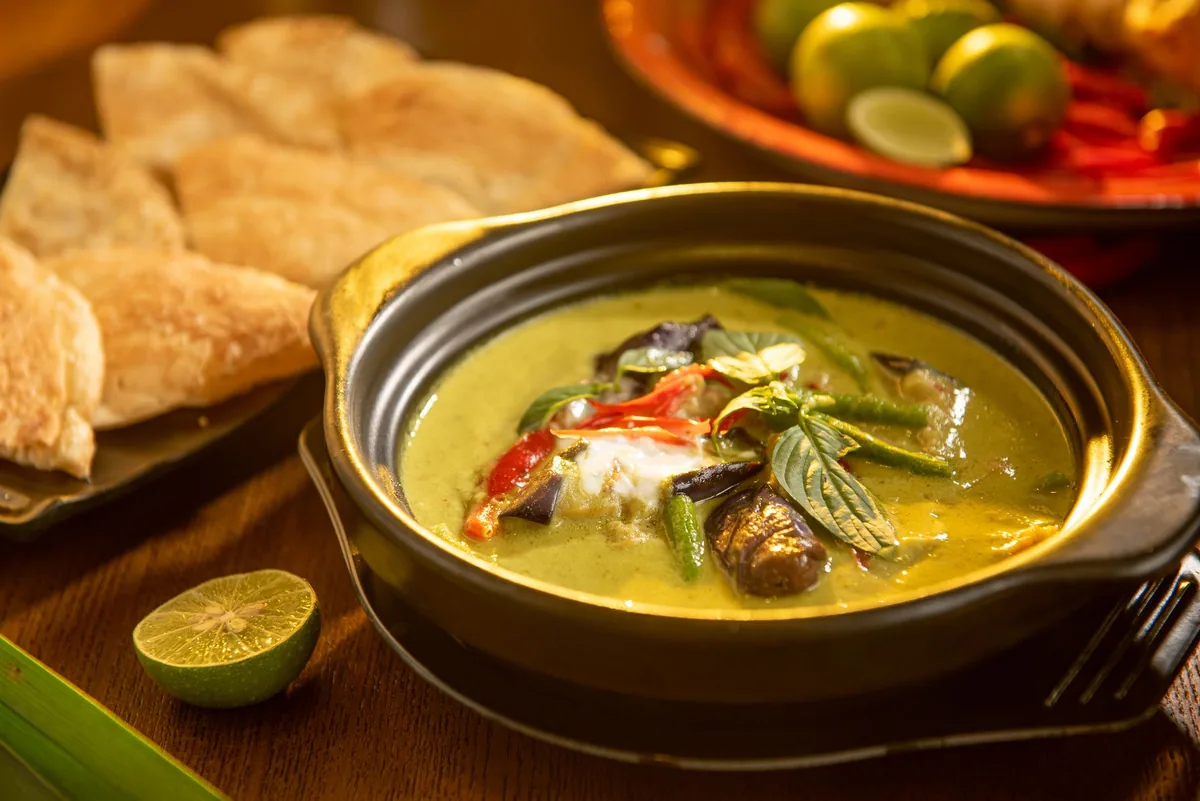
Green Curry (Gaeng Keow Wan), a staple of Thailand's cuisine
The Paste
Thai green curry begins with a paste pounded fresh in a granite mortar: green bird's eye chillies, lemongrass, galangal, kaffir lime, coriander root, shrimp paste and white pepper. The green chillies give the curry its colour, and the paste is the entire foundation of the dish. A jarred paste makes a different, flatter preparation.
The Split
The crucial technique is frying the paste in thick coconut cream until the fat separates, or splits, releasing the oils and aromatics of the paste. Skipping this step leaves the curry dull and one-dimensional. That fragrant, oil-slicked base is what the rest of the curry is built on.
The Coconut and Aromatics
Once the paste is bloomed, coconut milk, fish sauce and palm sugar build the broth, and Thai basil, kaffir lime leaf and pea aubergines are added with the chicken, fish balls or other protein. The slightly bitter pea aubergines provide a deliberate counterpoint to the rich, sweet coconut. The colour should be a deep moss-green, not a bright lime.
How It Is Eaten
Green curry is creamy and fragrant, the chilli heat arriving a beat after the first spoonful. It is eaten with plain jasmine rice, which soaks up the sauce, rather than sticky rice. The dish shows the central principle of Thai cooking: the freshly ground paste is the heart of everything, and the technique of blooming it is what makes it sing.
What to Expect
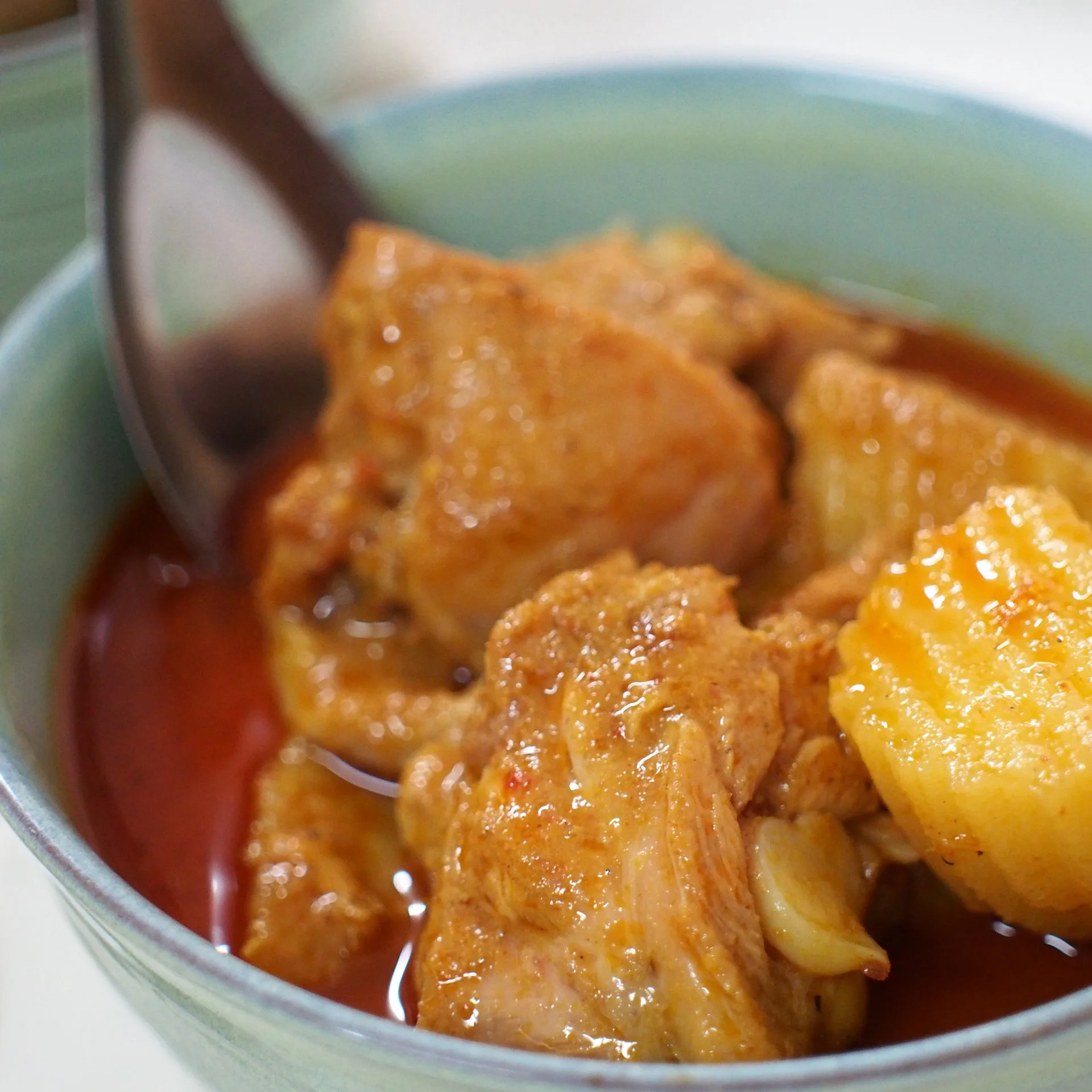
The green curry arrives in a wide bowl, the coconut cream slightly pooled at the surface, the Thai basil floating. The first spoonful is creamy and fragrant, the chilli heat arriving 10 seconds later.
Why Try It
Green curry demonstrates Thai cooking's most important principle: the fresh paste, ground that morning, is the entire dish. Jarred paste is a different preparation.
✦ Photo Gallery
Insider Tips
Fresh paste ground that morning is the standard to look for, ask at market restaurants.
The pea aubergines (makhuea phuang) are slightly bitter and provide essential contrast.
Eat with jasmine rice, not sticky rice, the sauce requires plain rice to absorb it.