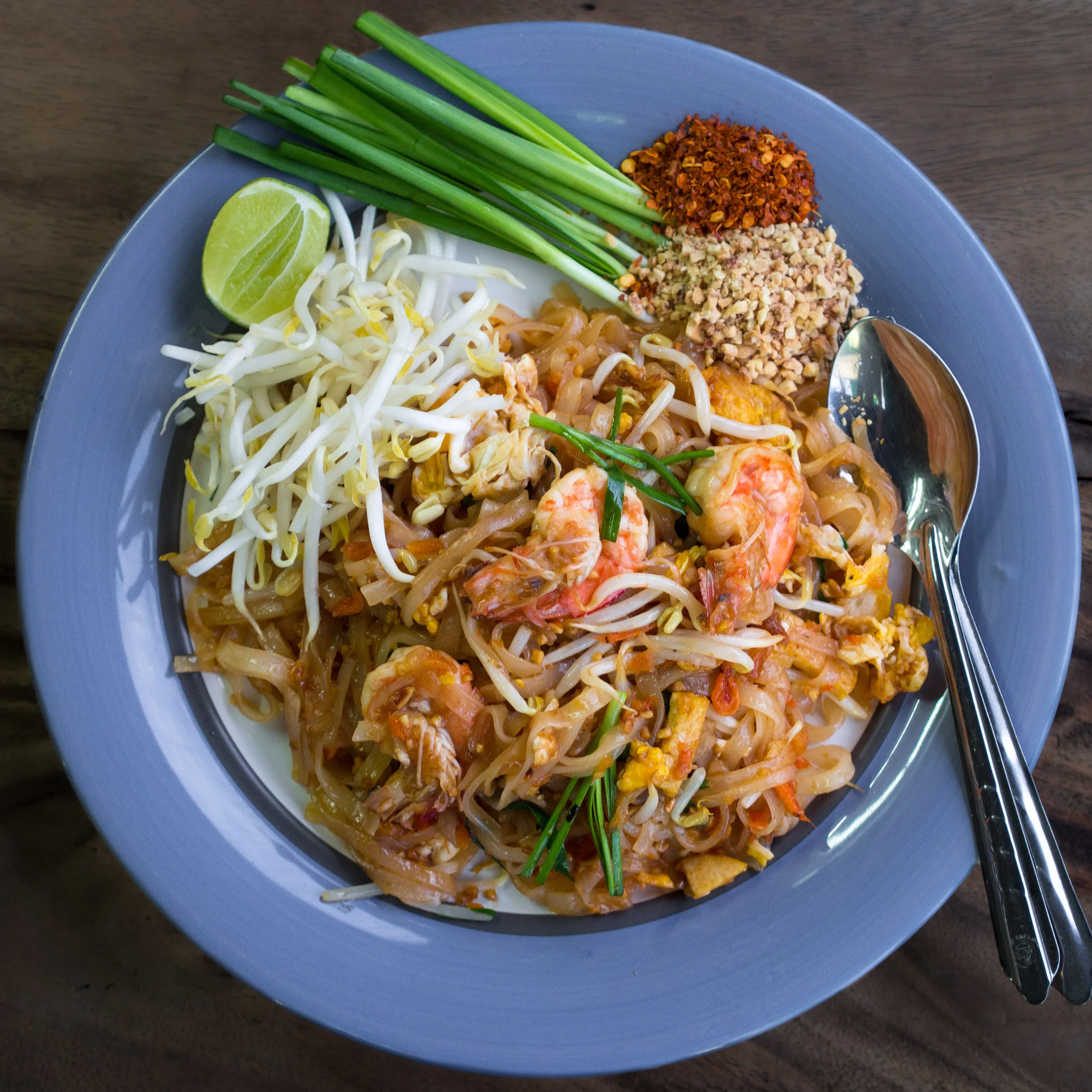
"Thailand's most internationally recognised dish requires a small wok and violent flame, one portion at a time. The tamarind is what gives it depth. Ketchup versions are wrong."
About Pad Thai
Thailand's most internationally recognisable dish: rice noodles stir-fried in a screaming wok with dried shrimp, tofu, egg, bean sprouts and spring onion in a sauce of tamarind pulp, fish sauce and palm sugar; finished tableside with a squeeze of lime, ground peanuts, dried chilli flakes and a sliver of banana blossom; the best versions are cooked in the smallest woks over the most violent flames in Bangkok.
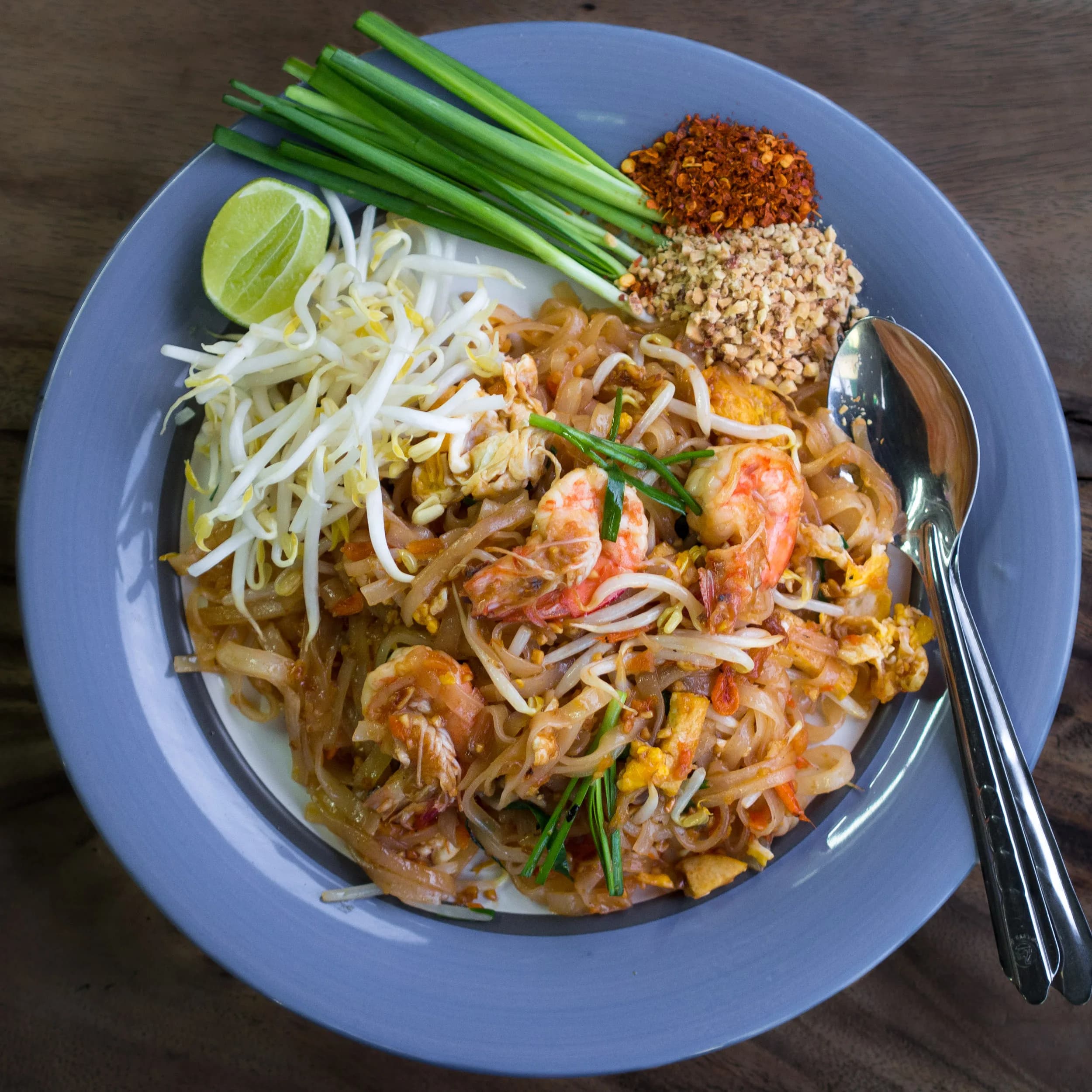
Pad Thai, a staple of Thailand's cuisine
The Wok
Pad Thai is Thailand's most internationally famous dish: rice noodles stir-fried at fierce heat with dried shrimp, tofu, egg and bean sprouts in a sauce of tamarind, fish sauce and palm sugar. The best versions are cooked one portion at a time in a small wok over a violent flame, never in a batch. That intense, focused heat is what gives the noodles their char.
The Tamarind
The sauce is the heart of pad Thai, and tamarind is its defining note, giving the dish its characteristic sweet-sour depth balanced against salty fish sauce and sweet palm sugar. Tourist versions that lean on ketchup miss this entirely, producing something flatter and oddly sweet. Real pad Thai is built on the tang of tamarind.
The Condiments
Pad Thai is finished at the table by the eater, with lime squeezed over and a tray of condiments, crushed peanuts, dried chilli flakes, sugar and fish sauce with chilli, used to adjust it. The idea is to taste first, then balance to preference. Bean sprouts and banana flower often come on the side for freshness and crunch.
A Deceptive Simplicity
Pad Thai is the dish many people eat first in Thailand and one of the hardest to cook truly well, since the wok heat and the tamarind balance are more demanding than they look. Cooked fast, the noodles slightly charred, the egg folded in at the end, it is street food at its most refined. Simple in appearance, it rewards real skill.
What to Expect
At a Bangkok street stall the pad Thai cooks in under three minutes, the wok never has time to cool between portions. The noodles char slightly at the edges. The egg is folded in at the end.
Why Try It
Pad Thai is the dish that most people eat first in Thailand and that takes the longest to eat really well, the wok heat and the tamarind balance together are harder to achieve than they appear.
✦ Photo Gallery
Insider Tips
Thip Samai on Mahachai Road in Bangkok is the most famous address.
The lime is squeezed over at the table immediately before eating.
The condiment tray (prik nam pla, sugar, chilli) is used to adjust after the first bite, not before.