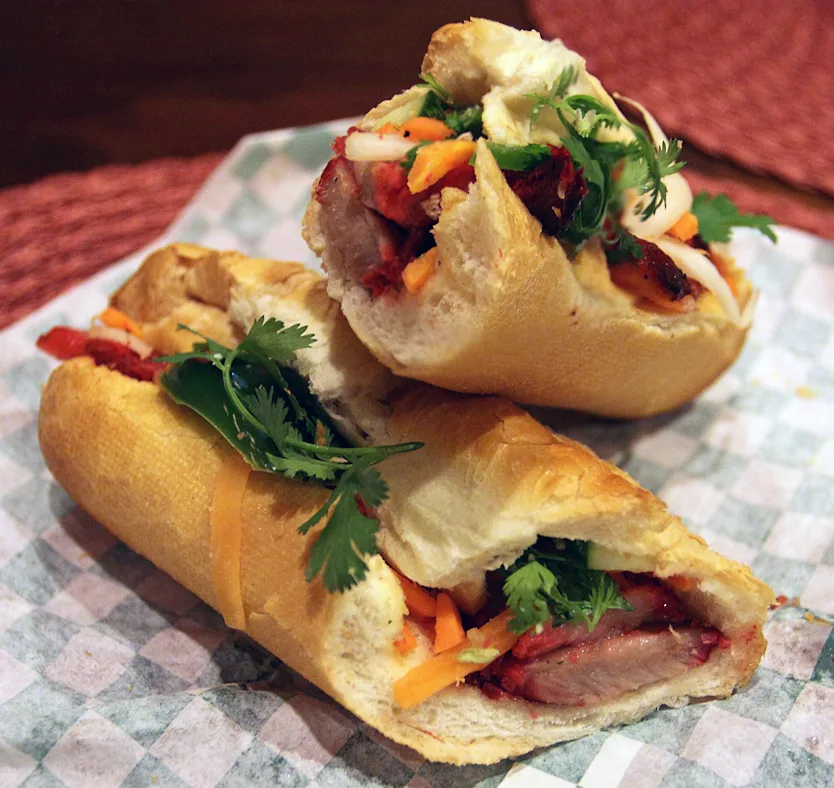
"Vietnam's greatest sandwich: a rice-wheat baguette with pâté, pork roll, pickled daikon, jalapeño and coriander. French colonial technique, Vietnamese ingredients, perfect result."
About Bánh Mì
Vietnam's greatest sandwich and the most successful French-colonial culinary fusion in history: a Vietnamese-adapted baguette with a shattering crust and airy crumb, split and filled with pâté, Vietnamese pork roll (chả lụa), pickled daikon and carrot, cucumber, jalapeño, fresh coriander and a smear of mayonnaise; the Huynh Hoa bánh mì stall in District 5 has the longest daily queue in Saigon.
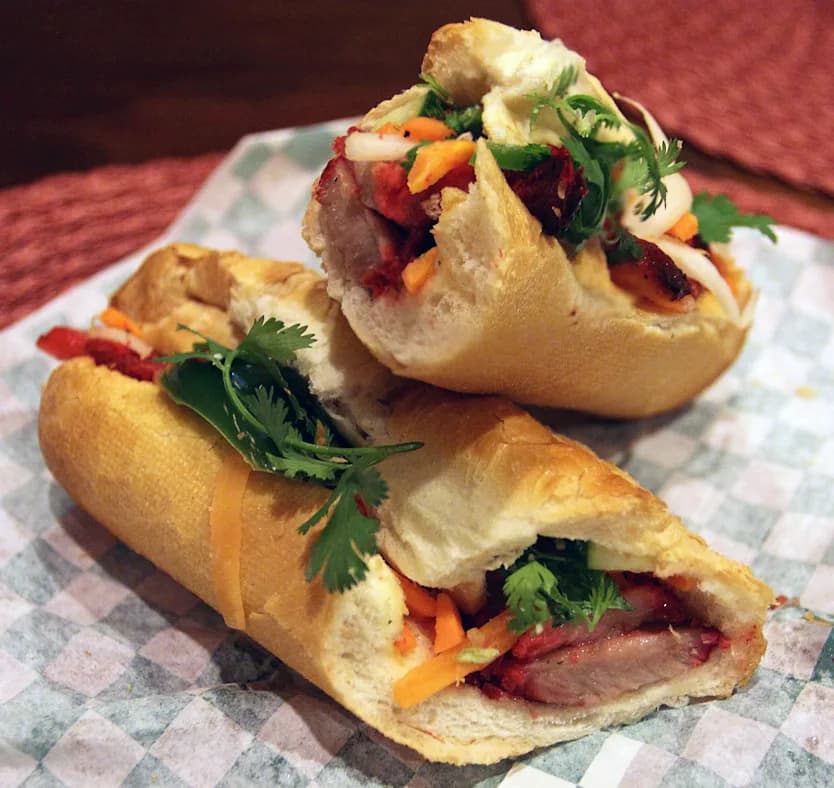
Bánh Mì, a staple of Vietnam's cuisine
The Fusion
Banh mi is Vietnam's greatest sandwich and one of the world's most successful culinary fusions: a light, crisp baguette split and filled with pate, Vietnamese pork roll, pickled daikon and carrot, cucumber, chilli and coriander. It marries French colonial bread and charcuterie with Vietnamese ingredients and balance. The result is brighter and better than either tradition alone.
The Bread
The baguette itself is the Vietnamese reinvention. Made with a mix of wheat and rice flour, it is shorter, lighter and airier than the French loaf, with a thin, shattering crust suited to the climate and to being stuffed. It is not a lesser baguette but a purpose-built one, the perfect vessel for the sandwich.
The Fillings
Inside, the layers are a study in balance: rich pate and pork, the cool crunch and tang of pickled daikon and carrot, fresh cucumber and coriander, a slick of mayonnaise and the heat of fresh chilli. The interplay of savoury, sour, fresh and spicy is the heart of banh mi. The pate is the non-negotiable base on which the rest is built.
A Colonial Legacy
Banh mi grew out of the French colonial presence in Vietnam, where the baguette, pate and ham were absorbed and then transformed by local taste. What emerged is a clear case of borrowed ingredients reworked into something distinctly Vietnamese. Assembled to order at street stalls and eaten at once, before the bread softens, it is fast food at its finest.
What to Expect
At Huynh Hoa on Mai Thị Lựu Street in Ho Chi Minh City the bánh mì is assembled in 20 seconds. The pâté goes first, then the pork, then the pickled vegetables, then the jalapeño. The coriander last. The bread shatters on the first bite.
Why Try It
Bánh mì is the clearest example of culinary colonialism producing something better than either source tradition alone.
✦ Photo Gallery
Insider Tips
Huynh Hoa in District 1, Ho Chi Minh City is the most celebrated street address.
Eat immediately, the bread goes soft within 15 minutes of assembly.
The pâté is the non-negotiable element, without it the sandwich is missing its base.