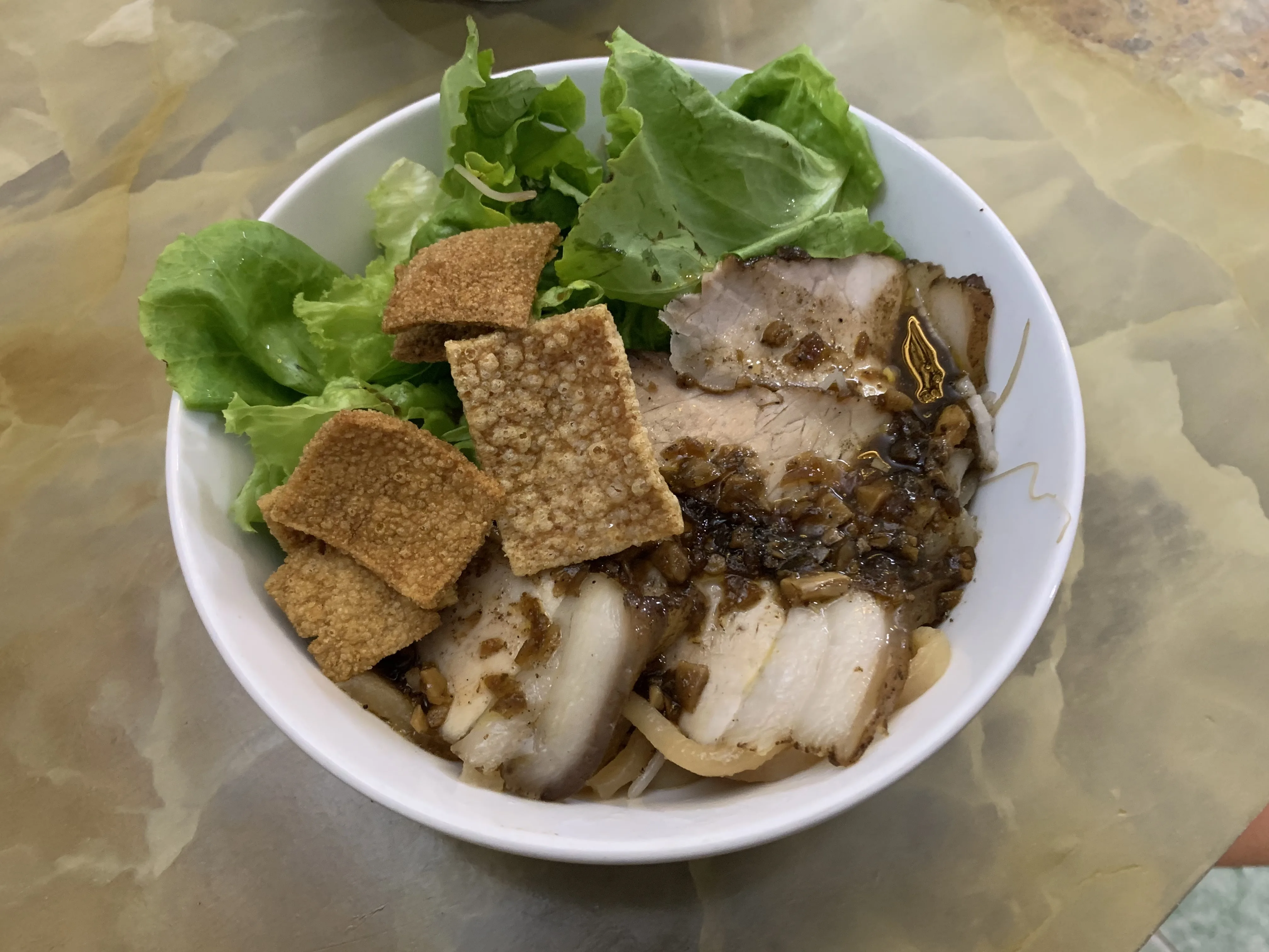
"Hội An's noodle cannot be authentically reproduced elsewhere, the ash water from a specific well changes the noodle's texture. Unique to one ancient trading port."
About Cao Lầu
Hội An's mysterious noodle that cannot be authentically reproduced elsewhere: thick, chewy yellow-grey noodles (made with ash water from a specific Hội An well and rice from Cham Island) topped with slices of char siu pork, pork crackling, bean sprouts and herbs in a small amount of concentrated broth; the texture of the noodles is unlike anything in Vietnam; unique to one small ancient trading port.
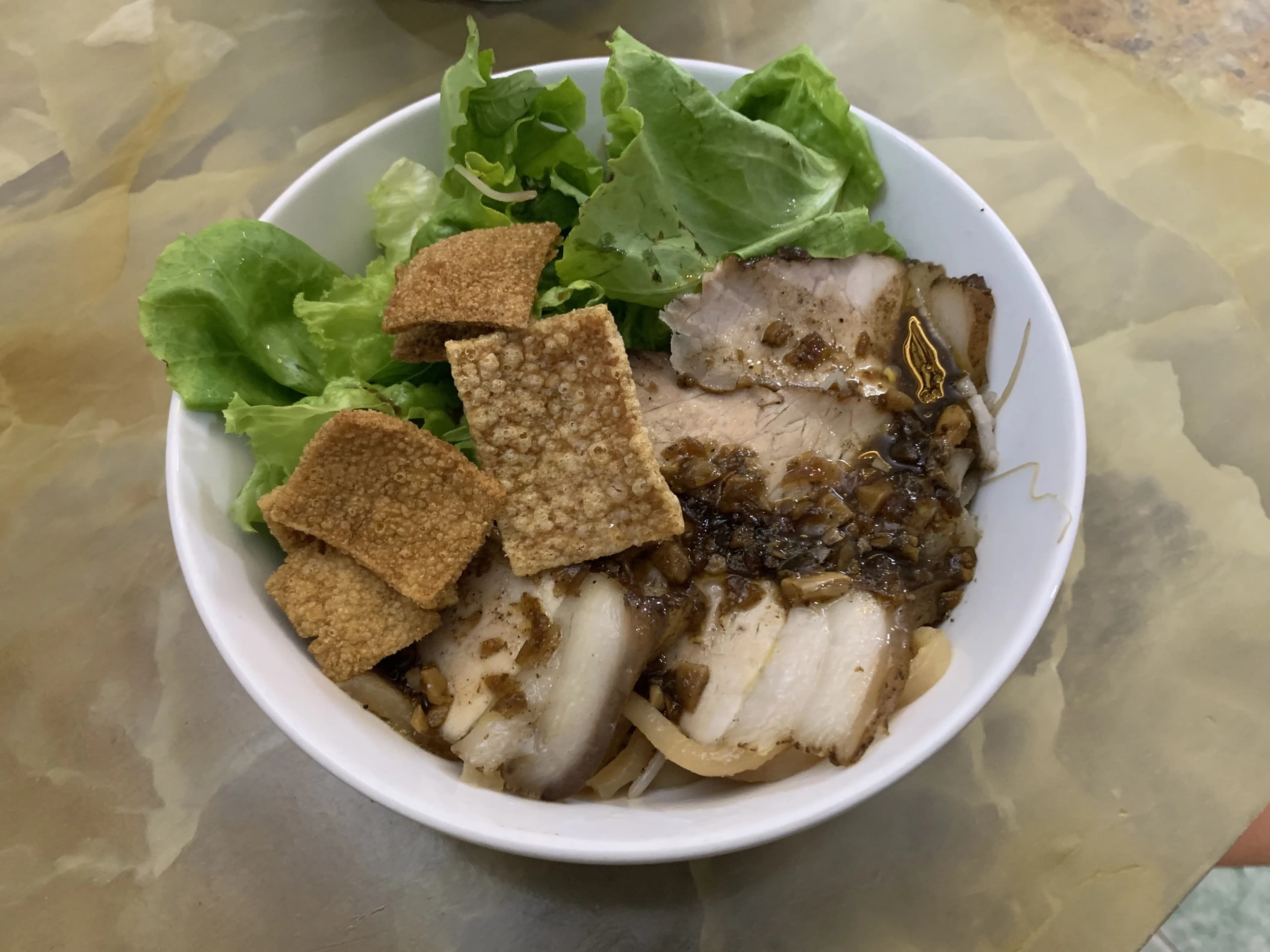
Cao Lầu, a staple of Vietnam's cuisine
Hoi An's Noodle
Cao lau is the signature noodle of Hoi An, the old central-Vietnamese trading port, and unlike almost any other Vietnamese dish. Thick, chewy, yellow-grey noodles are topped with slices of char siu-style pork, crisp crackling, bean sprouts and herbs, with only a little concentrated broth. It eats more like a noodle salad than a soup.
The Well Water
What makes cao lau famously hard to reproduce is its water. The noodles are traditionally made with alkaline ash water drawn from a particular Hoi An well, which gives them their distinctive firm, chewy texture and colour. Made with other water, the noodles simply come out different, which is why locals speak of the dish as having its own terroir.
The Components
Beyond the noodles, cao lau brings together char siu pork, crunchy fried crackling, fresh bean sprouts and herbs, and just enough rich broth to bind them. The crackling is added at the last moment so it stays crisp. The mix of chewy, tender, crunchy and fresh in one bowl is the appeal.
Unique to One City
Cao lau is perhaps the most place-specific dish in Vietnam, tied to a single town's water and traditions and reluctant to travel. Versions made elsewhere are approximations at best. It is one of the clearest reasons to eat a local dish in its origin city, where the noodles are made the way they have always been.
What to Expect
The cao lầu arrives with minimal broth, more like a noodle salad than a soup. The noodles are thick and chewy, the char siu tender, the crackling crumbling at the fork's touch.
Why Try It
Cao lầu is the most specific dish in Vietnamese cuisine, irreplaceable by geography and one of the clearest arguments for eating local food in its origin city.
✦ Photo Gallery
Insider Tips
Eat it in Hội An only, versions elsewhere use different water and produce different noodles.
Morning Glory restaurant and Cao Lầu Trung Bắc in Hội An are reliable addresses.
The crackling (bánh đa) should be added just before eating so it stays crisp.