“Tucked behind a limestone facade so sharp it seems to slice the sky, a single private collection managed to shift the entire cultural axis of the Southern Cone toward its own neighbors.”
About MALBA
The seeds of this institution were planted in the 1970s when Eduardo Costantini began buying works that others ignored, building a narrative of Latin American identity piece by piece. By the late 1990s, the collection had grown too large for any private home, leading to a prestigious international design competition won by AFT Arquitectos. The museum debuted in 2001, a year of monumental transition for Argentina, and immediately became the permanent home for some of the region's most contested treasures. It weathered the country's financial storms to become a symbol of stability, eventually expanding its film and literature programs to become a multi-disciplinary powerhouse that defines the porteño intellectual life.
What MALBA actually is
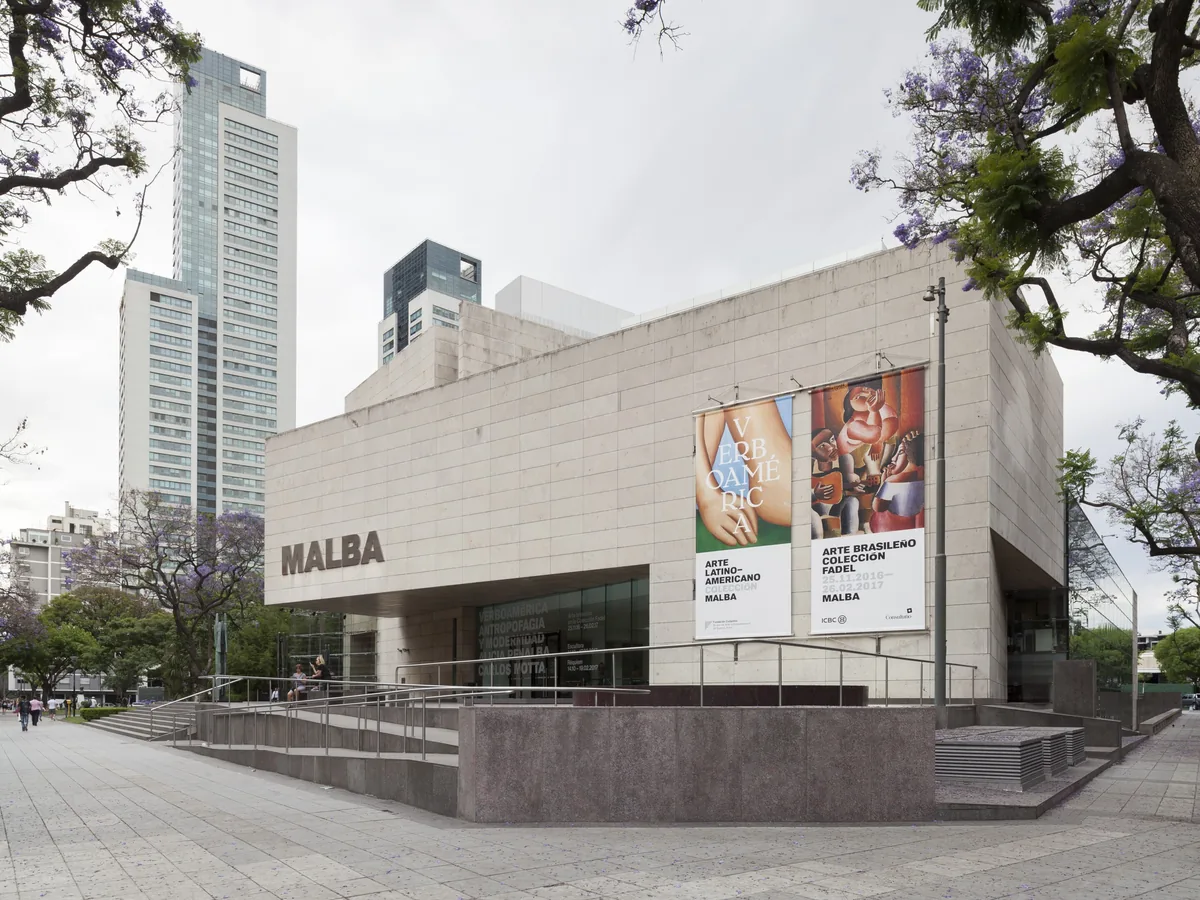
Buenos Aires often looks to Europe for its architectural cues, but inside this limestone and glass angular shell on Avenida Figueroa Alcorta, the heart beats purely for Latin America. The Museo de Arte Latinoamericano de Buenos Aires, universally known as MALBA, is the continent's cultural mirror. It houses a collection that refuses to be sidelined by the traditional Western canon, showcasing the political upheavals, surrealist dreams, and indigenous roots of a region in constant flux. Sunlight pours through soaring glass atriums, illuminating a space that feels more like a cathedral to modern thought than a sterile gallery. Here, the giants of the 20th century share walls with radical contemporary voices, creating a dialogue that spans from the Mexican Revolution to the digital age.
Buenos Aires often looks to Europe for its architectural cues, but inside this limestone and glass angular shell on Avenida Figueroa Alcorta, the heart beats purely for Latin America.
Eduardo Costantini, a billionaire developer
Eduardo Costantini, a billionaire developer and passionate collector, decided at the turn of the millennium that his private hoard of masterpieces belonged to the public. He donated over two hundred works to start the foundation, including pieces he had famously outbid international museums for at auction. The building itself was the result of a global competition, won by a trio of young Cordoban architects who designed a deconstructivist puzzle of intersecting planes. Since its opening in September 2001, just as Argentina spiraled into one of its worst economic crises, the museum has stood as a defiant symbol of intellectual resilience. It transformed a sleepy corner of Palermo into a global art destination, proving that the city's hunger for culture could survive even its most turbulent seasons.
Walking up the central escalator,
Walking up the central escalator, the shift from the busy roar of the avenue to a meditative, high-ceilinged quiet. The interior is cool and carries the faint, clean scent of floor wax and expensive paper. Visitors generally head straight for Tarsila do Amaral’s 'Abaporu' or Frida Kahlo’s haunting self-portraits, but the real power of the space lies in the transitions between rooms. The thing that hits is how the limestone walls absorb the bright Argentine sun, casting soft shadows across the geometric sculptures of the Madi movement. In the late afternoon, the light hits the glass facade in a way that reflects the jacaranda trees outside, blurring the line between the curated art and the vibrant city. The chatter in the galleries is often a mix of academic debate and the soft shuffle of leather soles on polished wood.
Palermo Chico provides the refined backdrop
Palermo Chico provides the refined backdrop for the museum, making it easily reachable by a long walk through the neighboring rose gardens and parks. Several major bus lines, known locally as colectivos, cruise down the avenue, dropping you almost at the doorstep of the striking, sharp-edged entrance. Many choose to arrive by taxi or bicycle, taking advantage of the wide, tree-lined boulevards that define this part of the capital. The museum stays open later than most on Wednesdays, offering a discounted entry that draws a younger, more local crowd. After a few hours among the canvases, the ground-floor cafe is the perfect decompression chamber, offering strong espresso and a view of the sculpture terrace where the city’s elite and its artists often mingle.
Palermo Chico provides the refined backdrop for the museum, making it easily reachable by a long walk through the neighboring rose gardens and parks.
The Experience
What you see first is a specific kind of stillness in the room housing Xul Solar’s esoteric watercolors, a contrast to the kinetic energy found in the sprawling installation spaces downstairs. The museum has a way of making you feel the heat of the Mexican sun or the dampness of the Amazon through a brushstroke, all while you are cocooned in a climate-controlled sanctuary of stone. A floor beneath you hum slightly as a group of local school children debates a provocative piece of conceptual art with unexpected ferocity. The experience is best finished at the museum cinema, where the smell of old film reels and the hushed anticipation of a discerning audience remind you that art here is a living, breathing social contract.
Why It Matters
MALBA is the only institution on the planet dedicated solely to the preservation and promotion of Latin American art from the early 20th century to the present. It serves as a necessary corrective to the Eurocentric art world, giving a voice to the social and aesthetic movements that define the southern hemisphere. Its existence ensures that the visual heritage of the continent remains in the continent, accessible to the people who inspired it.
Why Visit
Don't go to MALBA just for the big names like Rivera or Botero; go because it is the most sophisticated lens through which to understand the complex soul of Latin America. It offers a curated walk through a century of revolution and dreaming that you simply cannot find in the Louvre or the Tate. It is the smartest hour you can spend in Buenos Aires.
✦ Insider Tips
- 1
Visit on a Wednesday afternoon when admission is half-price and the galleries are filled with the vibrant energy of local students and artists.
- 2
Check the basement cinema schedule for rare 35mm screenings of classic Argentine films that you won't find on any streaming platform.
- 3
Look for the smaller, less-crowded galleries on the second floor which often house experimental works by the Madi and Concrete art movements.
- 4
Order a 'cortado' at the museum cafe and sit near the window to observe the high-fashion parades of Palermo Chico's residents.
- 5
Buy your tickets online in advance to bypass the humid queue that often snakes around the limestone corner on weekends.