“The first national park in Latin America was born from a private gift of seven thousand hectares, intended to preserve a lake so deep it has its own resident monster legend.”
About Nahuel Huapi National Park
The park's legal foundation was laid in 1903 when Francisco Moreno donated his personal land grants back to the state, effectively creating a sanctuary from the encroaching agricultural frontier. Originally known as the Parque Nacional del Sud, it was renamed in 1934 and significantly expanded to its current size of over seven hundred thousand hectares. This era coincided with a massive public works project aimed at turning the remote outpost of Bariloche into a world-class destination, modeled after the mountain resorts of Europe. Despite the influx of tourism and the development of the Catedral ski resort, the park's interior remains an impenetrable labyrinth of peaks and old-growth forests. It has survived as a delicate balance between a playground for the mountaineering elite and a critical refuge for the endangered huemul deer.
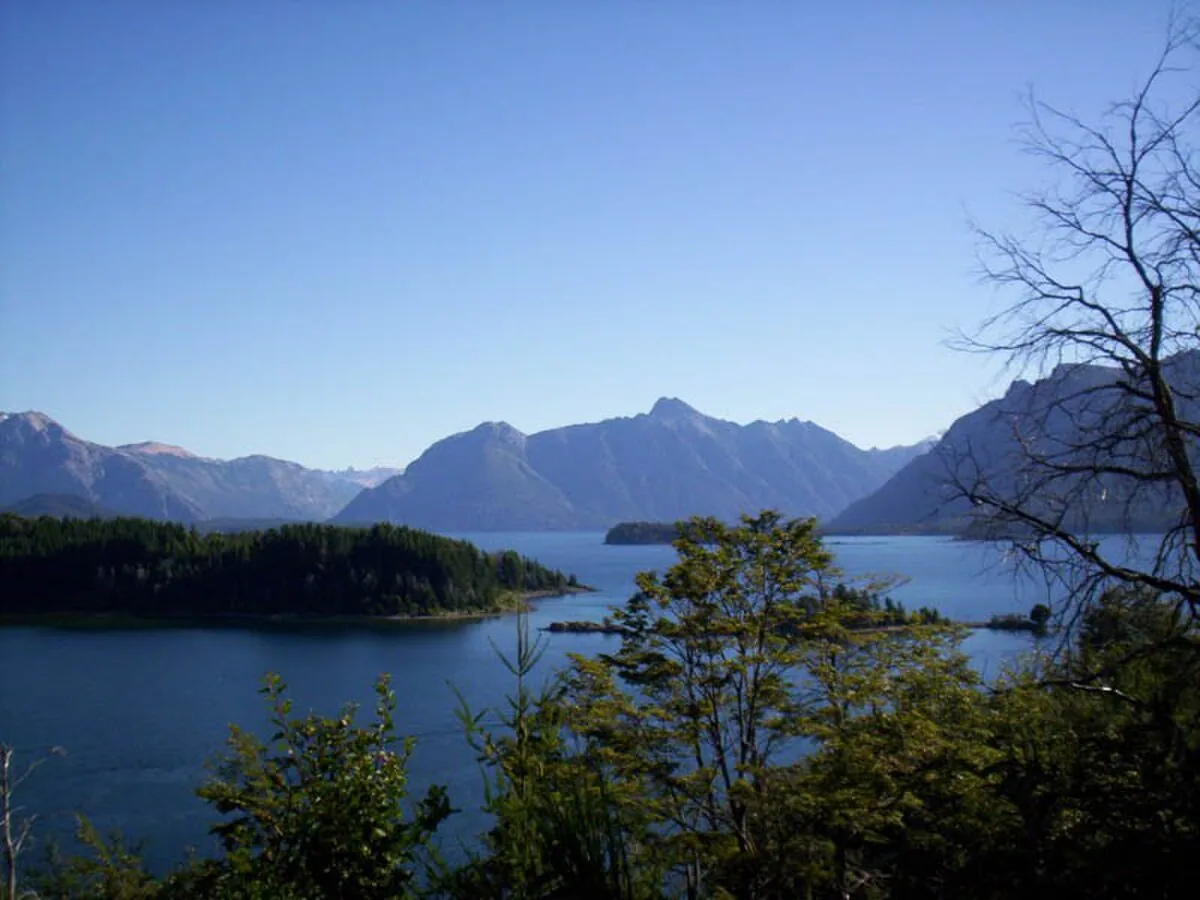
Deep within the lake district of northern Patagonia
Deep within the lake district of northern Patagonia, the landscape feels less like a park and more like an ancient kingdom where the water owns the light. Nahuel Huapi National Park protects a sprawling network of glacial fjords and Valdivian rainforests that spill down from the jagged peaks of the Andes. The space carries a sharp, pine-heavy perfume mixed with the metallic tang of melting snow, a scent so clean it is like a physical tonic. At the heart of it all lies the eponymous lake, a body of water so vast and blue it appears to be a fallen piece of the sky, cradling islands where myrtle trees grow with cinnamon-colored bark. This is a collection of deep greens and startling indigos, where the wind off the ice fields creates a constant, restless music through the branches of the coihue trees.
Deep within the lake district of northern Patagonia, the landscape feels less like a park and more like an ancient kingdom where the water owns the light.
Argentina owes this wild expanse
Argentina owes this wild expanse to a single, extraordinary act of generosity by Francisco Moreno, the explorer known as Perito Moreno. In 1903, he donated three leagues of land to the national government with the express wish that the area remain untouched for the enjoyment of future generations. This gesture established the first national park in Latin America, though the region had long been the ancestral territory of the Mapuche and Tehuelche peoples, who named the lake the Island of the Tiger. Throughout the mid-20th century, the architect Alejandro Bustillo shaped the human footprint here, designing the iconic Llao Llao Hotel and the civic center of Bariloche using local stone and heavy timber. His Alpine-Andean aesthetic created a visual language that makes the human settlements feel like a natural extension of the granite cliffs.
Standing on the shore of a secluded bay like Puerto Blest, The water is so clear that the sunken trunks of ancient trees are visible twenty feet below the surface. The silence in the Arrayanes forest is peculiar, muffled by the soft, sponge-like texture of the orange bark and the damp moss underfoot. The gravity of the temperature drop as the shadows of the peaks stretch across the water in the late afternoon, turning the lake from a bright turquoise to a brooding, deep navy. While many visitors crowd the panoramic viewpoints of the Circuito Chico, the real magic happens on the higher trails like the climb to Refugio Frey. Up there, the sound of the city vanishes, replaced by the clatter of loose scree and the occasional thundering crack of a distant glacier calving on Mount Tronador. The way the light catches the condors circling the spires, their wingspan a mark of the true scale of this wilderness. San Carlos de Bariloche is the busy, chocolate-scented entry point to the park, accessible by a short flight from Buenos Aires or a scenic drive across the Patagonian steppe. From the city center, a network of winding roads leads into the deeper recesses of the forest, where the tarmac eventually gives way to gravel and dust. Small ferries and private launches depart from Puerto Pañuelo, cutting through the deep glacial waters to reach the more isolated western arms of the lake where roads simply do not exist. For those who prefer a slower immersion, the Seven Lakes Road begins its journey northward from the park's edge, snaking through a succession of smaller, emerald-colored basins that offer a quieter alternative to the main lake's grandeur.
The Experience
It starts with the water of the lake is surprisingly soft to the touch, a liquid velvet that remains bone-chillingly cold even in the height of January. The wind, known as the Puelche, can whip the surface into white-capped waves in a matter of minutes, a reminder that this is an inland sea with its own unpredictable weather systems. Part of the transition from the dry, golden grasses of the eastern steppe to the dripping, lush ferns of the western rainforest as you cross the park's longitudinal span. The most haunting moment is the view of the 'Black Glacier' at the base of Mount Tronador, where the ice is stained dark with volcanic grit and the air vibrates with the roar of waterfalls cascading off the heights. It is a place that feels unfinished, as if the glaciers are still actively carving the valleys while you watch.
It starts with the water of the lake is surprisingly soft to the touch, a liquid velvet that remains bone-chillingly cold even in the height of January.
Why It Matters
Nahuel Huapi is the core of Argentine conservation, serving as the biological bridge between the high Andes and the southern forests. It preserves the unique Valdivian temperate rainforest, a rare ecosystem found nowhere else on earth outside of the southern tip of South America. Culturally, it is the birthplace of the nation's mountain culture, where the traditions of European alpinism fused with Argentine grit to create a unique identity centered on the respect for wild spaces.
Why Visit
Forget the manicured parks of North America; Nahuel Huapi offers a raw, gargantuan beauty where the scale is almost impossible to photograph. You come here to find the kind of solitude that only exists at the edge of a glacial fjord, where the trees are older than the cities and the water is pure enough to drink directly from the source. It is the definitive Patagonian dream.
✦ Insider Tips
- 1
Look for the 'monito del monte,' a tiny, nocturnal marsupial that is a living fossil, found in the damp undergrowth of the coihue forests.
- 2
Order a hot chocolate at the Llao Llao Hotel's Winter Garden just to sit behind the massive glass windows as the storm clouds roll over the peaks.
- 3
Hike the trail to Cerro Campanario instead of taking the chairlift; the physical effort makes the 360-degree view at the summit feel earned.
- 4
Pack a high-quality windbreaker even in mid-summer, as the gusts off the Nahuel Huapi lake can drop the perceived temperature by ten degrees in seconds.