“A thriving community of four thousand artisans and scholars vanished into the Argentine jungle in 1767, leaving behind blood-red sandstone cathedrals that the vines refuse to fully digest.”
About San Ignacio Miní
The Jesuits and the Guaraní first joined forces here to escape the brutal 'Bandeirantes' slave traders of São Paulo. After a grueling relocation in 1696, they constructed a city that rivaled European capitals in its planning, complete with hospitals, schools, and an asylum. The Guaraní did not just provide labor; they were the primary architects, infusing Christian iconography with local flora and fauna. Following the sudden Jesuit expulsion in 1767, the inhabitants gradually dispersed into the forest. By the time the writer Leopoldo Lugones visited in 1903, the site was a romantic ruin so choked by vegetation that the massive church facade was barely visible through the brush.
What San Ignacio Miní actually is
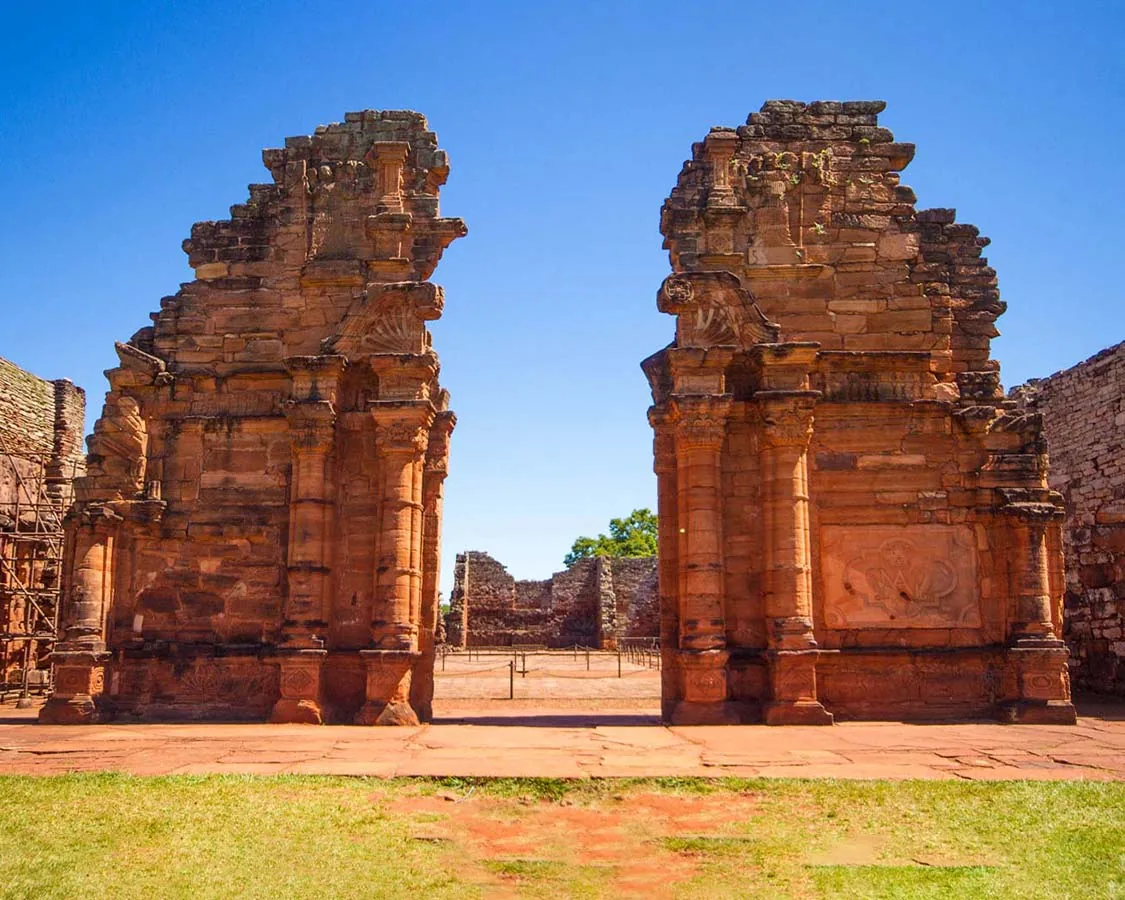
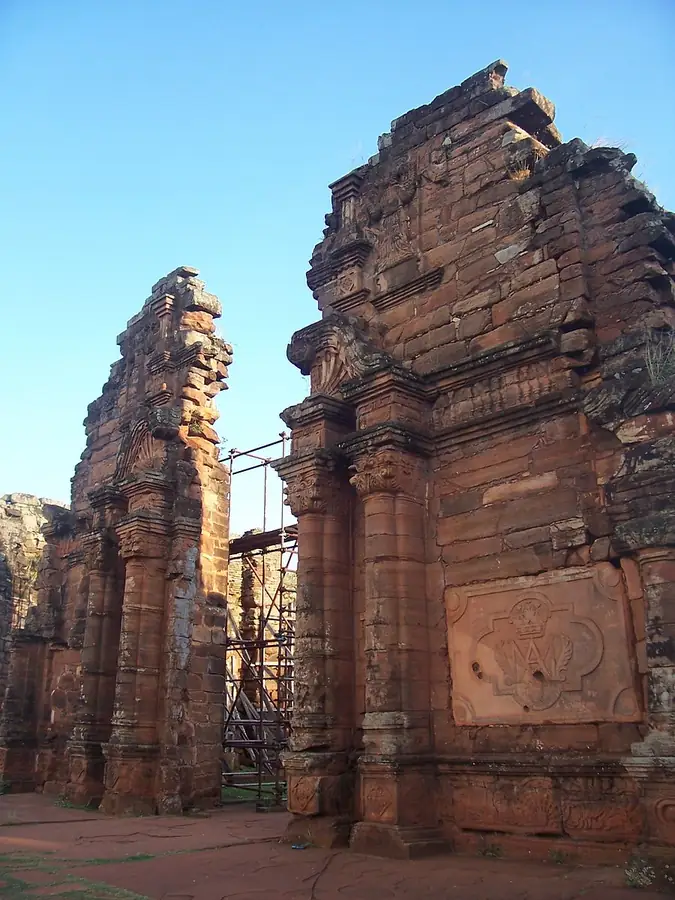
Deep within the humid, rust-colored soil of Misiones, the skeletons of a lost utopia rise from the encroaching canopy. San Ignacio Miní represents the high-water mark of the Jesuit-Guaraní missions, a massive 17th-century experiment in communal living and baroque artistry that once housed over three thousand people. The sandstone walls glow with a deep, blood-orange hue that contrasts sharply against the electric green of the Argentine jungle. Unlike many ruins that feel discarded by time, these arches and facades possess a deliberate, haunting grace. They stand as a rare fusion of European geometry and indigenous craftsmanship, where every carved cherub bears the distinct features of the Guaraní people who built this sanctuary.
Deep within the humid, rust-colored soil of Misiones, the skeletons of a lost utopia rise from the encroaching canopy.
History
Jesuit missionaries founded the original settlement in 1610, but the threat of slave hunters from Brazil forced the entire community to migrate south in a desperate exodus. They finally established this permanent site in 1696, carving a sophisticated urban grid out of the wilderness. For nearly a century, the mission thrived as a semi-autonomous state within the Spanish Empire, operating with a level of social organization that fascinated and threatened the European powers. The Guaraní masters became famous for their printing presses, musical instruments, and intricate masonry. This unique era ended abruptly in 1767 when King Charles III of Spain, fearing the Jesuits' growing influence, expelled the order from all Spanish territories. Within decades, the jungle reclaimed the plazas, and the mission vanished beneath a shroud of vines until its rediscovery and restoration in the 1940s.
Walking into the central plaza,
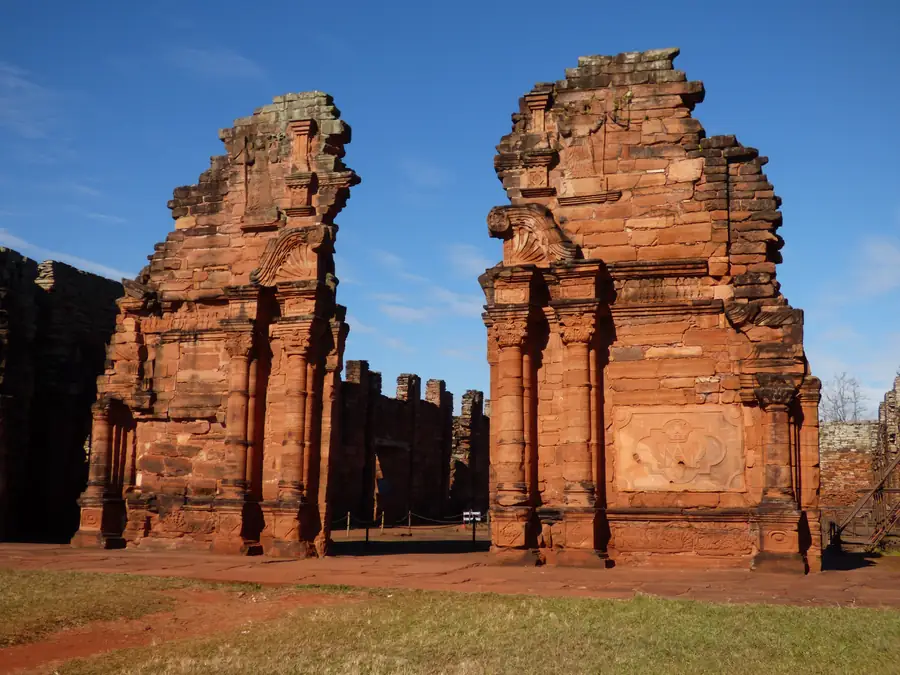
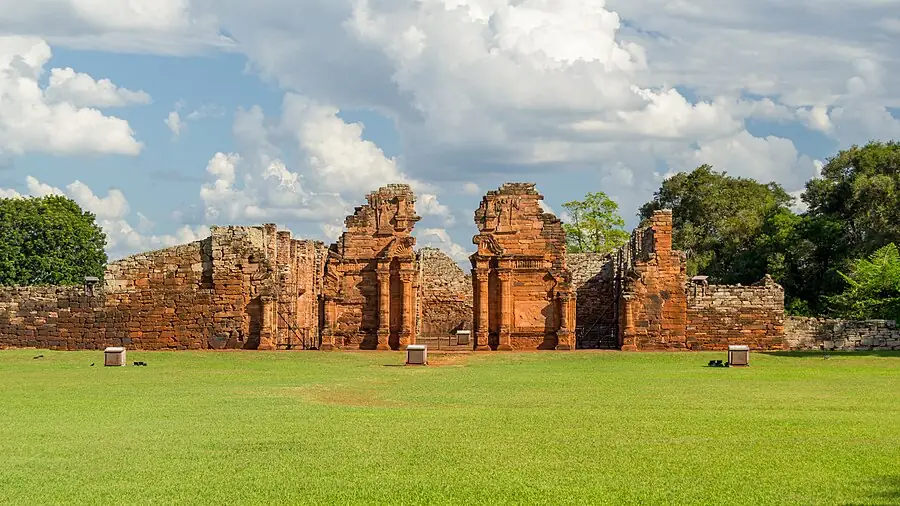
Walking into the central plaza, the heavy, perfume-laden air of the Misiones rainforest settle around you. The silence is profound, broken only by the rhythmic hum of cicadas and the occasional call of a toucan from the surrounding lapacho trees. The grain of the asperón sandstone, surprisingly warm to the touch and worn smooth by centuries of subtropical rain. The main portal of the church is the centerpiece, where the light at midday catches the deep relief of stone-carved lilies and palm leaves. Passing through the threshold of what was once the grandest church in the region, seeing the massive stone pillars that once supported a timber roof, now opening directly to the southern sky. The scale of the living quarters and workshops reveals a level of domestic sophistication that feels remarkably modern.
The ruins sit on the edge
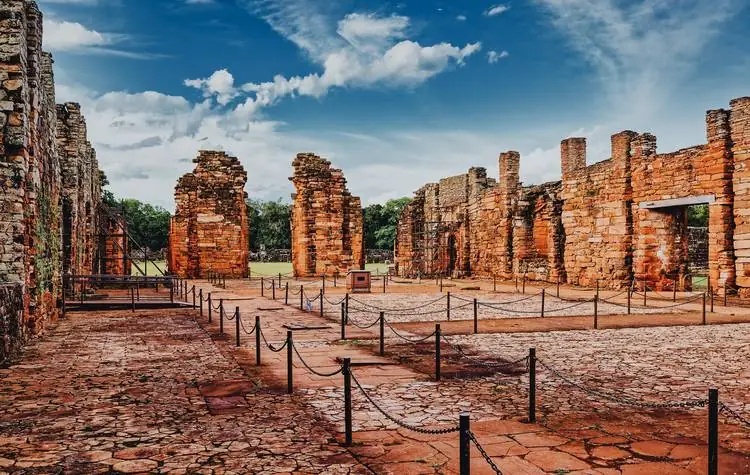
The ruins sit on the edge of the modern town of San Ignacio, roughly sixty kilometers north of Posadas along National Route 12. People typically arrive via long-distance bus from Puerto Iguazú, making the three-hour route through a landscape of yerba mate plantations and red-dirt tracks. The entrance to the site includes an interpretation center that provides essential context before stepping onto the historic grounds. Visiting during the late afternoon allows you to stay for the evening light-and-sound show, where holographic projections onto the ruins and the trees tell the story of the mission’s rise and fall in a surprisingly moving, immersive display.
The ruins sit on the edge of the modern town of San Ignacio, roughly sixty kilometers north of Posadas along National Route 12.
The Experience
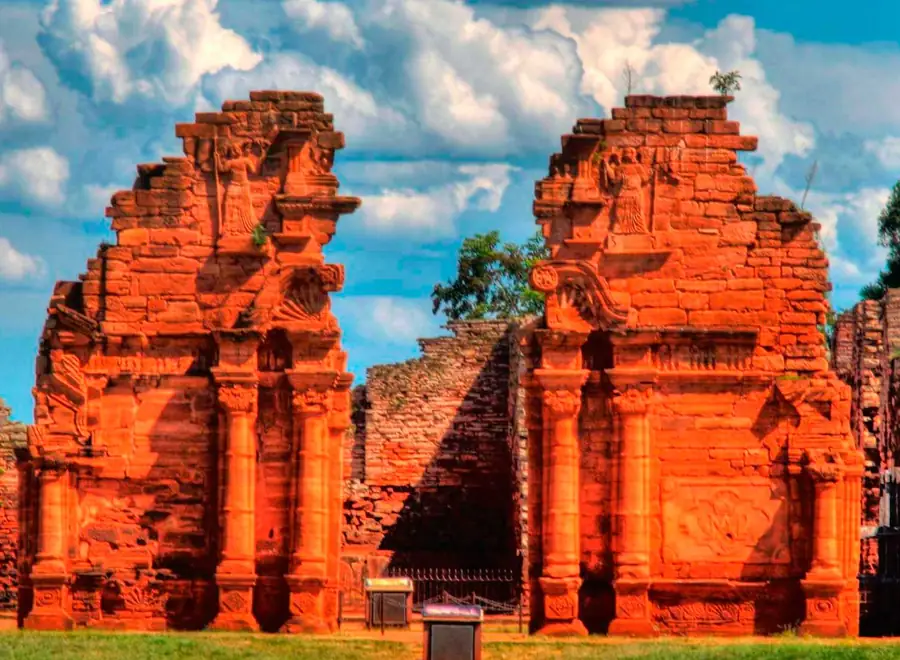
The red dust of Misiones clinging to your shoes the moment you step off the pavement and onto the mission grounds. The sun feels different here, filtered through a canopy that seems to be constantly trying to reclaim the stone. Within the center of the nave, you feel the sheer ambition of the builders; the walls are two meters thick, yet they appear light and airy thanks to the delicate carvings. The most striking detail is often missed by those in a hurry: the footprints of the original inhabitants are sometimes still visible in the ancient tiles of the workshops. As the sun dips, the orange sandstone turns a deep, fiery crimson that makes the ruins look as though they are glowing from within.
Why It Matters
San Ignacio Miní is the most complete example of the 'Reducciones,' a social and architectural model that remains one of history's most debated colonial experiments. It is a physical archive of a brief period where two disparate cultures collaborated to create a unique third identity. The site proves that the jungle can be an ally as much as an adversary, preserving the records of a civilization that would otherwise have been erased by the passage of time.
Why Visit
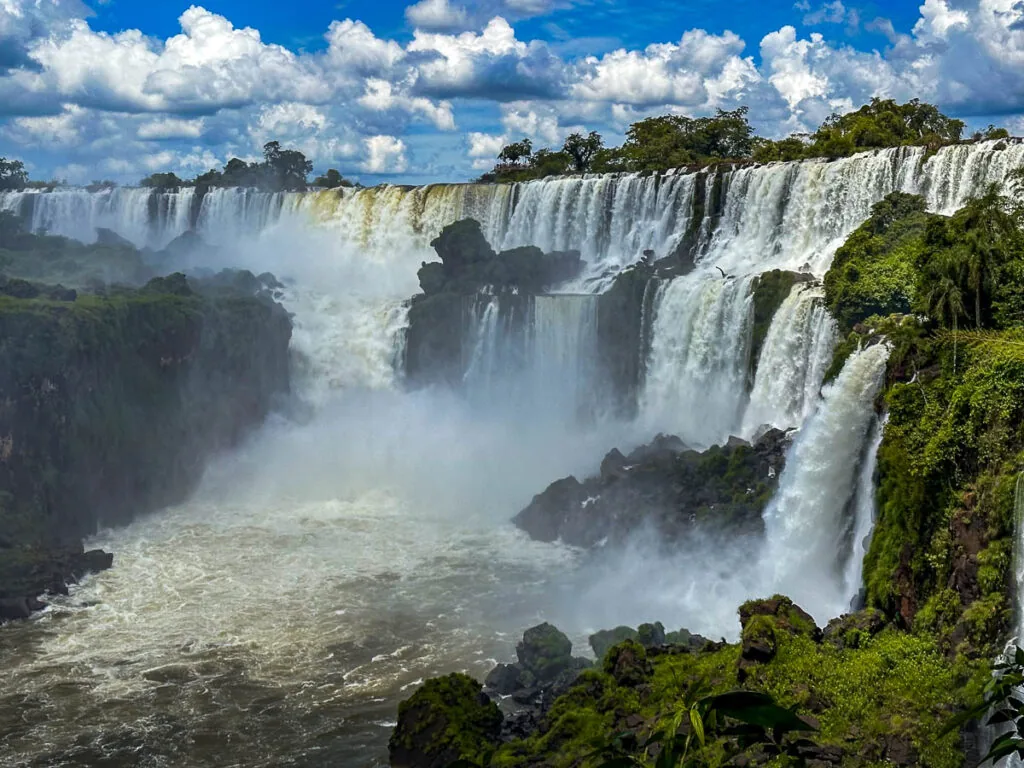
Iguazú Falls offers the power of nature, but San Ignacio offers the weight of the human spirit. While other ruins feel like dead monuments, these red walls feel like they are waiting for the music to start again. It provides the quiet, contemplative counterpoint to the thunder of the waterfalls, showing you the soul of a province that was once the world's most successful social experiment.
✦ Insider Tips
- 1
Look for the carved motifs of corn and citrus fruits in the church facade, which replaced traditional European grapes and wheat as a nod to local agriculture.
- 2
Stay for the evening light show to see holographic Guaraní figures projected onto the stone, which helps reconstruct the scale of the vanished community.
- 3
Avoid visiting during the high noon heat when the red soil reflects the sun intensely; the shadows of early morning offer far more detail for photography.
- 4
Check the small museum's collection of Guaraní-made musical instruments to understand the incredibly high level of craftsmanship achieved here.
- 5
Walk to the very edge of the residential blocks to find the remnants of the ingenious drainage system that kept the mission dry during tropical downpours.