Vineyards in this high-altitude desert are irrigated by prehistoric glaciers, producing grapes that struggle for survival against an ultraviolet sun only to produce the world's most elegant red wines.
About Valle de Uco
The valley’s modern prestige is a relatively new chapter in an ancient agricultural story that began with the Huarpe people carving water channels into the desert. Over the centuries, the region was dominated by hardy cattle and alfalfa until a group of visionaries in the 1990s bet their fortunes on the valley's extreme altitude. They moved away from the traditional, warm-climate estates of Maipú and Luján de Cuyo, seeking the 'cool-climate' potential of the mountain foothills. This gamble attracted French, Italian, and American investment, leading to a decade of explosive growth where world-renowned architects were commissioned to build wineries that doubled as geometric sculptures. The resulting landscape is a hybrid of ancient irrigation wisdom and 21st-century luxury, where a single frost can still threaten a vintage worth millions.
What Valle de Uco actually is
High above the sleepy plains of Mendoza, the earth rises in a series of alluvial fans that push the vineyards toward the very limits of the sky. Valle de Uco is the dramatic frontier of Argentine viticulture, where the Andes mountains don't just provide a backdrop but actively dictate the character of everything that grows. On all sides, The air is thin, sharp, and carries the scent of wild jarilla and sun-baked granite. Vineyards cling to the slopes at elevations exceeding 1,200 meters, thriving in a landscape of intense ultraviolet light and drastic thermal shifts that force the grapes to develop thick skins and concentrated flavors. This is a region defined by its austerity and its verticality, a place where the meltwater from ancient glaciers is the only thing standing between a lush harvest and the encroaching desert.
“High above the sleepy plains of Mendoza, the earth rises in a series of alluvial fans that push the vineyards toward the very limits of the sky.”
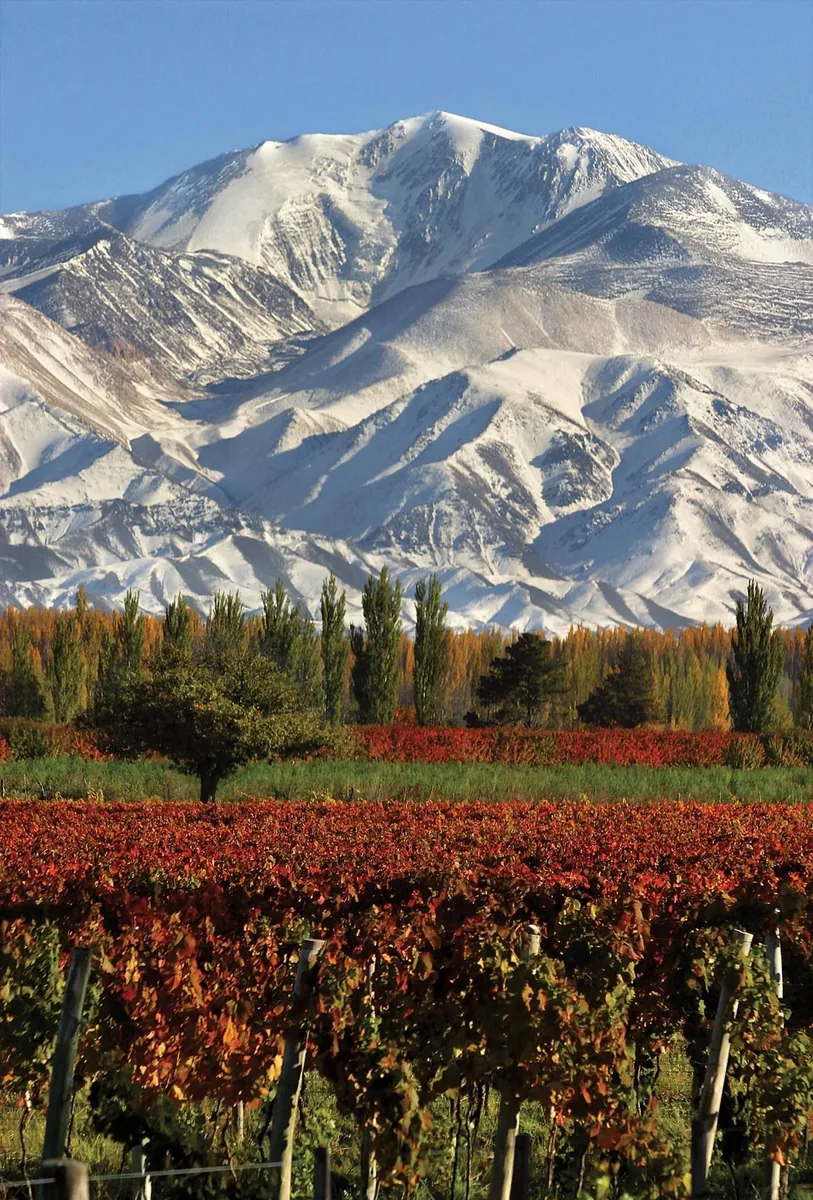
Valle de Uco, Argentina
Long before the first Malbec vines arrived
Long before the first Malbec vines arrived, the indigenous Huarpe people managed the valley's arid climate with an ingenious system of acequias, or hand-dug irrigation canals, that directed Andean runoff across the parched soil. Jesuit missionaries later refined these techniques, planting the first primitive vineyards for sacramental wine, but the valley remained a rugged backwater for centuries. The true revolution occurred in the late 1990s when pioneering oenologists like Nicolas Catena Zapata and international consultants like Michel Rolland looked toward the higher, cooler altitudes of Tupungato and Tunuyán. They realized that the stony, limestone-rich soils near the mountain peaks could produce wines with a structural elegance and acidity previously thought impossible in the heat of South America. This shift transformed a quiet agricultural valley into a global architectural showcase, with avant-garde wineries rising like concrete cathedrals among the old vines.
Standing in a vineyard at dusk,
Standing in a vineyard at dusk, the sudden, plummeting chill of the mountain air as the sun dips behind the Tupungato volcano. The light at this altitude has a crystalline quality that turns the rows of vines into deep violet silhouettes against the burning orange of the Andean sky. Immediately, the crunch of calcium-rich rocks beneath your feet, a textural reminder of the prehistoric seabed that once occupied this high desert. What is audible is dominated by a profound silence, occasionally broken by the whistle of the wind through the wire trellises or the call of a distant hawk. Inside the tasting rooms, the atmosphere is often one of quiet reverence, where the cool humidity of the barrel cellars provides a sensory refuge from the fierce Patagonian sun. You might catch a glimpse of a local gaucho moving through the sagebrush, a living link to a time before the valley was mapped by world-class sommeliers.
Reaching the valley requires a ninety-minute
Reaching the valley requires a ninety-minute drive south from the city of Mendoza along Route 40, a journey that tracks the jagged spine of the Cordillera de los Andes. The transition from the urban leafy boulevards of the city to the wide, sage-scented expanses of the valley happens quickly as the road climbs. Public transport is sparse and unreliable for visiting the scattered estates, so most explorers hire a private driver or rent a rugged vehicle capable of handling the gravel 'callejones' that lead to the most remote properties. The drive itself is part of the ritual, offering unobstructed views of peaks that stay snow-capped well into the summer, serving as a constant orientation point for anyone navigating this high-altitude maze.
“Reaching the valley requires a ninety-minute drive south from the city of Mendoza along Route 40, a journey that tracks the jagged spine of the Cordillera de los Andes.”
The Experience
Right away, the wind first; it is a dry, persistent force that smells of mineral dust and mountain herbs. As you move through the valley, the scale of the Andes becomes an overwhelming presence that makes the massive, modern wineries look like small stone toys. You get a intense heat of the sun on your neck while your feet remain cool in the shadows of the tall vines, a sensory contradiction that explains the complexity of the wine in your glass. The thing most visitors overlook is the color of the soil, which shifts from deep red clay to pale, chalky limestone within a few hundred meters. What lingers with you is lunch on a shaded terrace, eating salt-crusted beef as the mountain shadows slowly swallow the valley floor.
Why It Matters
Valle de Uco represents the pinnacle of the Argentine 'High Altitude' movement, a shift that redefined the country's wine identity on the global stage. It is born from human ingenuity in an environment that is naturally hostile to agriculture. Culturally, it has become a sanctuary for both traditional gaucho heritage and modern, sustainable architecture, balancing the rugged past with a sophisticated future.
Why Visit
Maipú offers history, but Valle de Uco offers the future of wine in its most dramatic setting. You come here to see what happens when the world's best winemakers are given a blank slate at the foot of the world's longest mountain range. It is the only place where you can taste the literal taste of limestone and altitude in a glass of Malbec while looking at the snow that watered it.
Insider Tips
- 1
Hire a driver for the day because the distances between wineries are deceptive and the high altitude makes the effect of a wine tasting much more potent.
- 2
Look for the 'Concrete Egg' fermentation tanks in the newer wineries, a design innovation that was largely popularized right here in the valley.
- 3
Ask to see the soil pits in the vineyards to see the different layers of volcanic ash and river stones that give the wines their specific minerality.
- 4
Make lunch your main event at a winery restaurant like Siete Fuegos or La Azul, as the views and slow-paced service are as important as the food.