Two billion years of planetary history are stacked like thin sheets of iron here, yet the only way to read them is to crawl through crevices barely wider than a human shoulders.
About Karijini National Park
The bedrock of Karijini was laid down in a prehistoric sea, where layers of iron and silica settled in a rhythmic dance before being thrust upward by tectonic shifts. Aboriginal Australians have managed this landscape for over 30,000 years, using fire and deep knowledge of the seasonal waterholes to thrive in what outsiders once considered a wasteland. In the 1860s, surveyor F.T. Gregory led the first European expedition into the Hamersley Range, largely ignored by the colonial government until the massive iron ore discoveries of the 20th century. While the surrounding regions were transformed into some of the largest open-cut mines on Earth, Karijini was carved out as a preserve of the original wilderness. Its history is one of resilience, surviving both geological upheaval and the industrial appetite of the modern world.
What Karijini National Park actually is
Deep within the Hamersley Range of Western Australia, the earth appears to have been pulled apart by a giant hand, revealing a subterranean world of terrifying beauty. Karijini National Park is a landscape of profound verticality where the flat, spinifex-choked plains of the Pilbara suddenly drop into narrow, serpentine chasms of banded iron formation. The red dust of the surface gives way to walls of polished hematite that glow with a dark, metallic luster, shifting from deep violet to bruised crimson as the sun passes overhead. Water is the sculptor here, trickling through ancient rock layers to create permanent emerald pools that mirror the sliver of sky far above. Passing through these gorges feels like descending into the very cooling vents of the planet, where the air grows noticeably damp and the scent of wet stone replaces the dry heat of the desert.
“Deep within the Hamersley Range of Western Australia, the earth appears to have been pulled apart by a giant hand, revealing a subterranean world of terrifying beauty.”
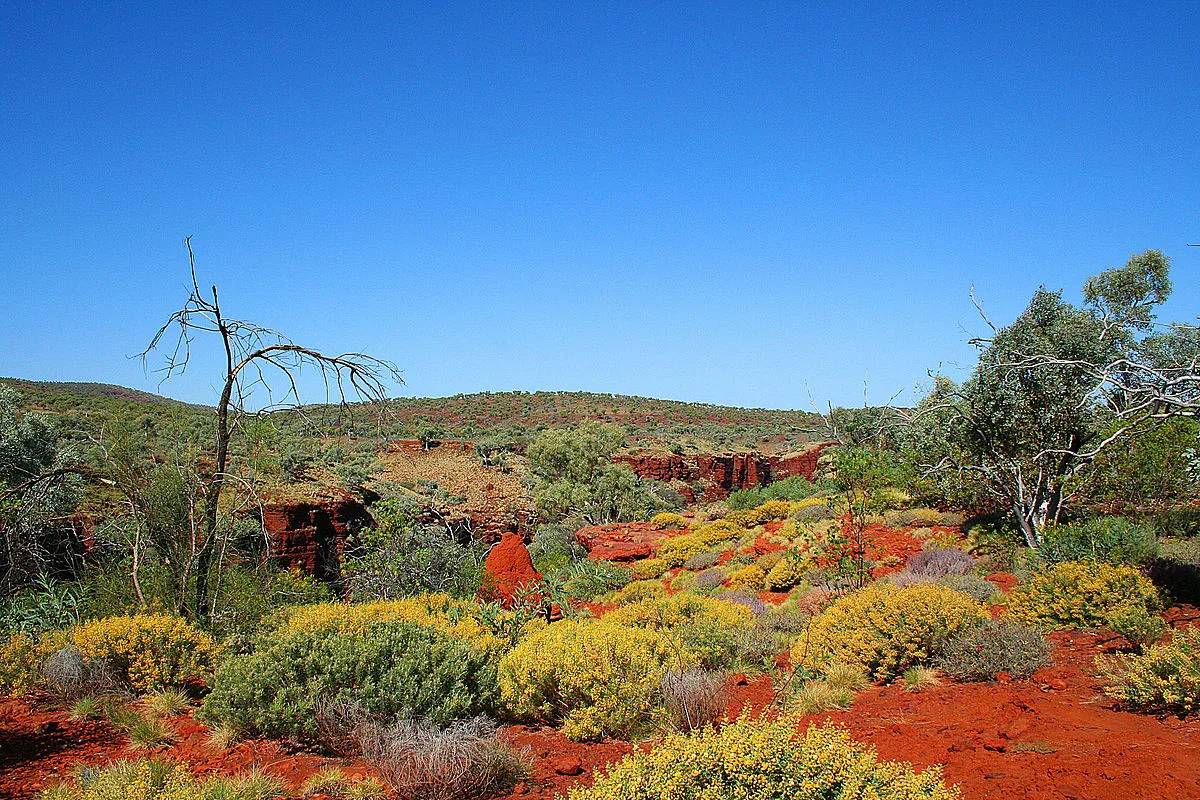
Karijini National Park, Australia
Geological time scales here are almost
Geological time scales here are almost impossible to comprehend, with the iron-rich deposits of the Brockman Formation dating back over two billion years to a time when the earth’s atmosphere was still forming. For the Banyjima, Kurrama, and Innawonga people, this is a sacred landscape where the spirit of the land remains etched into the rock and the water. European explorers only began to document the area in the mid-19th century, but it wasn't until the 1970s that the park was formally protected from the surrounding iron ore mining interests. The name Karijini was officially restored in 1991, acknowledging the deep and unbroken connection the traditional owners have maintained with these gorges through tens of thousands of years. Today, the park is a bridge between the industrial might of the Pilbara’s mines and the primordial silence of the Australian interior.
Spider-walking through Hancock Gorge, The textured ridges of the rock provide a cool, rhythmic grip for your fingers while your boots splash through shallow, subterranean streams. The sound is dominated by the echoing drip of water and the sudden, shrill whistle of a rock pigeon vibrating against the narrow canyon walls. The temperature plummet the moment you step into the shadows of Weano Gorge, a welcome relief that quickly turns into a bracing chill if you swim in the light-deprived pools of Handrail Pool. The majority of visitors stick to the lookout platforms, but The subtle shifting of the light at Oxer Lookout, where four massive river systems converge into a single, dizzying point of geological violence. The element that stays with you is floating on your back in Spa Pool, looking up at the billion-year-old rock layers that resemble the pages of a giant, stone book. The smell of native lemongrass clinging to the cliff edges, a sharp, clean fragrance that cuts through the earthy musk of the canyon floor. Reaching this remote sanctuary requires a commitment to the long haul, usually involving a flight into the mining town of Paraburdoo or a grueling multi-day drive from Perth. The final stretch involves navigating corrugated gravel roads that vibrate through the chassis of your vehicle, kicking up plumes of iron-rich dust that coat everything in a fine red powder. This physical transition is necessary; it strips away the bustle of the coast and prepares you for the absolute isolation of the park. Arriving at the Karijini Eco Retreat, you are greeted by a horizon that seems to stretch forever, punctuated only by the occasional silhouette of a termite mound or a stunted desert oak.
The Experience
Immediately, the way the metallic walls of the gorges hum with a low, sub-audible frequency when the wind catches the rim of the canyon. The light at mid-afternoon turns the water in Fern Pool into a vibrant, glowing jade that seems to emit its own internal phosphorescence. A remnant of the transition from the scorching sun of the plateau to the refrigerated air of the deep chasms, a sensory shift that makes the hair on your arms stand up. The thing most visitors overlook is the delicate filigree of ferns and mosses that thrive in the permanent shade of the Circular Pool, a micro-climate that shouldn't exist in the desert. What stays with you is the absolute darkness of a Pilbara night, where the Milky Way is so bright it casts actual shadows across the red earth.
Why It Matters
Karijini matters as a rare window into the 'Great Oxidation Event,' a pivotal moment in Earth's history when life began to fundamentally change the planet’s atmosphere. It is one of the few places where the ancient crust of the earth is exposed with such clarity and violence. Humanly, it represents a landscape of immense spiritual power that has remained largely unchanged since the first people arrived on the continent.
Why Visit
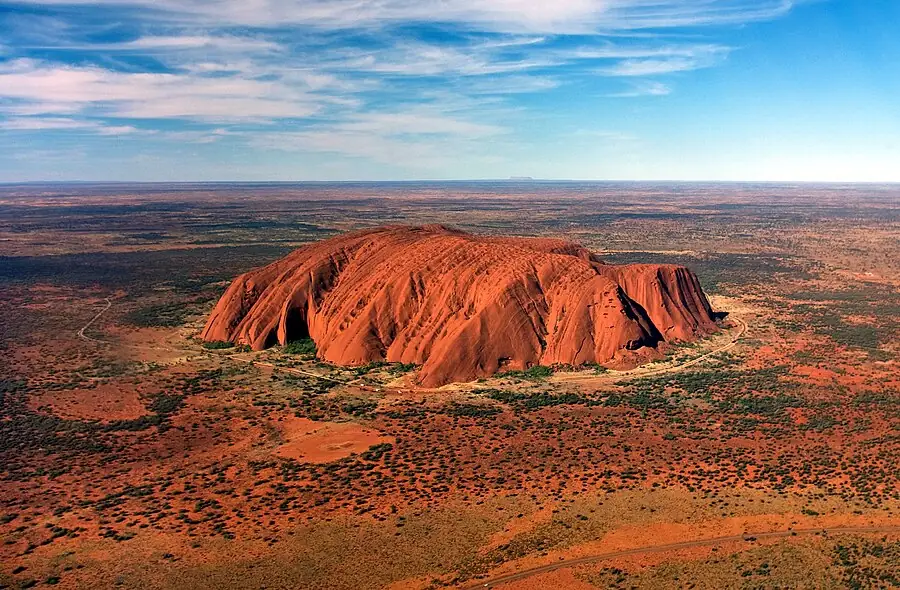
Uluru is a singular monument, but Karijini is an entire hidden world tucked beneath the surface of the earth. You visit because it demands a physical engagement, climbing, swimming, and squeezing, that turns a sightseeing trip into a visceral expedition. It offers a sense of discovery that feels increasingly rare in a mapped and photographed world.
Insider Tips
- 1
Pack a pair of sturdy water shoes with excellent grip, as the 'spider walk' sections through Hancock Gorge require navigating wet, polished rock surfaces.
- 2
Look for the wild dingoes that frequent the Dales Gorge area at dusk, but keep a respectful distance as they are true apex predators of the desert.
- 3
Check the water levels with park rangers before entering the narrowest slots, as flash floods can turn these serene canyons into death traps within minutes of a distant storm.
- 4
Bring a high-quality tripod for night photography; the lack of light pollution here makes the stars appear close enough to touch.
- 5
Try the 'natural spa' treatment by sitting under the small waterfall at Fern Pool, where the water temperature remains remarkably consistent year-round.