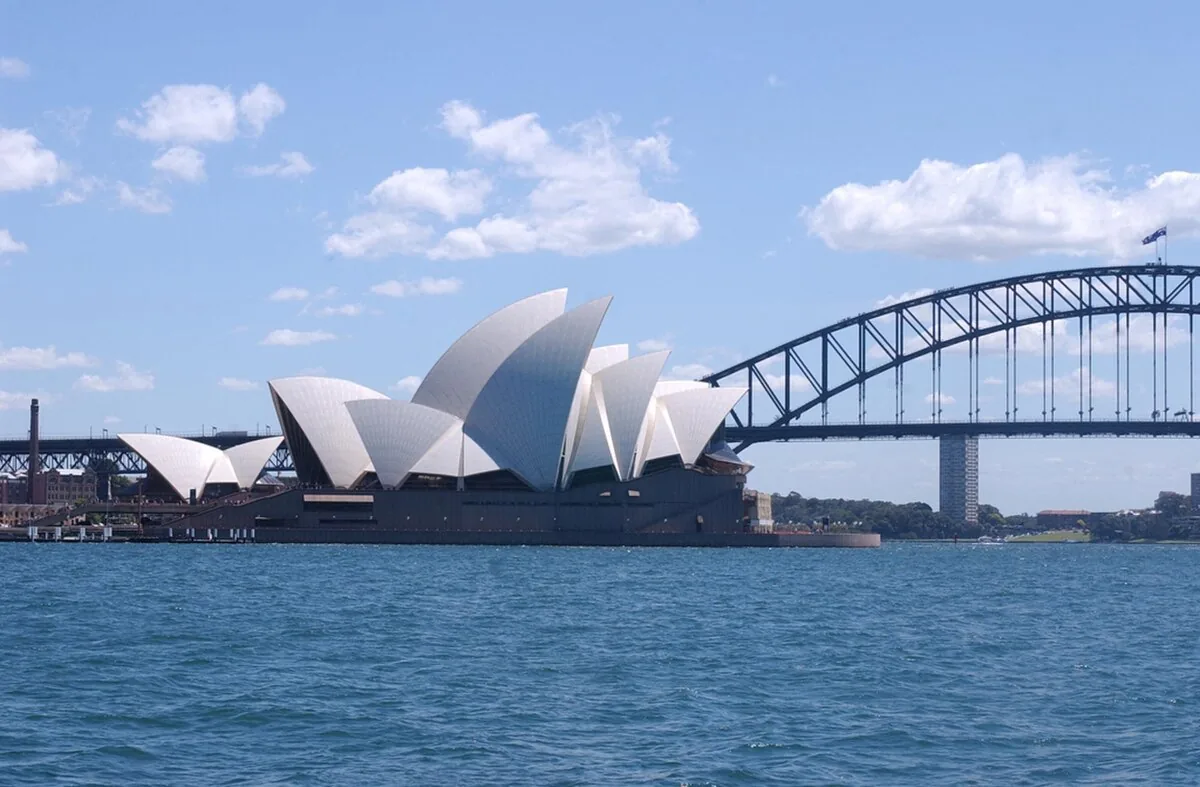
A single Danish architect’s rejected sketches were pulled from a bin to create this mountain of a million ceramic tiles, yet he never returned to see his completed masterpiece.
About Sydney Opera House
The site was once home to a defensive fort and later a tram depot before the New South Wales government launched an international design competition in 1955. Utzon's winning design was so radical that the engineering firm Ove Arup had to spend years developing a spherical geometry solution just to make the shells stand up. The project’s cost famously ballooned from seven million to over one hundred million Australian dollars, largely funded by a dedicated state lottery. Despite the architectural triumph, the interior remained a point of contention for decades, leading to a massive internal refurbishment in the early 2020s to finally achieve the acoustic perfection Utzon had originally envisioned. Today, the building serves as a busy working theater, hosting over 1,500 performances annually within its interlocking vaulted spaces.
Sydney Opera House in Australia
Bennelong Point juts into the salt-slicked air of the harbor, serving as a granite pedestal for a structure that redefined the skyline of the southern hemisphere. The Sydney Opera House does not merely sit by the water; it appears to have emerged from it, a series of pre-cast concrete shells that mimic the billowing sails of the tall ships once common in these waters. Standing beneath the soaring white peaks, The surface is not a uniform white but a complex mosaic of over a million chevron-shaped tiles that catch the Pacific light in a shifting dance of cream and pearl. The atmosphere carries the rhythmic pulse of the harbor, a mix of ferry whistles and the low thrum of the city, yet the granite platforms offer a sense of ancient permanence. Every angle reveals a new geometry, making the building feel less like a static object and more like a creature caught in mid-motion against the blue Tasman Sea.
“Bennelong Point juts into the salt-slicked air of the harbor, serving as a granite pedestal for a structure that redefined the skyline of the southern hemisphere.”
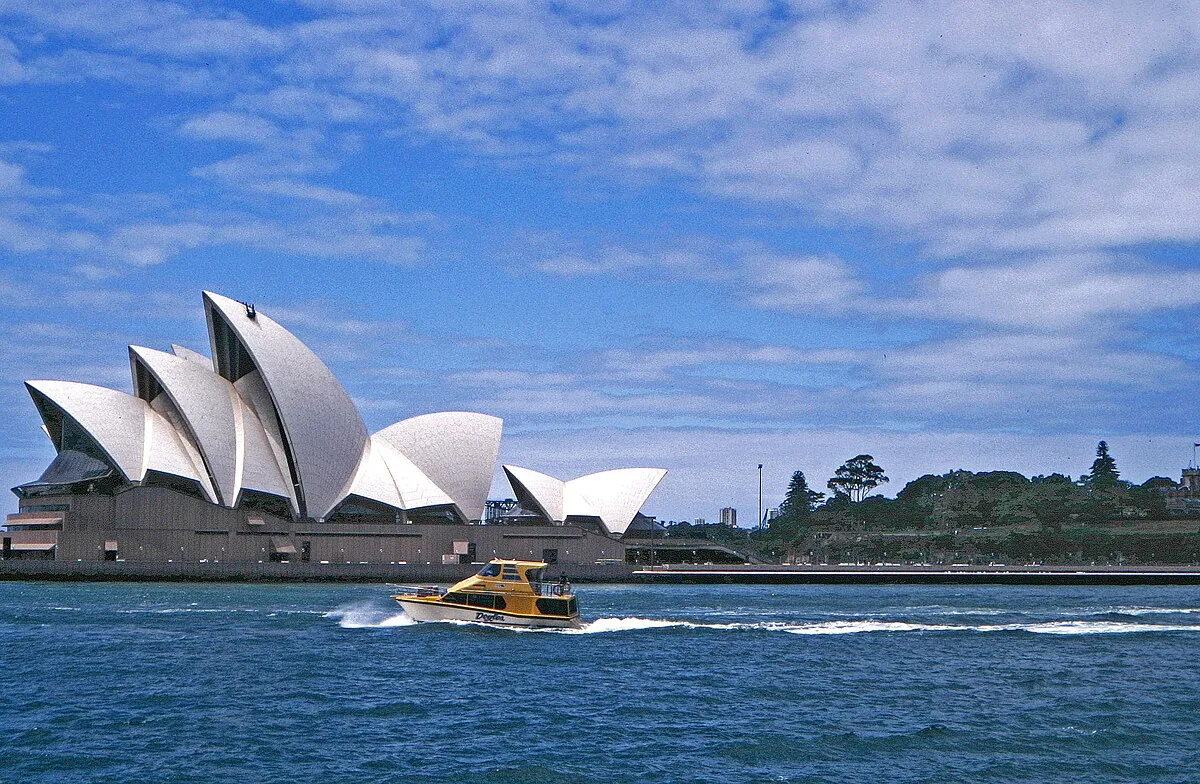
Sydney Opera House, Australia
series of sketches, 1957
Jørn Utzon, a relatively unknown Danish architect, submitted a series of sketches in 1957 that were famously salvaged from a pile of rejected entries by Eero Saarinen, who recognized a spark of genius the other judges had dismissed. The construction became a saga of engineering impossible shapes, as the technology to calculate the stress on the curved shells simply did not exist when ground was first broken. Utzon eventually resigned in 1966 following a bitter political dispute over rising costs and interior designs, leaving Australia before his masterpiece was ever completed. He never returned to see the finished work in person, a heartbreaking irony for the man who gave the continent its most recognizable silhouette. The building finally opened in 1973, with Queen Elizabeth II officiating a ceremony that marked the end of sixteen years of controversy and the beginning of a global cultural icon.
Running your hand along the exterior walls, you
Running your hand along the exterior walls, The unexpected texture of the Swedish ceramic tiles, which feel smooth and cool like eggshells against your palms. In your ears transitions abruptly the moment you enter the Concert Hall, where the air grows smelling of brush box and white birch timber used to tune the room's acoustics. You get a sense of compression in the low-ceilinged foyers before the space explodes upward into the ribbing of the concrete shells, making as though you are standing inside the skeleton of a great leviathan. Just about everyone stay on the broad public boardwalks, but The quiet, shaded nooks tucked under the monumental steps where the harbor breeze creates a pocket of stillness. The element that stays with you is watching the sunset from the western broadwalk, when the white sails turn a deep, bruised orange and the shadows of the harbor bridge stretch across the tiles like long, dark fingers.
Circular Quay is the primary route into
Circular Quay is the primary route into the Opera House, acting as a noisy transit hub where trains, buses, and ferries converge in a constant swirl of movement. Walking from the station toward Bennelong Point takes you along the water's edge, past the historic wharves and the street performers who provide a chaotic soundtrack to the approach. Many travelers choose to arrive by ferry from Manly or Rose Bay, a perspective that allows the building to grow from a small white dot on the horizon into a towering mountain of glass and concrete. This water-bound arrival remains the most dramatic way to experience the landmark, as it underscores the building's deep, inseparable connection to the tides and the wind of the Tasman Sea.
“Circular Quay is the primary route into the Opera House, acting as a noisy transit hub where trains, buses, and ferries converge in a constant swirl of movement.”
The Experience
Right away, the scent of the salt air thinning as you move into the deeper recesses of the house, replaced by the faint, elegant aroma of aged wood and velvet. The light inside is filtered through high glass walls that lean outward at impossible angles, offering a framed view of the harbor that feels like a living painting. The vibration of the great organ, the largest of its kind in the world, sending a low, tectonic hum through the floorboards during a rehearsal. The thing most visitors overlook is the Bennelong Restaurant tucked into one of the smaller shells, where the architecture creates an acoustic pocket that makes even a whisper feel profound. The piece that stays with you is standing on the steps at midnight, when the crowds have vanished and the building glows under the moonlight like a silent, prehistoric monument.
Why It Matters
The Sydney Opera House matters as the physical manifestation of a young nation's ambition, proving that world-class culture could thrive at the edge of the Pacific. It remains a pivotal moment in 20th-century engineering, representing the first major use of computer-aided design to solve structural paradoxes. Humanly, it is proof of the fact that even the most controversial and difficult visions can eventually become the very soul of a city.
Why Visit
The Harbor Bridge is grand and the beaches are gold, but the Opera House is the only place in Australia where the architecture feels as ancient as the land and as modern as the morning. You visit because it is a tactile encounter with genius, a place where you can feel the tension between the weight of the concrete and the lightness of the design. It offers a sensory rhythm that defines the Sydney experience.
Insider Tips
- 1
Look for the bronze plaque honoring Jørn Utzon near the western foyer, a quiet apology for the years he spent in exile from his own creation.
- 2
Book a backstage tour to see the intricate pulley systems and the hidden concrete canyons that exist between the inner ceilings and the outer shells.
- 3
Avoid the expensive tourist cafes and grab a simple glass of wine at the Opera Bar during the golden hour for the best view of the sun setting behind the bridge.
- 4
Check the schedule for a performance in the Utzon Room, the only interior space designed entirely according to the architect's original vision.