Mindil Beach — Australia
🏙️ ModernAustralia

Mindil Beach

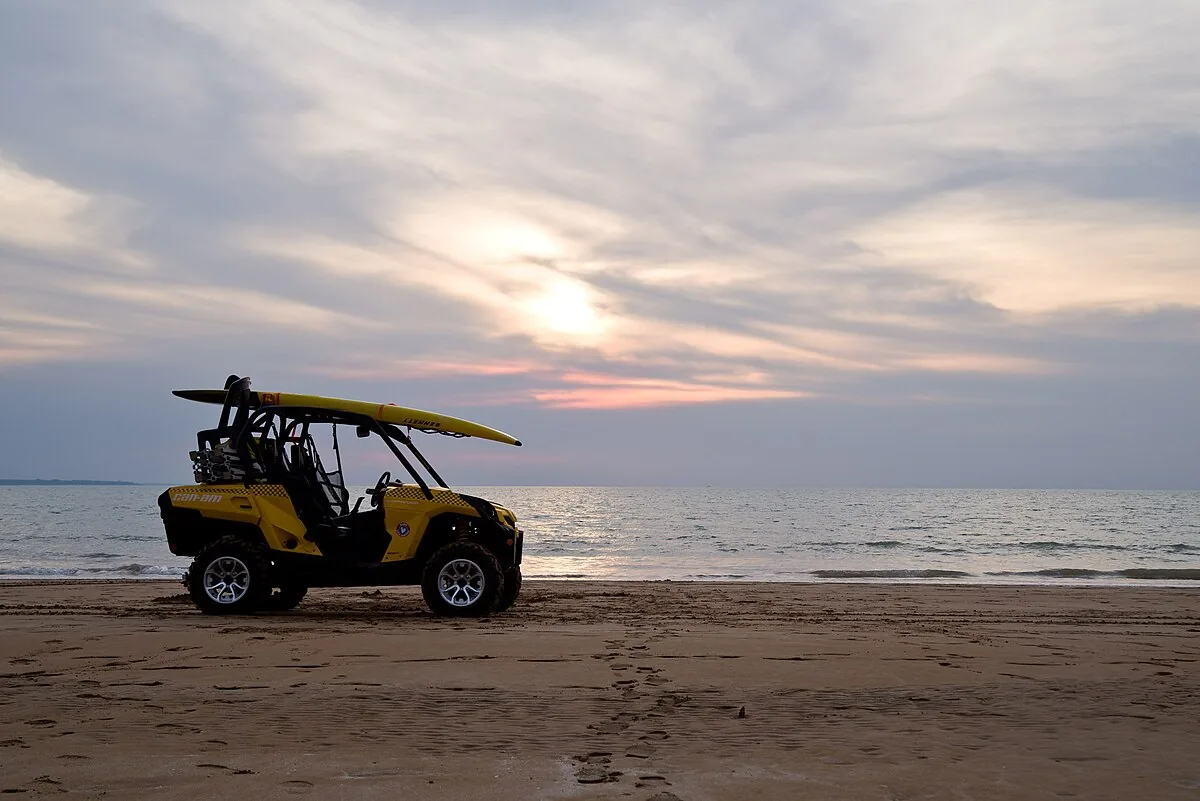
The cultural intersection of the Top End where the aroma of laksa and grilled barramundi meets the salt air of the Timor Sea; the market operates under the high canopy of tropical palms; arrive on a Thursday at 6 pm; the sky turns a saturated; bruised purple as the sun sets over the water; traders bargain in five languages simultaneously while the sound of didgeridoos provides a low-frequency hum to the tropical heat.

LocationAustraliaTypeattractionCoordinates-12.4451°, 130.8310°Learn MoreWikipedia article available🌤 Visit between May and October during the 'Dry,' when the humidity drops, the markets are in full swing, and the skies are perpetually clear for that famous sunset.Show on Map

Thousands of people gather on this shoreline every Thursday and Sunday just to applaud the sun, a ritual that feels more like a pagan celebration than a simple tourist outing.

About Mindil Beach

The Larrakia people are the traditional owners of Mindil, and their history is embedded in the very dunes that now host thousands of travelers. Throughout the 20th century, the beach served as a rugged outpost for Darwin's residents, a place where the frontier spirit of the north was most visible. The pivotal moment came in the late 1980s when the Sunset Markets were established, transforming a quiet stretch of sand into a high-octane cultural hub. This shift was led by a diverse group of stallholders, many of whom were refugees and migrants who brought the flavors of Thailand, Indonesia, and Vietnam to the Australian shore. Despite the pressures of commercialization and the challenges of the tropical climate, the site has maintained its raw, unpretentious character for nearly forty years.

Nightfall in the Top End arrives with a dramatic, bruised purple sky that seems to melt directly into the Arafura Sea. Mindil Beach is the social soul of Darwin, a vast sweep of coconut palms and pale sand that serves as a communal living room for the most multicultural city in Australia. During the dry season, the air carries a heavy, intoxicating blend of woodsmoke, saltwater, and the sizzling aromas of lemongrass and ginger wafting from dozens of market stalls. The tide here is a transformative force, retreating hundreds of meters to expose rippled mudflats that reflect the twilight like a tarnished silver mirror. While many beaches are for swimming, Mindil is for observing, a place where the proximity to Southeast Asia is felt in every humid breeze and every spicy bite of street food eaten cross-legged on the sand.

Nightfall in the Top End arrives with a dramatic, bruised purple sky that seems to melt directly into the Arafura Sea.

Mindil Beach in Australia — photo 2

Mindil Beach, Australia

Larrakia people have lived on this coastline for tens of thousands of years, knowing this stretch of sand as a place of spiritual importance long before the first European tents were pitched in Darwin. The modern tradition of the Sunset Markets began humbly in 1987, started by a group of vendors who wanted to replicate the night markets of Southeast Asia in an Australian setting. These markets faced early closure by authorities who worried about the untamed energy of the crowds, yet the local community fought to keep the grill fires burning. Over the decades, Mindil has survived the fury of Cyclone Tracy and the shifting tides of urban development to remain a stubbornly democratic space. It represents a successful fusion of ancient indigenous heritage and the vibrant, migrant-driven energy that defines modern Northern Territory life.

Sitting on the sand as the sun touches the horizon, you notice a sudden, collective hush fall over thousands of people, followed by a spontaneous roar of applause as the last sliver of orange disappears. The soundscape is a chaotic, beautiful symphony: the rhythmic clatter of spatulas on iron griddles, the low thrum of a didgeridoo echoing from the palm groves, and the chatter of a dozen different languages. You feel the fine, powdery sand cooling rapidly beneath you while the humid air remains draped over your shoulders like a warm silk shawl. Most visitors focus on the food, but you notice the local fire-twirlers practicing in the shadows, their flames tracing glowing arcs against the deepening indigo. The moment that stays with you is the walk back through the scrub at night, when the smell of dry eucalyptus finally overpowers the scent of satay and the tropical stars begin to pierce the hazy sky.

Reaching this coastal sanctuary is a simple journey from Darwin’s central business district, often involving a scenic stroll through the George Brown Darwin Botanic Gardens. Many travelers arrive via the local buses that shuttle relentlessly between the city and the beach on market nights, or by taking a short taxi ride that deposits you right at the edge of the palm forest. Arriving on foot allows you to transition slowly from the modern glass of the city to the ancient, salt-etched reality of the shoreline. The entrance is marked by the glow of string lights and the rising heat of the market, signaling that you have moved from the structured world of the capital into the sensory wild of the Top End.

Reaching this coastal sanctuary is a simple journey from Darwin’s central business district, often involving a scenic stroll through the George Brown Darwin Botanic Gardens.

The Experience

You notice the way the light catches the steam rising from a giant vat of laksa, turning a simple meal into a glowing, amber centerpiece. The sound of the waves is often a gentle, rhythmic hiss, a backdrop to the more frantic energy of the drum circles forming near the tree line. You feel the occasional sharp nip of a 'midgie' or a mosquito, a small price to pay for the privilege of the view. The thing most visitors overlook is the quiet northern end of the beach, away from the markets, where the cliffs turn a deep ochre and the only footprints are your own. The moment that stays with you is the taste of a cold mango smoothie on a thirty-degree evening, the sweetness cutting through the heavy tropical humidity.

Why It Matters

Mindil Beach matters because it is the most visceral map of Darwin’s identity, proving that the city's heart is oriented toward Asia as much as it is toward the rest of Australia. It is a site of constant cultural exchange, where indigenous art, migrant flavors, and the brutal beauty of the northern climate intersect. Humanly, it serves as a reminder that the most meaningful experiences are often the ones shared with strangers in the fading light.

Why Visit

Sydney has Bondi and Queensland has the Gold Coast, but neither offers the raw, spicy, and untamed energy of a Darwin sunset. You visit because Mindil isn't a postcard; it's a sensory assault that forces you to engage with the heat and the history of the north. It provides a perspective on Australian life that is far removed from the polished suburbs of the south.

Insider Tips

  • 1

    Arrive at least an hour before sunset to secure a patch of sand; the beach fills up faster than you would expect for such a vast space.

  • 2

    Look for the Roadkill Cafe for a taste of authentic territory fare, including camel, kangaroo, and water buffalo burgers.

  • 3

    Bring your own picnic blanket or even a folding chair, as the sand can stay surprisingly hot well into the evening.

  • 4

    Avoid entering the water entirely; the presence of saltwater crocodiles and box jellyfish makes this a beach for viewing, not for swimming.

  • 5

    Search for the local weavers near the market entrance to find hand-woven baskets made from sustainable pandanus leaves.

Free Travel Tools
Games & Discover

Featured

Conquer the World

195 nations. One dart. Build your empire.

New Game

FateLand

Three darts. The world decides your fortune, heartbreak & legacy.

FateLand
Fortune. Heartbreak. Legacy. Throw & find out.
Show on Map