Just twenty centimeters of rust-red earth sitting on a bed of ancient sea creatures is all that separates a world-class Cabernet from a common table wine.
About Terra Rossa Strip
The Terra Rossa was born from the slow decay of a limestone ridge known as the Whopper Hill, a geological remnant of an ancient shoreline. When John Riddoch established the Penola Fruit Colony in the 1890s, he envisioned a garden of Eden, but it was the hardy vines that eventually triumphed over his orchards. Throughout the early 1900s, the region struggled with isolation and economic downturns, until Samuel Wynn purchased the Riddoch estate in 1951. This purchase acted as a catalyst, proving that the unique chemistry of the iron-oxide soil could produce wines of incredible longevity and finesse. Since then, the boundary of the 'strip' has been the subject of intense geological mapping and legal debate, as every winery in the region seeks to prove their vines sit atop the hallowed red earth. Today, it remains the most precisely defined and highly prized bit of viticultural real estate in the Southern Hemisphere.
What Terra Rossa Strip actually is
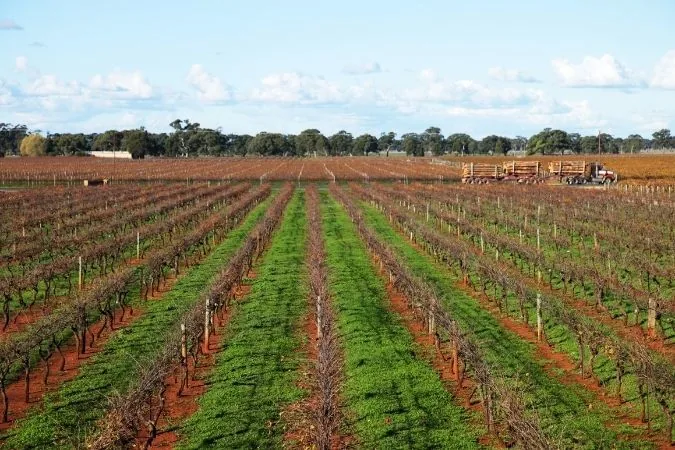
A narrow cigar-shaped sliver of earth in South Australia’s Limestone Coast holds a secret that has baffled and delighted viticulturists for over a century. The Terra Rossa Strip of Coonawarra is a geological fluke, a fifteen-kilometer stretch of crumbly, rust-colored soil that sits atop a prehistoric limestone ridge like a smear of iron-rich paint. Along the edges of the vineyards, a startlingly sharp boundary where the vibrant red earth suddenly pales into the grey, swampy plains of the surrounding region. The surroundings here carries a cool, maritime crispness from the Southern Ocean, mixed with the damp, mineral scent of upturned clay. This slender vein of land is the primary reason why a small, flat patch of the Australian outback produces wines with a structural elegance that rivals the finest estates of Bordeaux.
Deep beneath the red dirt lies a bed of Gambier limestone, the remnants of a vast inland sea that receded nearly a million years ago. As the limestone weathered and dissolved over eons, it left behind a concentrated residue of iron and clay, creating the friable topsoil that defines the region. John Riddoch, a pioneer with a keen eye for landscape, planted the first vines here in 1891, sensing that the unique drainage of the ridge was something special. For decades, the true potential of the strip remained a local secret, used primarily for brandy and fortified wines until the middle of the twentieth century. The 1950s saw a renaissance as the Woodleys and the Wynns recognized that the combination of the red soil and the long, cool ripening season was perfect for Cabernet Sauvignon. This realization sparked a frantic land rush, as vintners fought for every available inch of the narrow red band, knowing that a single meter could be the difference between a masterpiece and a mediocre harvest.
Standing in a vineyard row during the winter pruning, The way the red dust clings to your boots, a fine, ochre powder that stains like a dye. The sound layer is a peaceful, rhythmic snip of shears against dormant vines, occasionally broken by the call of a kookaburra from a distant stand of river red gums. the brittle, limestone-flecked texture of the soil as you crumble a clod between your fingers, marveling at how something so dry can hold the lifeblood of such complex fruit. The majority focus on the tasting rooms, but The gnarled trunks of vines that have dug their roots deep into the white rock beneath for over sixty years. The element that stays with you is a late afternoon walk when the sun hits the exposed road cuttings, turning the embankments into a fiery, crimson wall that glows against the green vine canopy. You get a cool breeze that rolls in at sunset, realizing that this temperature drop is the final ingredient in the strip's magic.
The journey to the Terra Rossa
The journey to the Terra Rossa Strip typically begins with a drive along the Riddoch Highway, which acts as the spine of the Coonawarra region. Located roughly halfway between Melbourne and Adelaide, the area is easily accessible for those willing to commit to a scenic road trip through the rolling pastures of the southeast. Arriving in the town of Penola, the highway leads you north directly onto the ridge, where the vineyards begin to huddle close to the tarmac. A bicycle is often the best way to navigate the flat, straight roads of the strip, allowing you to move at a pace that matches the slow, steady pulse of the viticultural cycle. You know you have arrived when the grey-brown earth of the plains shifts into that unmistakable, vibrant red, signaling your entry into the world's most famous patch of dirt.
The Experience
Opening the visit is the way the light reflects off the white limestone rocks occasionally piled at the end of vine rows, a stark contrast to the deep scarlet soil. In your ears of the wind through the leaves has a dry, paper-like quality in the heat of mid-summer, a sign of the vines working hard to pull moisture through the rock. There is a sudden, biting cold of a Coonawarra evening, a thermal shift that preserves the acidity in the grapes and gives the wine its famous structure. The thing most visitors overlook is the sheer flatness of the landscape; without the red soil and the vines, you might mistake it for ordinary sheep country. The element that stays with you is tasting a wine while standing on the very row it came from, the flavor of dark berries and cedar reflecting the iron-rich earth beneath your feet.
Why It Matters
The Terra Rossa Strip matters as a perfect demonstration of 'terroir,' where a specific geological anomaly dictates the culture and economy of an entire region. It is a physical link to a million-year-old coastline, preserved in a narrow band that has become a global benchmark for quality. Humanly, it represents the persistence of generations of farmers who learned to read the nuances of a single, slender ridge of stone.
Why Visit
Famous mountain vineyards offer views, but Coonawarra offers a masterclass in the power of the ground beneath your feet. You visit because there is no other place where you can see the exact line where the earth changes and the quality of the wine changes with it. It is a pilgrimage for anyone who wants to understand why dirt is the most important ingredient in a glass of red.
✦ Photo Gallery
Best Season
🌤 Visit in April during the harvest when the smell of fermenting grapes fills the air and the vines turn shades of gold and copper that mirror the red earth.
Quick Facts
Best time to visit
Visit in April during the harvest when the smell of fermenting grapes fills the air and the vines turn shades of gold and copper that mirror the red earth.
Getting there
In Coonawarra, Australia; reach Coonawarra first, then continue to the site.
Location
Coonawarra, Australia
Type
attraction
Insider Tips
- 1
Look for the 'Coonawarra Siding' near the center of the strip to see the old railway line where the first cases of Riddoch’s wine began their journey to the world.
- 2
Pack a light jacket even in the height of summer, as the maritime influence means temperatures can drop ten degrees the moment the sun dips.
- 3
Cycle the trail from Penola to the famous 'Wynns' gables; the terrain is perfectly flat and allows you to see the soil transitions up close.
- 4
Search for the road cuttings on the highway where you can see the distinct layers of red topsoil sitting directly on the white limestone base.
- 5
Visit the Petticoat Lane in nearby Penola to see how the early vintners lived in the 19th century before the red dirt made the region famous.