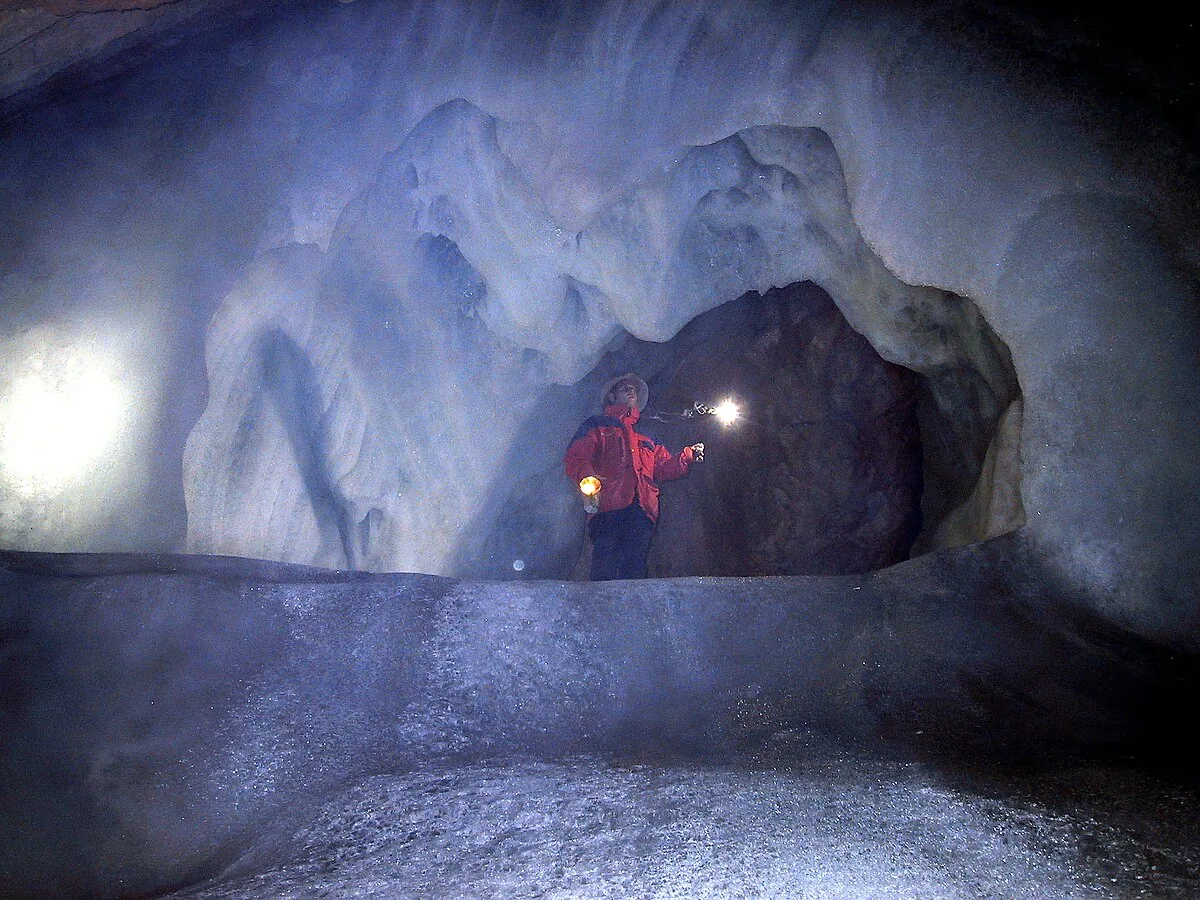
A relentless gale of freezing air bellows from this mountain cave even in July, guarding forty kilometers of translucent blue ice palaces hidden inside the limestone rock.
About Eisriesenwelt
The formation of this frozen labyrinth began nearly a hundred million years ago as water carved through the limestone, but the ice itself is a more recent tenant, arriving less than a thousand years ago. In the late 1800s, the cave was a place of terror for locals who avoided the 'hole in the mountain' at all costs, fearing the spirits that surely dwelt in such a cold, lightless void. Alexander von Mörk changed that narrative in 1912, hacking steps into the ice with a pickaxe and using primitive ropes to scale frozen waterfalls. After his death, his fellow explorers continued his work, building the first primitive wooden walkways in the 1920s to allow the public to witness the 'Ice Organ' and the 'Midgard' hall. Today, it remains a protected monument, managed with a light touch that prioritizes the preservation of the delicate ice structures over modern convenience, ensuring the giants remain frozen in time.
What Eisriesenwelt actually is
High above the village of Werfen, carved into the sheer limestone face of the Tennengebirge massif, lies the entrance to a world that shouldn't exist in our temperate reality. Eisriesenwelt, the World of the Ice Giants, is a forty-kilometer labyrinth of subterranean frozen palaces where the temperature never rises above freezing, even when the valley below is sweltering in the summer sun. The space near the entrance is a living thing, a powerful, freezing draft that gusts from the darkness with such force it can knock the hat from an unwary traveler's head. Inside, the limestone walls vanish behind curtains of sapphire-colored ice, and massive stalagmites rise from the floor like the petrified ribs of some primordial beast. This is a cathedral of frost where the only light comes from hand-held carbide lamps, casting long, flickering shadows that make the frozen formations appear to breathe and shift in the gloom.
'discovered' the cave, 1879
Naturalist Anton Posselt officially 'discovered' the cave in 1879, though he only ventured two hundred meters into the darkness before the wall of ice turned him back. For decades, the local mountain folk believed the cave was an entrance to hell, a superstition that kept the interior pristine and untouched by human curiosity. It took the obsessive dedication of Alexander von Mörk, a speleologist from Salzburg, to unlock its secrets in the early twentieth century. Von Mörk led several grueling expeditions into the depths, navigating ice chimneys and frozen lakes by candlelight. He was so enamored with the silent, frozen halls that he requested his ashes be interred within the cave, a wish granted after his death in World War I. Today, the urn of the man who gave this underworld to the world rests in a niche within the very cathedral of ice he mapped, forever part of the silence.
Walking into the first great hall,
The absolute, heavy silence of the mountain, broken only by the rhythmic clinking of the carbide lamps carried by your group. The light from these small flames hits the 'Hymir Castle' formation, making the translucent ice glow with an internal, ethereal light that ranges from bone-white to deep turquoise. The sting of the cold on your cheeks, a sharp reminder that you are standing inside a natural refrigerator that has maintained its climate for thousands of years. The acoustic layer is a curious mix of the muffled shuffling of boots on wooden boardwalks and the occasional, crystalline 'ping' of a single water droplet freezing upon impact. The element that stays with you is the climb up the 1,400 wooden steps, where your breath blooms in the air like small ghosts and the ice walls press in so close It smells of clean, metallic scent of the frozen earth. First, the texture of the ice changes from smooth, glass-like sheets to rippled, wave-like structures that look like a sea frozen mid-storm. Reaching the cave is an alpine odyssey that begins in the town of Werfen, followed by a winding drive up a mountain road that offers dizzying views of the Salzach Valley. From the parking area, a short hike leads to the steepest cable car in Austria, which whisks you up the cliffside with a speed that leaves your ears popping. The final approach involves a scenic twenty-minute walk along a path carved into the rock, leading directly to the yawning mouth of the cave. This journey ensures that by the time you reach the entrance, your heart is already racing from the altitude and the sheer scale of the limestone cliffs that tower above you.
The Experience
Leading is the way the cave air tastes, utterly pure, devoid of dust, and so cold it feels like drinking liquid silver. The carbide lamps flicker and hiss, throwing a warm, orange glow that dances across the frost-covered walls, creating a visual paradox of fire and ice. The muscles in your legs burn as you conquer the vertical climb, but the exhaustion vanishes the moment the light catches the 'Ice Giant,' a massive pillar of frozen meltwater that dwarfs the human form. The thing most visitors overlook is the subtle movement of the ice; over decades, these giants slowly flow and change shape, a geological ballet occurring in total darkness. The bit that stays with you is looking back toward the entrance from the depths, seeing the distant, tiny circle of daylight as a brilliant sapphire dot against the velvet black of the cave.
Why It Matters
Eisriesenwelt is a rare dynamic ice cave, a geological anomaly where a chimney effect keeps the interior in a permanent state of winter. It matters as a pristine laboratory for climate history and as born from the early pioneers of speleology who explored these depths with little more than courage and candles. Culturally, it anchors the folklore of the Salzburg Alps, proving that the most fantastical legends often have a foundation in the physical world.
Why Visit
Salt mines are fascinating and mountain peaks are grand, but this is the only place where you can stand inside a frozen cloud deep within the earth. You visit because the experience is raw and physical, stripping away the polish of modern tourism. It is a rare chance to feel the true, crushing scale of the natural world in a place where light is a precious commodity and time is measured in centuries of ice.
✦ Photo Gallery
Best Season
🌤 Visit in May or June; this is when the ice formations are at their most voluminous and sculpted after the spring melt has frozen into new, glass-like layers of blue and white.
Quick Facts
Best time to visit
Visit in May or June; this is when the ice formations are at their most voluminous and sculpted after the spring melt has frozen into new, glass-like layers of blue and white.
Getting there
In Werfen, Austria; reach Werfen first, then continue to the site.
What's nearby
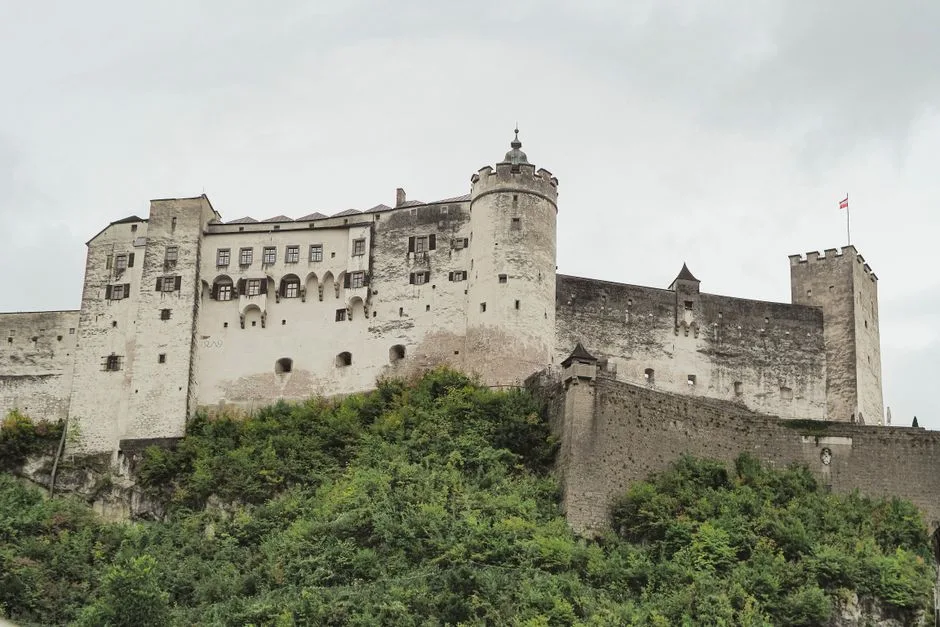
Hohensalzburg Fortress and Swarovski Kristallwelten are also in the area.
Location
Werfen, Austria
Type
attraction
Coordinates
47.5029°, 13.1903°
Insider Tips
- 1
Secure the strap of your carbide lamp tightly before entering the mouth of the cave, as the sudden 'wind door' effect can snatch objects right out of your hands.
- 2
Wear a heavy winter parka and gloves even if the temperature in Werfen is 30°C, as standing still for an hour in 0°C will chill you to the bone.
- 3
Pay attention to the 'Ice Organ' formation; if you listen closely during the quietest moments, you can hear the faint, musical tinkling of shifting frost.
- 4
Arrive for the first tour of the morning to experience the mountain path when the valley mist is still rising and the cable car is nearly empty.