“A six-year-old Mozart once jumped into the lap of Empress Maria Theresa in these halls, a brief moment of childhood joy in a palace built for the world's most rigid bureaucracy.”
About Schloss Schönbrunn
Emperor Leopold I commissioned the first ambitious plans for the palace in 1696, intending to eclipse the sun-king’s palace in France, though financial constraints eventually tempered his architectural ego. Maria Theresa turned the site into a permanent summer home during her reign from 1740 to 1780, overseeing the decoration of the 'Millions Room' with its priceless Indo-Persian miniatures. The 19th century brought the long, disciplined reign of Franz Joseph, who was born and died within these walls, maintaining a lifestyle of spartan work amidst the gold leaf. After the fall of the monarchy in 1918, the palace narrowly avoided being converted into social housing, instead becoming a public park and museum that now welcomes millions who come to trace the footsteps of Sisi and her tragic, glittering court.
What Schloss Schönbrunn actually is
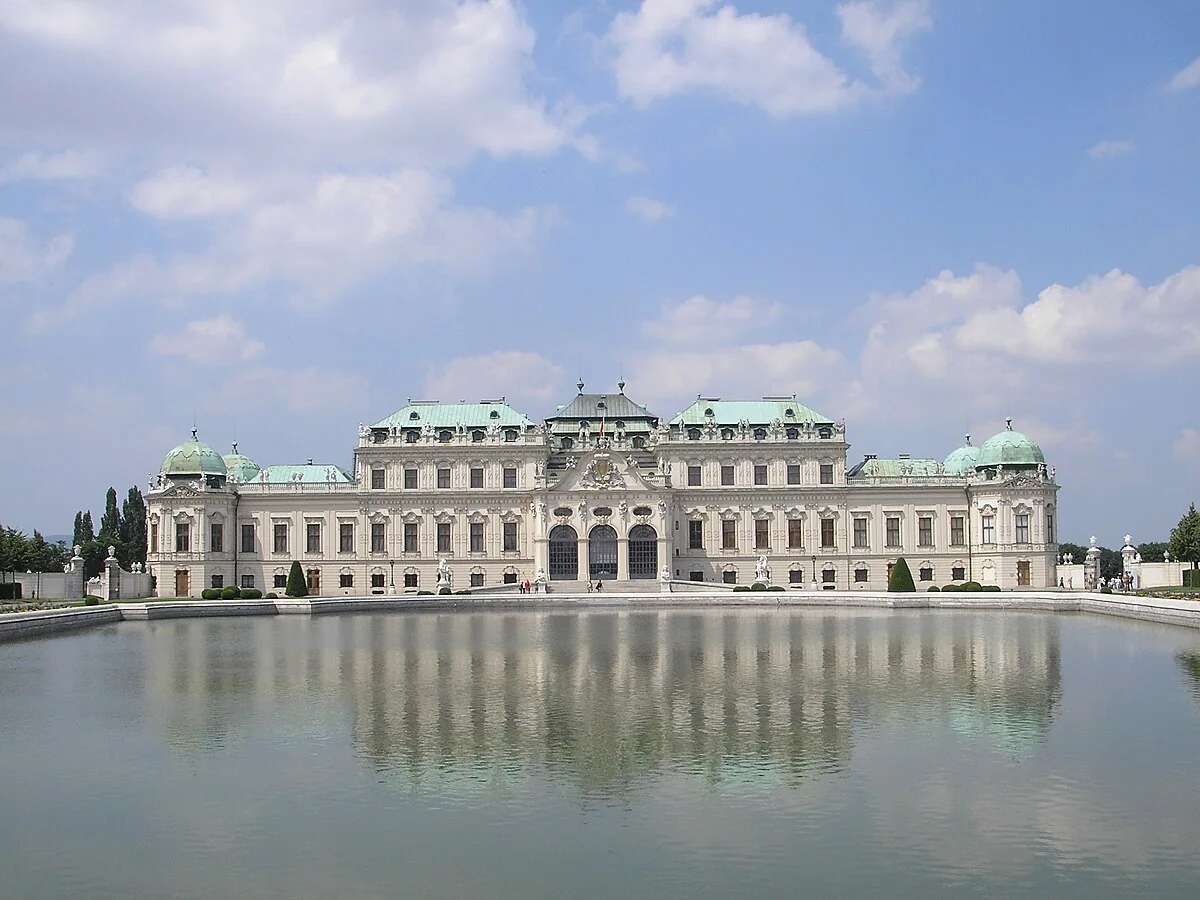
A specific shade of ochre, famously nicknamed Schönbrunn Yellow, dominates the horizon of Vienna’s Hietzing district, acting as a warm, regal sun even on the grayest Danubian mornings. This former summer residence of the Habsburgs functions as a sprawling proof of the dynastic theatricality of Central Europe. Behind the symmetry of its 1,441 rooms lies a landscape where the rigid geometry of French gardens meets the untamed greenery of the Viennese woods. The space around the palace carries the faint, nostalgic scent of roasted chestnuts in winter or the heavy perfume of blooming roses in June. It remains a place where the grandeur of a vanished empire is kept alive through the rhythmic crunch of gravel underfoot and the impeccable gilding of the Great Gallery.
A specific shade of ochre, famously nicknamed Schönbrunn Yellow, dominates the horizon of Vienna’s Hietzing district, acting as a warm, regal sun even on the grayest Danubian mornings.
a hunting trip, 1612
The name itself translates to 'beautiful spring,' supposedly discovered by Emperor Matthias during a hunting trip in 1612. However, the site’s current Baroque splendor is the result of Maria Theresa’s iron will and her desire for a residence that could rival Versailles in scale, if not in sheer decadence. After the Siege of Vienna, the original hunting lodge was expanded by architect Johann Bernhard Fischer von Erlach, but it was Maria Theresa who moved in during the 1740s and made it the vibrant, bureaucratic, and social center of her court. It was here that a six-year-old Mozart performed for the Empress in the Hall of Mirrors, and later, where Napoleon stayed as a conqueror within the very walls that had symbolized his enemies' power. The palace transitioned into the hands of the Republic in 1918, following the abdication of Emperor Karl I, yet it feels as though the Imperial family simply stepped out for a walk in the gardens.
Commissioned by Emperor Franz
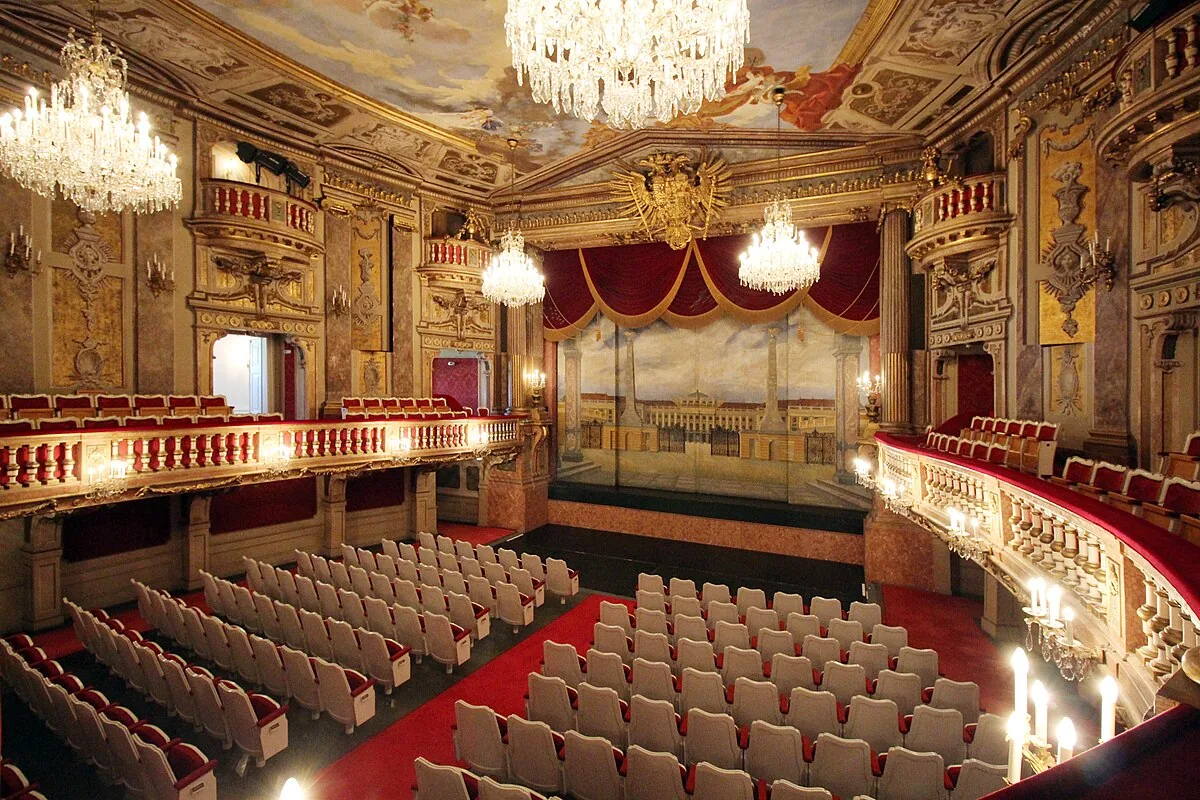
Crossing the threshold into the palace, The sound of the modern world immediately replaced by the echoing silence of marble hallways and the soft creak of historic parquet. The Great Gallery steals your breath with its white and gold rococo stucco, looking like a massive, frozen piece of wedding cake under the light of Bohemian crystal chandeliers. The intimacy of the private apartments, where the stark, military simplicity of Emperor Franz Joseph’s iron bed contrasts sharply with the flamboyant Chinese lacquer of the round cabinets. Outside, the walk up the zig-zagging paths to the Gloriette hill is a physical ritual that rewards you with a panoramic view of the palace roofline set against the skyline of the modern city. The locals jogging through the park’s hidden avenues, reminding you that this museum of the past is also a living, breathing backyard for the present-day Viennese.
Vienna’s U4 subway line drops you
Vienna’s U4 subway line drops you at the Schönbrunn station, a mere five-minute stroll from the palace gates. The approach from the station takes you across the bridge over the Wien River, where the yellow facade begins to emerge from behind the trees. For a more leisurely arrival, several tram lines stop at Schloss Schönbrunn, offering a slower, street-level view of the surrounding 19th-century villas. Many visitors prefer to arrive early in the morning, entering through the side gates of the park to witness the gardeners meticulously grooming the hedges before the first tour groups congregate in the main courtyard.
Vienna’s U4 subway line drops you at the Schönbrunn station, a mere five-minute stroll from the palace gates.
The Experience
It starts with the temperature drop as you enter the Neptune Fountain’s spray, a welcome relief if you’ve just hiked the sun-baked paths of the Great Parterre. The light at four in the afternoon is transformative, catching the yellow walls and making them glow with a saturated, golden intensity that feels like a filter from an old film. The history of the place not in the grand rooms, but in the quiet, overlooked corners of the gardens where the statues of Roman heroes stand guard over the ivy. What sticks with you is the view from the Gloriette’s balcony, where the symmetrical lines of the park perfectly frame the distant spire of St. Stephen's Cathedral, pinning the palace into the larger heart of Vienna. What you catch first is the sharp, clean smell of the Orangery, where the citrus trees have been sheltered from the Austrian winter for centuries.
Why It Matters
Schloss Schönbrunn is the ultimate physical manifestation of the Habsburgs' role as the center of the Holy Roman Empire and later the Austro-Hungarian state. It represents a peak of Baroque and Rococo design that was never truly replicated elsewhere in the German-speaking world. Humanly, it functions as a monument to the endurance of Viennese culture, surviving wars and revolutions to remain the city's most beloved communal space.
Why Visit
Versailles has the mirrors, but Schönbrunn has the soul; it feels like a home that was actually lived in, not just a stage for power. You visit for the paradox of finding a world-class zoo, a desert house, and an imperial palace all within the same park. It is the only place where you can walk through the history of a thousand-year dynasty and then lose yourself in an 18th-century hedge maze.
✦ Insider Tips
- 1
Head straight to the Gloriette for coffee and cake at 9:00 AM to enjoy the view before the main palace tours dump thousands of people into the gardens.
- 2
Look for the 'Roman Ruins' in the park, which aren't ruins at all but a 1778 architectural folly designed to symbolize the decline of ancient empires.
- 3
Walk through the Tyrolean Garden hidden on the western edge of the park to find a traditional wooden alpine hut and a much quieter, forested atmosphere.
- 4
Check the schedule for the evening Orangery concerts if you want to hear Strauss and Mozart in the exact space where the composers once competed for imperial favor.