“Gustav Klimt painted the walls of this grand staircase years before his golden period, creating a silent bridge between the rigid imperial past and the radical modernism of old Vienna.”
About Kunsthistorisches Museum
The Habsburgs were arguably the most dedicated collectors in history, and by the 1870s, their hoard of masterpieces had outgrown every palace in the city. To solve this, the Kunsthistorisches Museum was designed as part of the massive Ringstrasse project, a radical urban redesign that replaced the city's old defensive walls with grand monuments. Completed in 1891, it became a temple for the personal tastes of emperors like Rudolf II, who preferred the strange and the marvelous. The museum narrowly survived the collapse of the Austro-Hungarian Empire in 1918, transitioning from a private royal collection to a national institution that remained largely unchanged in its presentation. Today, its galleries of Egyptian antiquities and Old Master paintings remain exactly where the emperors originally intended them to hang, preserving a 19th-century vision of the history of art.
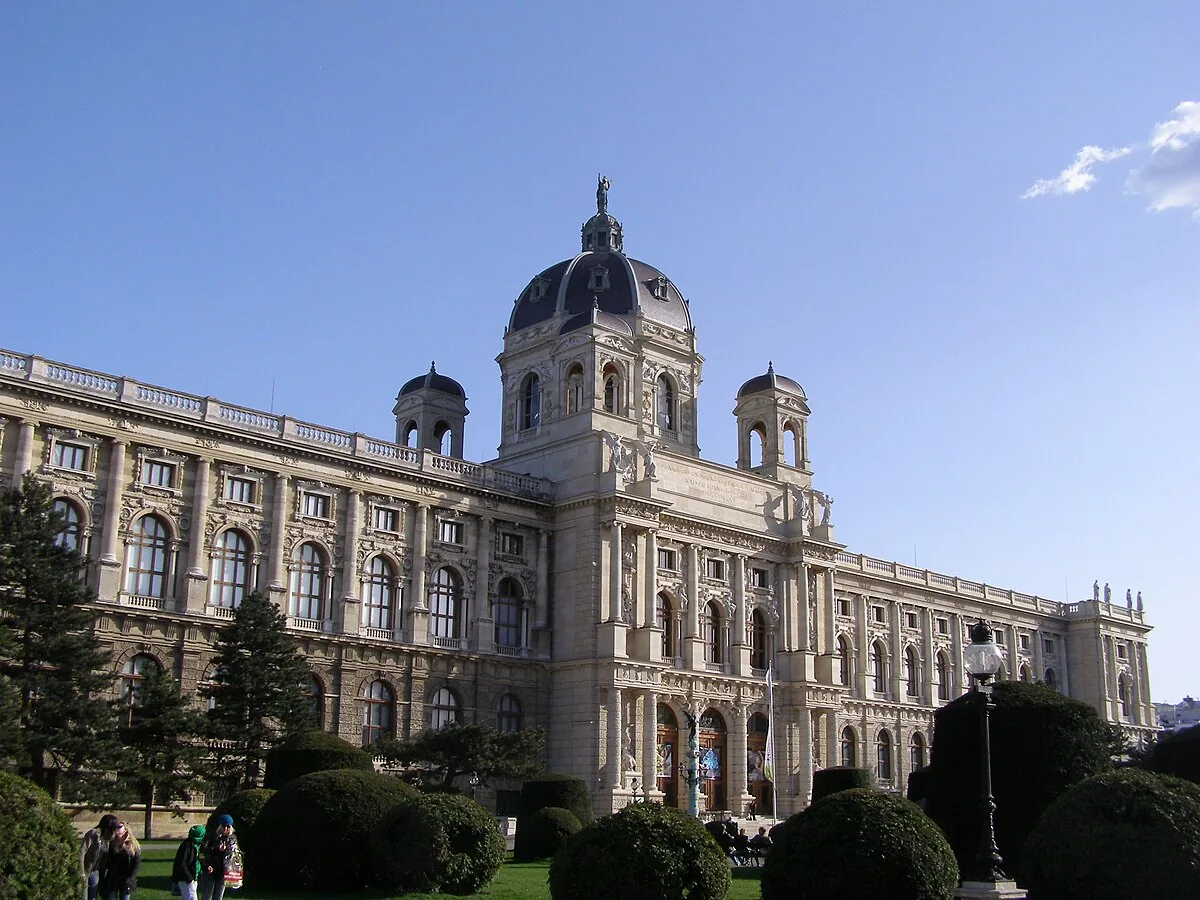
Deep within the Ringstrasse, the air suddenly changes
Deep within the Ringstrasse, the air suddenly changes, thickening with the scent of floor wax and the hushed, reverent stillness of a cathedral dedicated to human genius. The Kunsthistorisches Museum, or Museum of Art History, is still a symmetrical titan of the Italian Renaissance style, mirrored across the Maria-Theresien-Platz by its twin, the Natural History Museum. Its facade of sandstone and marble hides a world where the Habsburgs’ obsessive collecting over five centuries has been barely changed since. Stepping inside, you are greeted by an architectural crescendo of polychrome marble and gold leaf that makes the very act of walking feel like a ceremony. This building was never intended to be just a gallery; it was designed as a chest for the crown jewels of European art, from the melancholic landscapes of Bruegel to the intense, brooding gaze of a Rembrandt self-portrait.
Deep within the Ringstrasse, the air suddenly changes, thickening with the scent of floor wax and the hushed, reverent stillness of a cathedral dedicated to human genius.
Emperor Franz Joseph
Emperor Franz Joseph I commissioned this limestone palace in the late nineteenth century to house the staggering overflow of treasures scattered across the imperial residences. Architects Gottfried Semper and Karl von Hasenauer envisioned a total work of art where the building would be as significant as the paintings it held. Construction lasted nearly twenty years, finally concluding in 1891 when the doors opened to a public that had never seen such a concentrated display of wealth and aesthetics. The interior was finished by a young Gustav Klimt, who painted the spandrels of the grand staircase, leaving his early, more classical marks before he revolutionized the Viennese art world. During the dark years of the Second World War, the most valuable pieces were spirited away to salt mines in Altaussee to escape the falling bombs, only returning to these walls when the city began to breathe again in 1945.
Climbing the grand staircase, the floor feels cool
Climbing the grand staircase, the floor feels cool and unyielding beneath your feet while the gaze of Canova’s Theseus statue follows your ascent. You register the light in the Octagon, the museum's central cafe, is filtered through a massive dome that turns the dust motes into dancing specks of gold. The quality of the Bruegel room is particularly haunting; the chatter of visitors seems to vanish as people lean in to find the tiny, intricate details of a medieval peasant's life in the 'Tower of Babel.' The shift in energy entering the Kunstkammer, where mechanical clocks and ivory carvings from the Renaissance create a sense of whimsical, almost magical curiosity. What sticks with you is standing alone before the 'Saliera,' Benvenuto Cellini's gold salt cellar, watching the soft gallery lights catch the curves of the Neptune figure. First, the way the old wooden floors creak in the quieter wings, a sound that has echoed through these galleries for over a century.
Vienna’s U2 and U3 subway lines stop
Vienna’s U2 and U3 subway lines stop at Volkstheater, placing you just a short walk from the museum's monumental entrance. Trams 1, 2, 71, and D also circle the Ringstrasse, dropping passengers at the Burgring stop where the palace-museum dominates the view. Many visitors choose to arrive from the Hofburg Palace side, crossing the Heldenplatz to enter the museum district through the massive gate. The approach is best done on foot, allowing the sheer scale of the twin museums to unfold against the backdrop of the city's imperial parks.
Vienna’s U2 and U3 subway lines stop at Volkstheater, placing you just a short walk from the museum's monumental entrance.
The Experience
The scent of expensive coffee and old stone as you move through the central hall, a sensory signature of the Viennese museum experience. The crowds tend to cluster around the Vermeer and the Caravaggios, but the side galleries of the Coin Cabinet offer a silent, metallic-smelling retreat into the ancient world. You get a weight of the marble pillars, which seem to vibrate slightly when the subway passes deep underground. The thing most visitors overlook is the intricate ceiling work in the smaller rooms, where the decorative paintings are often as complex as the canvases on the walls. The piece that stays with you is watching the sunset through the high windows of the painting gallery, when the low light catches the brushstrokes of the Venetian masters and brings the oil to life in a way that artificial lighting never can.
Why It Matters
The Kunsthistorisches Museum is one of the four most important art museums in the world, holding the primary collection of the Habsburg dynasty. It matters as a physical encyclopedia of European taste, representing the transition from the private curiosity cabinets of the Renaissance to the public education missions of the modern era. Culturally, it is the heart of Vienna's intellectual identity, standing as a monument to the city's role as a crossroads of European history.
Why Visit
While the Louvre is a fortress and the Met is a city, the Kunsthistorisches is a palace that still feels like a home for art. You visit for the Bruegel collection alone, the largest in the world, which offers a window into the northern soul that you won't find anywhere else. It is the only place where the architecture and the art are so perfectly synchronized that you cannot tell where the gallery ends and the masterpiece begins.
✦ Insider Tips
- 1
Reserve a table for lunch at the museum's cafe in the dome hall weeks in advance; it is the most beautiful place in Vienna to eat a Sacher Torte.
- 2
Look for the 'Kunstkammer' on the raised ground floor; many people skip it for the paintings, but it contains the most bizarre and beautiful objects the Habsburgs ever owned.
- 3
Visit on a Thursday evening when the museum stays open late; the galleries are dimly lit and the atmosphere becomes incredibly cinematic and intimate.
- 4
Search for the hidden portrait of a young girl by Vermeer; it is smaller than you expect but the luminosity of the paint is far more intense in person.
- 5
Walk to the very top floor to see the Coin Cabinet, where the wooden display cases are masterpieces of 19th-century joinery in their own right.