“A prince-archbishop once built these gardens as a secret sanctuary for his mistress and their fifteen children, hiding a family scandal behind the most orderly hedges in Europe.”
About Mirabellgarten
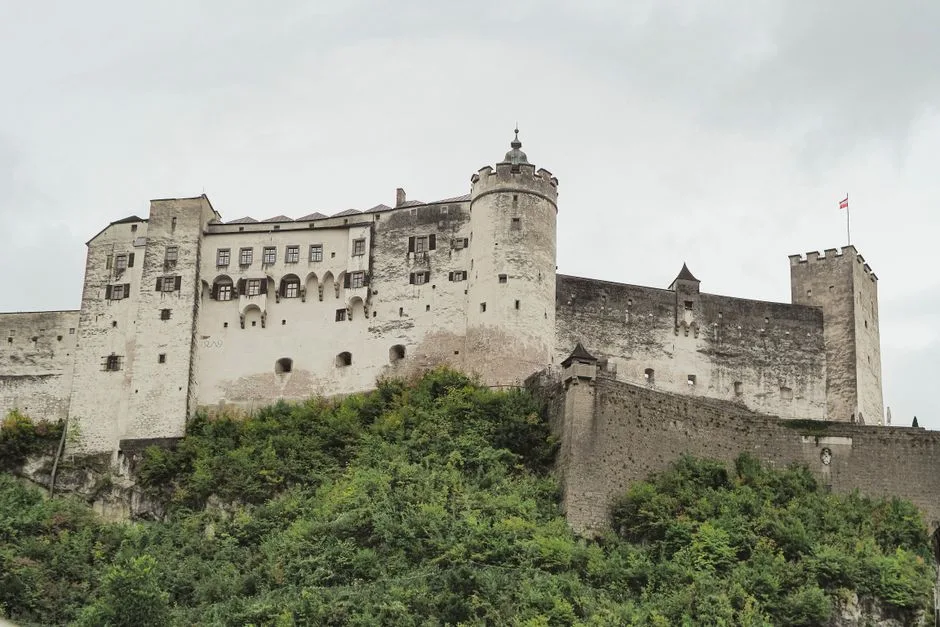
Wolf Dietrich von Raitenau’s romantic rebellion in 1606 didn't last long, as he was eventually ousted by his own nephew and spent his final years in the fortress overlooking the very gardens he built. The landscape evolved through the centuries, transitioning from a private royal retreat to a public park in 1854. The sculptures decorating the Grand Parterre were carved by Ottavio Mosto in 1690, representing the four elements: fire, air, earth, and water, each locked in a dramatic struggle. During the nineteenth century, the gardens survived the Napoleonic wars and the shifting borders of the Austrian and Bavarian empires. Its global fame peaked in 1965 when its statues and fountains served as the backdrop for cinema's most famous musical, but to the locals, it remains the quiet backyard of a city that has always balanced its piety with a love for the theatrical.
What Mirabellgarten actually is
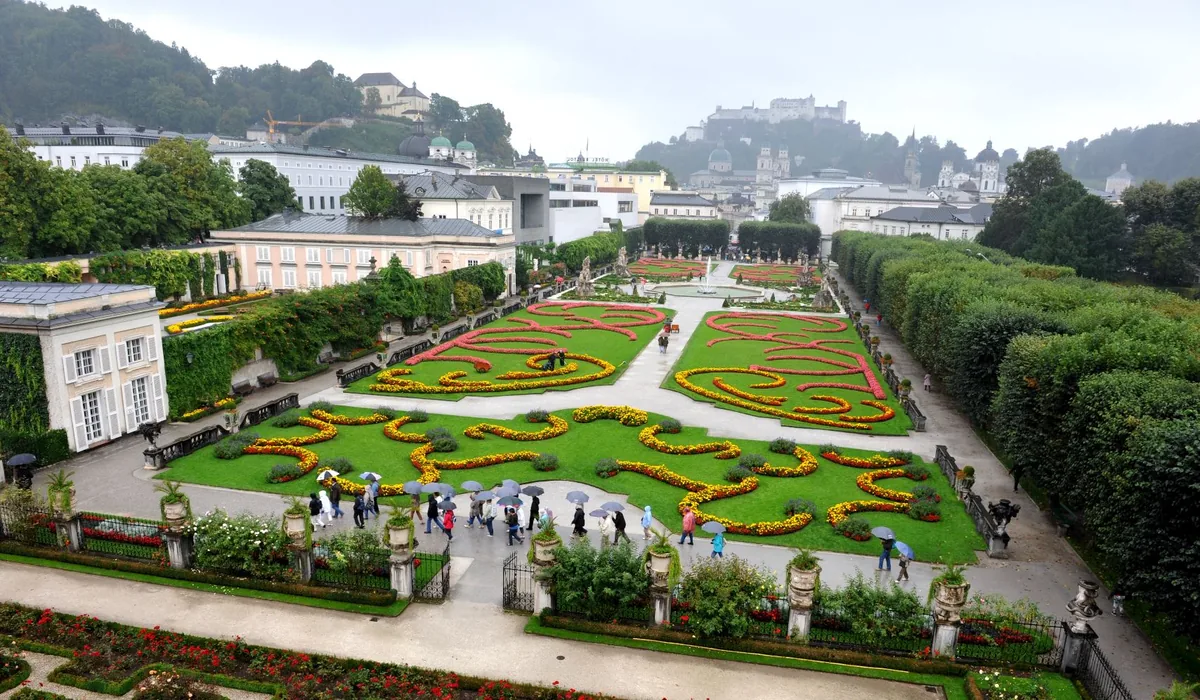
Salzburg operates on a visual plane of theatricality, and nowhere is the stage set more perfectly than within the gravel paths of the Mirabellgarten. This baroque masterpiece is a geometric interplay of flora, aligned with such mathematical precision that the Hohensalzburg Fortress appears to be cradled by the very hedges themselves. Nearby, There is a damp, fresh scent of the Salzach River mixed with the heavy perfume of manicured roses and wet boxwood. As you move through the Grand Parterre, the world feels organized into an idealistic vision of seventeenth-century harmony. Marble statues of deities wrestle in the shadows of perfectly spherical trees, while the central fountain provides a rhythmic, liquid pulse to the morning air. It remains a space where the rigidity of royal architecture yields to the chaotic bloom of the seasons, creating a sanctuary that feels both public and profoundly intimate.
Salzburg operates on a visual plane of theatricality, and nowhere is the stage set more perfectly than within the gravel paths of the Mirabellgarten.
the original palace, 1606
Prince-Archbishop Wolf Dietrich von Raitenau built the original palace in 1606 as a gesture of forbidden love for Salome Alt, the daughter of a local merchant who bore him fifteen children. Originally named Altenau, the estate was a defiance of clerical celibacy, a sunny retreat outside the medieval city walls where the archbishop could play the role of a family man. After Dietrich was deposed and imprisoned in his own fortress, his successor, Markus Sittikus, renamed the palace Mirabell to scrub away the scandal. The gardens reached their peak of baroque complexity under the direction of Johann Lukas von Hildebrandt in the 1720s, who introduced the marble balustrades and the mythologically charged sculptures that survive today. Despite a devastating fire in 1818 that forced a neoclassical reconstruction of the palace, the gardens retained their symmetrical soul, eventually opening to the citizens of Salzburg by royal decree of King Ludwig I of Bavaria.
Standing at the Pegasus Fountain,
Standing at the Pegasus Fountain, The way the light catches the spray, turning the water into a fine mist that coats the nearby stone in a glistening sheen. The sound layer is dominated by the crunch of fine limestone gravel underfoot, a texture that reminds you of the city's ancient mountain quarries. The mass of the temperature drop entering the Hedge Theater, a secluded labyrinth of greenery where the air is still and smells of crushed leaves and damp earth. Just about everyone move quickly toward the famous 'Do-Re-Mi' steps, but The quiet dignity of the Dwarf Garden, where misshapen marble figures standing on pedestals offer a strange, grotesque counterpoint to the surrounding beauty. What sticks with you is the view from the rose garden at sunset, when the fortress on the hill turns a deep, bruised purple and the orange light blazes through the gaps in the marble balustrade.
Accessing the gardens is effortless,
Accessing the gardens is effortless, as they sit on the right bank of the Salzach River, just a short walk from the Salzburg Hauptbahnhof or the historic Altstadt. People typically cross the Makartsteg pedestrian bridge, following the sight of the manicured treelines that mark the garden’s southern edge. The entrance through the Schloss Mirabell courtyard is particularly effective, moving you from the heavy stone silence of the palace corridors into the sudden, wide-open brilliance of the floral displays. Trams and buses stop at the Mirabellplatz, placing you directly at The way into this green heart of the city, where the transition from urban bustle to baroque peace is instantaneous.
Accessing the gardens is effortless, as they sit on the right bank of the Salzach River, just a short walk from the Salzburg Hauptbahnhof or the historic Altstadt.
The Experience
The scent of the orange trees in the orangery, a sharp citrus tang that cuts through the floral sweetness of the main beds. The light in the early morning is soft and silvery, making the white marble statues appear almost translucent against the dark green of the clipped hedges. You come across a sun warming the stone benches near the rose garden, a perfect spot to watch the shadow of the cathedral spire stretch across the valley. The thing most visitors overlook is the intricate wrought-iron work on the gates, featuring delicate floral motifs that mirror the living plants inside. The element that stays with you is the echo of a distant flute player from the Mozarteum nearby, the music drifting over the walls to provide a spontaneous soundtrack to the baroque scenery.
Why It Matters
Mirabellgarten is a prime example of the European 'Grand Manner' in landscape architecture, where the environment is coerced into perfect symmetry to reflect the absolute power of the ruler. It matters as a rare survivor of the baroque era that has maintained its layout for over three hundred years. Culturally, it is the bridge between the medieval hill-fortress and the enlightenment-era city, embodying Salzburg's distinctive mix of religious authority and aesthetic indulgence.
Why Visit
Schönbrunn has the scale, but Mirabell has the framing. You visit because this garden provides the definitive view of Salzburg, where the palace, the gardens, and the mountain fortress align in a single, flawless perspective. It is the only place where you can feel the 17th century's obsession with order while standing in a city that is defined by its wild, alpine surroundings.
✦ Insider Tips
- 1
Enter the Dwarf Garden via the small stone bridge to see the odd, caricatured statues based on real members of the 18th-century archbishop's court.
- 2
Walk through the Hedge Theater in the late afternoon; the high walls of greenery create long shadows that make for incredible, moody photography away from the crowds.
- 3
Look for the two stone lions guarding the entrance to the gardens; rub their paws for luck, as the local students have done for generations.
- 4
Visit the Marble Hall inside the palace for a free look at one of the world's most beautiful wedding venues, where Mozart once performed.
- 5
Avoid the central fountain during the peak tour-bus hours of mid-day and instead head to the quiet, shaded gravel paths on the western perimeter for a true sense of the garden's peace.