One hundred and twenty specialized stalls sit directly on top of a hidden river, creating a mile-long banquet that has survived every imperial collapse and urban renewal since the 1700s.
About Naschmarkt
What began as a simple milk market for local villagers became a geopolitical melting pot as Vienna expanded into the capital of a sprawling empire. By the 1800s, the stalls had expanded to include exotic fruits arriving via the southern railway, earning it the name 'Naschmarkt' from the German word 'naschen,' meaning to nibble on sweets. The site was permanently anchored in the city's topography when the Wien River was entombed in a tunnel in 1898, creating the wide, paved platform the market occupies today. Despite numerous attempts by city planners to replace the stalls with a highway in the 1970s, the citizens of Vienna fought to preserve the market as a cultural sanctuary. It stands today as born from the city's appetite, where the historic metal pavilions still serve the same function they did during the reign of Franz Joseph.
What Naschmarkt actually is
Vienna is often characterized by its imperial rigidity and marble silence, but the Naschmarkt acts as the city’s unruly, aromatic heartbeat. Stretching for nearly a mile between the Linke and Rechte Wienzeile, this open-air culinary theater occupies a peculiar space directly atop the paved-over Wien River. The atmosphere here is a dense, swirling fog of sensory inputs where the smell of fermented sauerkraut from traditional Austrian stalls collides with the sharp, citrusy perfume of sumac and za'atar. Metal shutters rattle open in the damp morning air, revealing pyramids of iridescent olives, piles of ginger root, and the deep crimson of Alpine strawberries. It functions as a porous border where the coffee-house culture of Central Europe meets the spice routes of the Levant, creating a gritty, vibrant energy that feels essential to understanding the modern Viennese soul.
“Vienna is often characterized by its imperial rigidity and marble silence, but the Naschmarkt acts as the city’s unruly, aromatic heartbeat.”
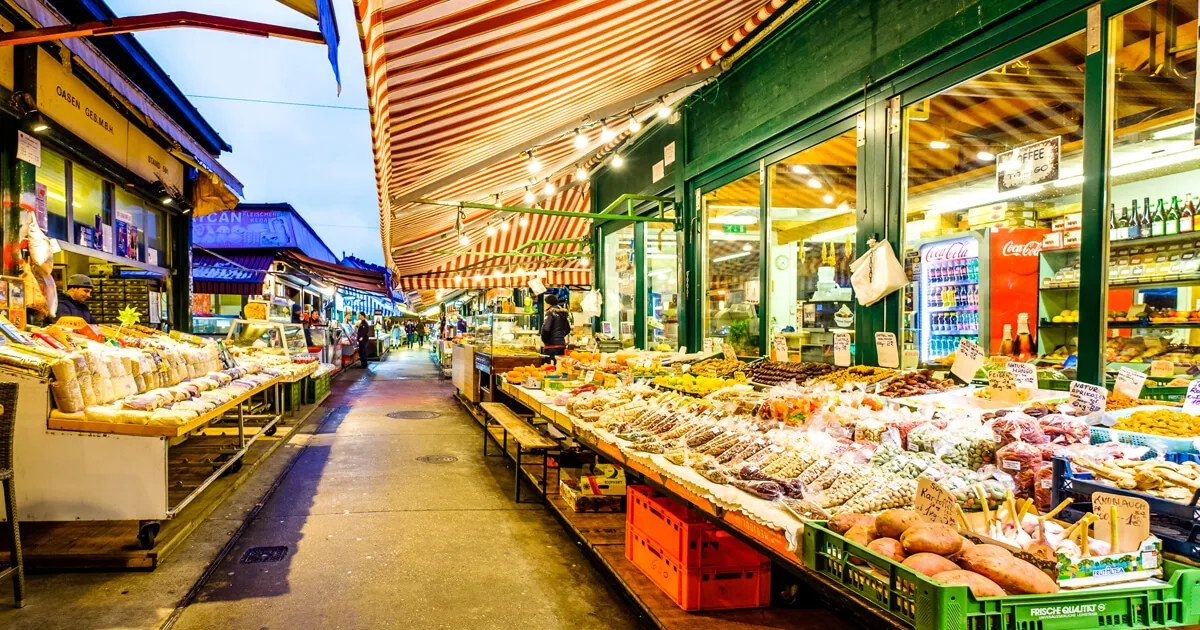
Naschmarkt, Austria
Farmers began gathering on this site
Farmers began gathering on this site in the 16th century to sell milk in wooden buckets, originally earning the name Aschenmarkt because of the ash heaps that once lined the riverbanks. The transition from a humble dairy market to an international bazaar began in earnest during the late 19th century when the Wien River was vaulted over with stone and concrete. Otto Wagner, the legendary Secessionist architect, left his mark on the market’s periphery with his famous Majolica House, featuring floral tiles that seem to mirror the produce in the stalls. Throughout the 20th century, the Naschmarkt survived the scars of war and the encroachment of modern supermarkets, evolving into a culinary sanctuary that preserved the city’s Gastwirtschaft traditions while embracing the flavors brought by generations of immigrants. Today, it remains a protected landmark where the architecture of the stalls is as strictly regulated as the quality of the mountain cheeses sold within them.
Navigating the narrow aisles on a busy Saturday
Navigating the narrow aisles on a busy Saturday, The rhythmic, percussive sounds of butchers at work and the persistent, melodic calls of vendors offering slices of honey-dripping persimmon. The light filters through the green metal awnings in dusty shafts, illuminating the fuzzy skin of apricots and the polished surfaces of Turkish delight. A trace of the occasional spray of cold water from a fishmonger’s hose, a sudden sharp contrast to the warmth radiating from the communal tables of the falafel bars. Those who come focus on the colorful center of the market, but The quiet, stoic elderly women at the edges selling nothing but hand-picked forest mushrooms or bunches of wild garlic. What stays with you is sitting at a wooden counter with a glass of crisp Grüner Veltliner, watching the reflected glow of the Jugendstil buildings dance in the puddles of the market floor as the sun begins to dip. The market occupies a long sliver of land easily reached by the U4 subway line, with stations at Karlsplatz, Kettenbrückengasse, and Pilgramgasse providing multiple entry points. Karlsplatz offers the most dramatic approach, leading you past the golden-domed Secession Building before the first stalls emerge. Walking is the preferred method of exploration, as the market is entirely pedestrian and requires a slow, meandering pace to appreciate the sheer variety of goods. For those coming from the Museumsquartier, a short five-minute stroll down the Getreidemarkt brings you to the market’s northern tip, where the transition from high art to high cuisine is marked by a sudden, irresistible shift in the city’s aroma.
The Experience
Right from the start, the scent of the market changes every twenty paces, moving from the brine of artisanal pickles to the deep, roasted cocoa notes of a boutique chocolatier. You catch is an unfiltered blend of Viennese dialect clashing with Turkish and Arabic, a linguistic texture that is unique to this specific stretch of pavement. The vibrant energy of the Saturday flea market at the far end, where the smell of old paper and brass polish replaces the aroma of food. The thing most visitors overlook is the intricate wrought-iron detail on the vintage stalls, a quiet nod to the craftsmanship of the late 19th century. The piece that stays with you is the first bite of a warm, rosemary-infused foccacia purchased from a stall while the morning mist still clings to the nearby rooftops.
Why It Matters
The Naschmarkt is Vienna's secular cathedral of consumption, representing the city's long history as the crossroads of Europe. It matters because it is a living museum of trade that resists the sterilization of modern retail, maintaining a direct link to the region's agricultural roots. Culturally, it is the one place in the city where social hierarchies dissolve over shared plates of hummus and plates of Kaiserschmarrn.
Why Visit
Borough Market has the history and La Boqueria has the color, but the Naschmarkt has a specific, defiant Viennese character that refuses to be purely a tourist attraction. You visit because it is the only place where you can shop for Alpine honey in the shadow of world-class Art Nouveau architecture. It offers a gritty, delicious reality that provides a necessary counterweight to the porcelain perfection of the inner city.
Insider Tips
- 1
Head to the very back of the market on a Saturday morning to find the authentic flea market where you can still bargain for genuine Habsburg-era porcelain and vintage postcards.
- 2
Look for the stalls selling 'Wiener Schnecken' if you want to try a forgotten local delicacy; snails were a staple of the Viennese diet long before they were associated with France.
- 3
Avoid the middle-aisle vendors who offer aggressive free samples; the best quality produce is usually found in the quieter, permanent shops along the outer edges.
- 4
Visit on a Tuesday or Wednesday morning to witness the local chefs doing their primary sourcing before the weekend crowds make the aisles impassable.