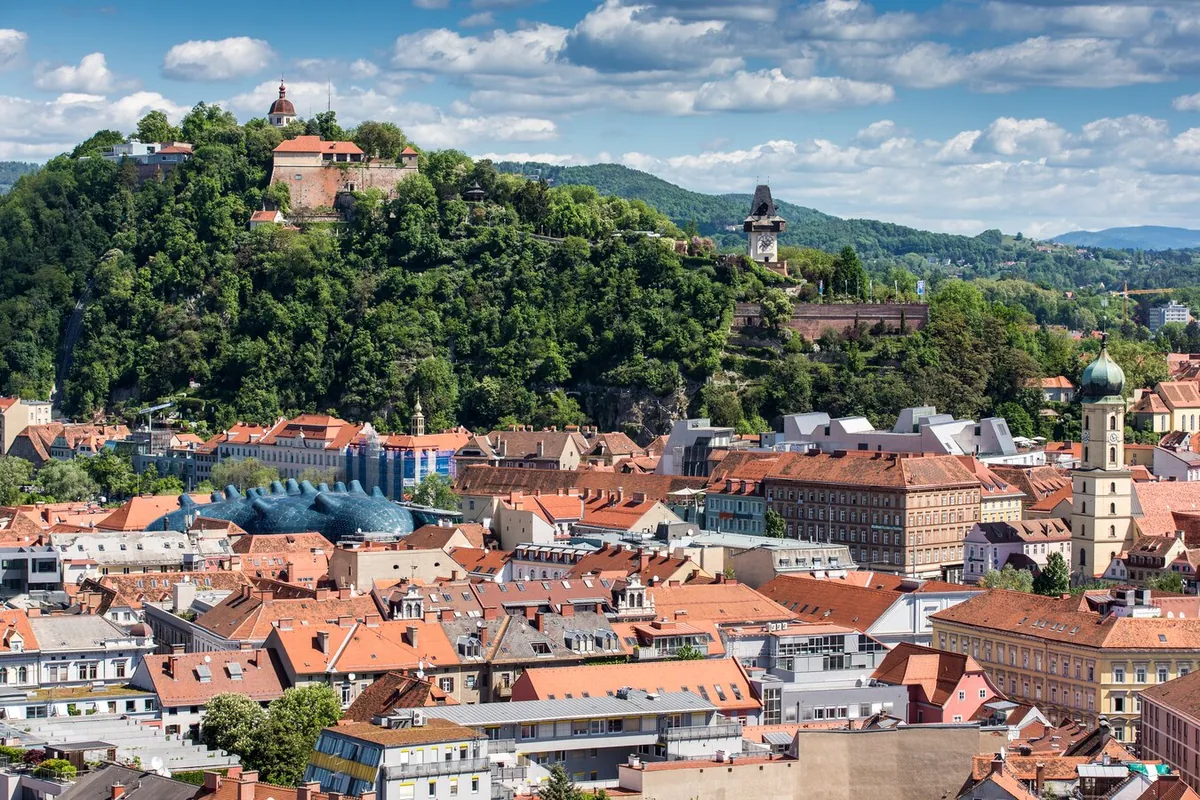
Schlossberg — modern landmark in Austria
🏙️ ModernAustria · 47.0761° N

Schlossberg

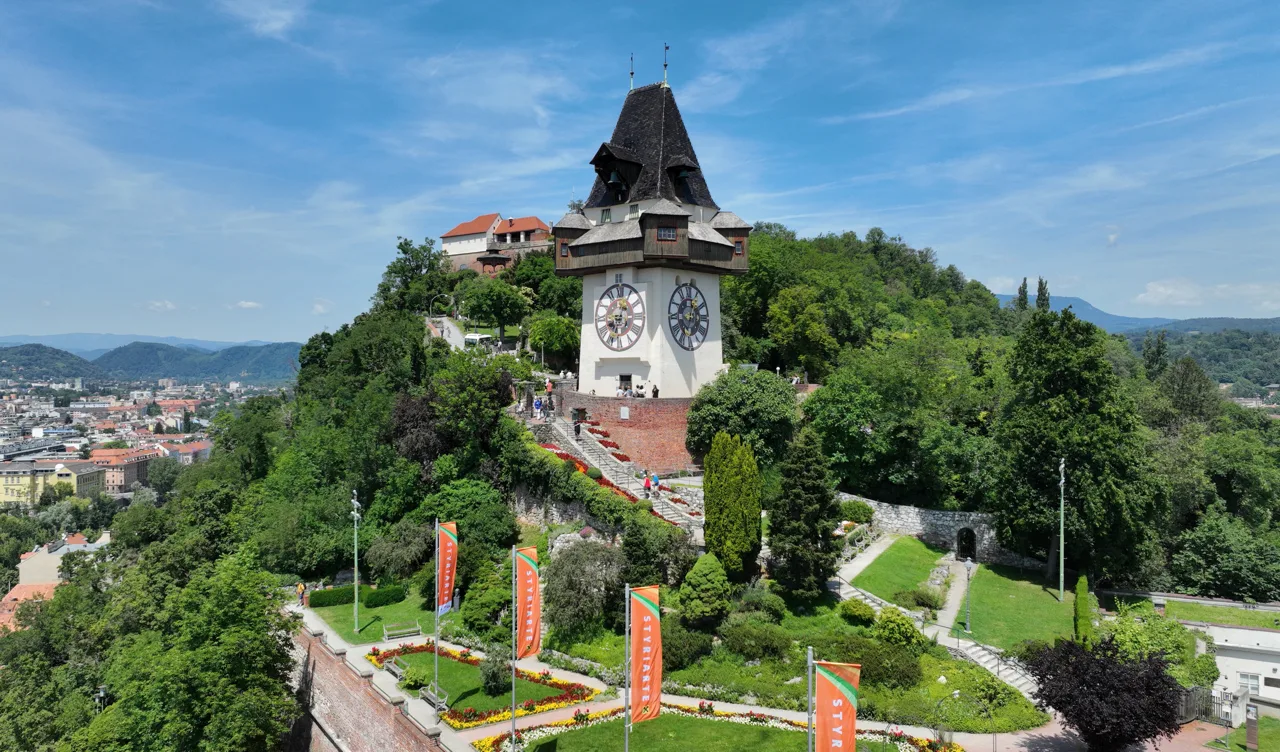
A dolomite hill rising 123 metres over the city; crowned by the 16th-century Uhrturm clock tower whose hands are reversed; the zigzagging stone stairs were carved during World War I; climb to the bastion at dawn to watch the red-tiled roofs of the Altstadt emerge from the Mur valley fog; the sound of the city waking is muffled by the heavy pine canopy.

Napoleon was so frustrated by this fortress that he ordered its total destruction, but the citizens of Graz paid a ransom to save their clock tower from the French explosives.

About Schlossberg

Fortifications on this dolomite crag date back to at least 1125, serving as a vital bulwark against Hungarian and Ottoman invasions. The citadel was expanded into a massive Renaissance masterpiece by Italian architects like Domenico dell'Allio in the mid-16th century. After the French demolition of 1809, the ruins sat neglected until Baron von Welden converted the site into a park. During World War II, a vast tunnel system was carved into the rock to protect 40,000 people from air raids, creating the subterranean world that now houses an underground railway and a nightclub.

A jagged dolomite rock juts suddenly from the sea of red-tiled roofs in Graz, topped by a clock tower whose hands tell time in a confusing, inverted dance. The Schlossberg remains the green heart of Styria's capital, a public park that was once a fortress so formidable it even earned the begrudging respect of Napoleon. Today, the ramparts that once held back Ottoman sieges are softened by sprawling wisteria, rose gardens, and a network of zigzagging stone stairs. Walking the plateau feels like navigating a layered cake of history, where medieval bell towers coexist with a subterranean slide and a futuristic glass lift. It represents the ultimate victory of a city's affection over military destruction, as the locals literally bought their landmark back from the brink of total demolition.

The hill has been inhabited since the 10th century, evolving from a small Slavic fort into a massive citadel that stood as the gateway to Central Europe. By the time Napoleon arrived in the early 1800s, the Schlossberg was considered the strongest fortress in the world. He failed to take it by force, but after defeating the Austrians elsewhere, he demanded the fortress be leveled as a condition of the Treaty of Schönbrunn in 1809. The townspeople of Graz, desperate to save their beloved Clock Tower and the Bell Tower, paid the French 2,987 guilders to spare them from the explosives. While the massive bastions were blown sky-high, these two icons remained, standing atop a skeleton of rubble that was eventually transformed into a romantic landscape garden in 1839. This explains the mountain's curious topography, where sheer cliffs drop off into manicured flowerbeds.

Climbing the 260 steps of the Schlossbergsteig, you notice the sound of the city fading into a chorus of songbirds and the rustle of leaves. The air at the summit feels noticeably cooler than in the Hauptplatz below, often carrying the scent of pine needles and warm stone. You feel the history under your fingertips as you touch the rough, porous dolomite of the old casemates. You notice the strange movement of the Uhrturm's clock hands; the large hand shows the hour while the small hand shows the minutes, a reversal designed for visibility from the market below in centuries past. Most visitors overlook the 'Liesl,' the city’s heaviest bell, which still hangs in the belfry and rings 101 times daily at certain hours. The moment that stays with you is standing on the Starcke House terrace at sunset, watching the Mur river glow like a silver thread as the orange lights of the city flicker on.

Reaching the summit offers a choice between a scenic sweat and effortless ascent. The Schlossbergbahn, a funicular that has been shuttling passengers since 1894, provides a glass-roofed climb with a 60 percent incline. For those who prefer a modern thrill, the Schlossberg Lift travels through the core of the mountain itself. Pedestrians can take the steep stone staircase from Schlossbergplatz or follow the gentler, winding paths through the woods from the Karmeliterplatz side. Graz itself is a primary stop on the Austrian Southern Railway, roughly two and a half hours by train from Vienna.

The Experience

You notice the rhythmic ticking of the great clock, a sound that has governed Graz since 1560. The gravel crunches under your feet as you navigate the narrow paths that skirt the cliff's edge. You feel a sense of vertigo looking down into the 'Lazarus' hole, a former prison shaft that plunges deep into the mountain. Most visitors miss the quiet corners of the Hackher-Löwe monument, dedicated to the major who successfully defended the hill against the French. The moment that stays with you is the view from the top of the Slide Graz, the world's tallest underground slide, before you plunge into the mountain's belly.

Why It Matters

The Schlossberg is the defining symbol of Styrian resilience and the cultural anchor of Graz's UNESCO World Heritage status. It is a rare example of a military site that successfully transitioned into a purely civic and aesthetic space. It embodies the city’s identity, merging the rugged medieval past with a playful, modern approach to urban life.

Why Visit

Visit the Schlossberg to experience a mountain that belongs to the people. It isn't just a viewpoint; it is an adventure park, a historical archive, and a botanical garden rolled into one. Nowhere else in Austria can you ride a 19th-century funicular, slide down a 175-meter tube through a mountain, and dine in a medieval bastion all in the same afternoon.

✦ Photo Gallery

Best Season

🌤 September is the ideal time to visit, as the summer heat has broken and the autumn foliage begins to turn the hill into a palette of copper and gold that perfectly matches the city's rooftops.

Quick Facts

Location

Austria

Type

attraction

Coordinates

47.0761°, 15.4372°

Learn More

Wikipedia article available

Insider Tips

  • 1

    Check the small hand on the Clock Tower first; it indicates the minutes, which is the opposite of almost every other clock in the world.

  • 2

    Take the Schlossbergbahn funicular up to save your legs and then walk the 'Kriegssteig' stairs down for the best views over the Mur river.

  • 3

    Visit the Kasemattenbühne during the summer to catch an open-air opera inside the ruins of the old fortress walls.

  • 4

    The tunnel system is open to pedestrians and provides a literal shortcut through the mountain if you are walking between Schlossbergplatz and Karmeliterplatz.

  • 5

    Look for the 'Türkenbrunnen' or Turkish Well, which was dug 94 meters deep into the rock to ensure a water supply during sieges.

All of Austria
Free Travel Tools
Games & Discover

Featured

Conquer the World

195 nations. One dart. Build your empire.

New Game

FateLand

Three darts. The world decides your fortune, heartbreak & legacy.

FateLand
Fortune. Heartbreak. Legacy. Throw & find out.
Show on Map