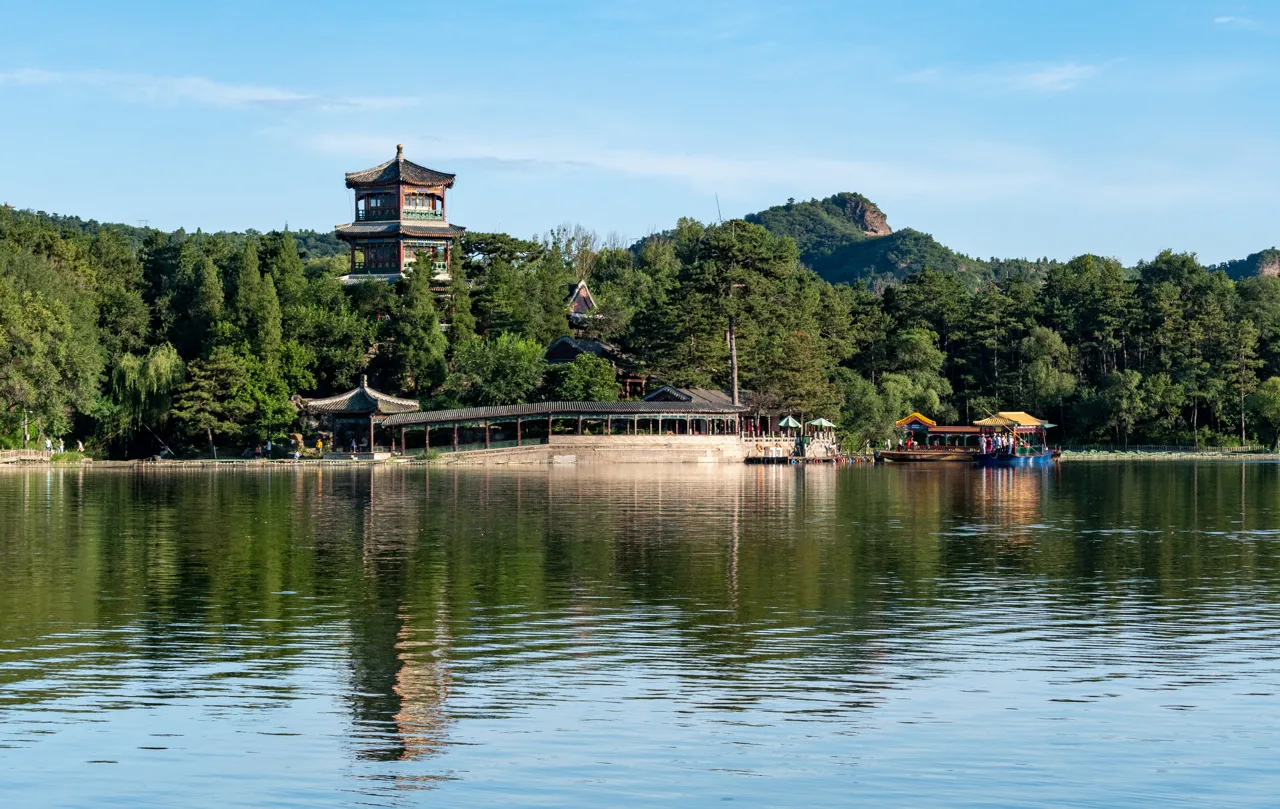
“Three Qing emperors spent ninety years building a summer capital in the Hebei highlands. The outlying temples, in Tibetan, Han, and mixed styles, were built as diplomatic architecture for the peoples of a multi-ethnic empire.”
About Mountain Resort Chengde
Constructed 1703–1792 by emperors Kangxi, Yongzheng, and Qianlong, the Mountain Resort and its outlying temples served as a summer court and diplomatic reception venue for Qing China. The temples were designed to reflect the religious traditions of Central Asian, Mongolian, and Tibetan peoples under Qing rule. UNESCO World Heritage Site since 1994.
What Mountain Resort and its Outlying Temples
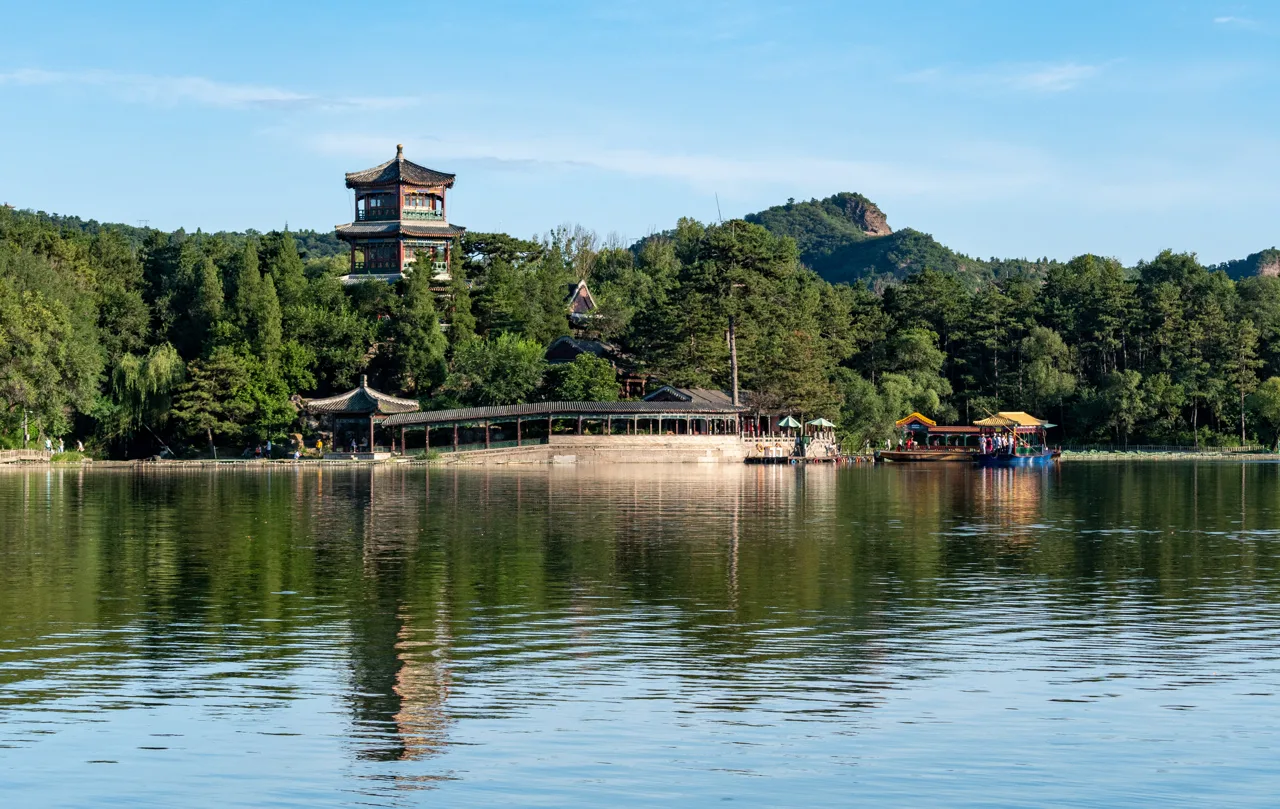
The Mountain Resort at Chengde, Bishu Shanzhuang, is the largest surviving imperial garden complex in China, covering 5.6 square kilometers of lakes, forests, grassland, and palace buildings. The 72 imperial views, eight outlying temples, and surrounding wall were built between 1703 and 1792 by three Qing emperors as a summer capital and diplomatic reception center. It received UNESCO status the complex a World Heritage Site in 1994.
6 square kilometers of lakes, forests, grassland, and palace buildings.
The Qing emperors chose Chengde, 250 kilometers northeast of Beijing in the Hebei highlands, because the landscape reminded them of the Mongolian steppe, the home terrain of the Manchu ruling dynasty. The resort served as more than a retreat: it was the venue where the Qing court received Central Asian and Mongolian leaders, and the outlying temples, built in Tibetan, Han, and other styles, were constructed specifically to demonstrate Qing respect for the religious traditions of the peoples the empire encompassed. The Puning Temple contains China's tallest indoor wooden sculpture: a 22-meter Guanyin bodhisattva. The complex fell into disrepair after the Qing dynasty collapsed in 1912 and has been under restoration since the 1980s.
The resort grounds require a full day to cover, the lake section and the palace buildings are the most visited, while the grassland and forest areas in the northern section require cycling or golf cart transport. The outlying temples are distributed around the mountain slopes outside the main wall and require separate visits by taxi or tour bus. The Puning Temple's great hall, housing the towering Guanyin, is the single most impressive interior in the complex. Chengde is accessible from Beijing by train (4 hours by regular rail) or high-speed rail (2 hours from Beijing North). The resort and outlying temples are accessible by taxi or local bus from Chengde station.
The Experience
A 5.6-square-kilometer imperial landscape of lakes, forest, grassland, and palace buildings, with eight outlying temples on surrounding slopes, including the Puning Temple housing China's tallest indoor wooden sculpture.
Why It Matters
The Mountain Resort is the physical record of the Qing dynasty's approach to multi-ethnic empire, using landscape, architecture, and religious patronage as instruments of political integration across China's vast and diverse territories.
Why Visit
The scale and variety of the complex, grassland, lakes, forests, and temples in multiple architectural traditions, make it one of China's most undervisited significant sites, largely because Beijing's greater fame draws visitors away.
✦ Insider Tips
- 1
Rent a bicycle at the main gate, the resort grounds are too large to walk comfortably.
- 2
Budget a separate half-day for the outlying temples; they require transport and additional tickets.
- 3
The Puning Temple is the single most worthwhile stop among the outlying temples.