“This fort was built so cleverly that in 1741 a massive British invasion fleet besieged it and was beaten back.”
About Castillo San Felipe de Barajas
San Felipe was begun in the 17th century and steadily enlarged into the greatest Spanish fortress in the Americas, protecting Cartagena, a key port through which the wealth of the New World flowed to Spain. Its sophisticated design withstood the major British siege of 1741 under Admiral Vernon. Together with the city's walls, the fort is part of Cartagena's UNESCO World Heritage Site.
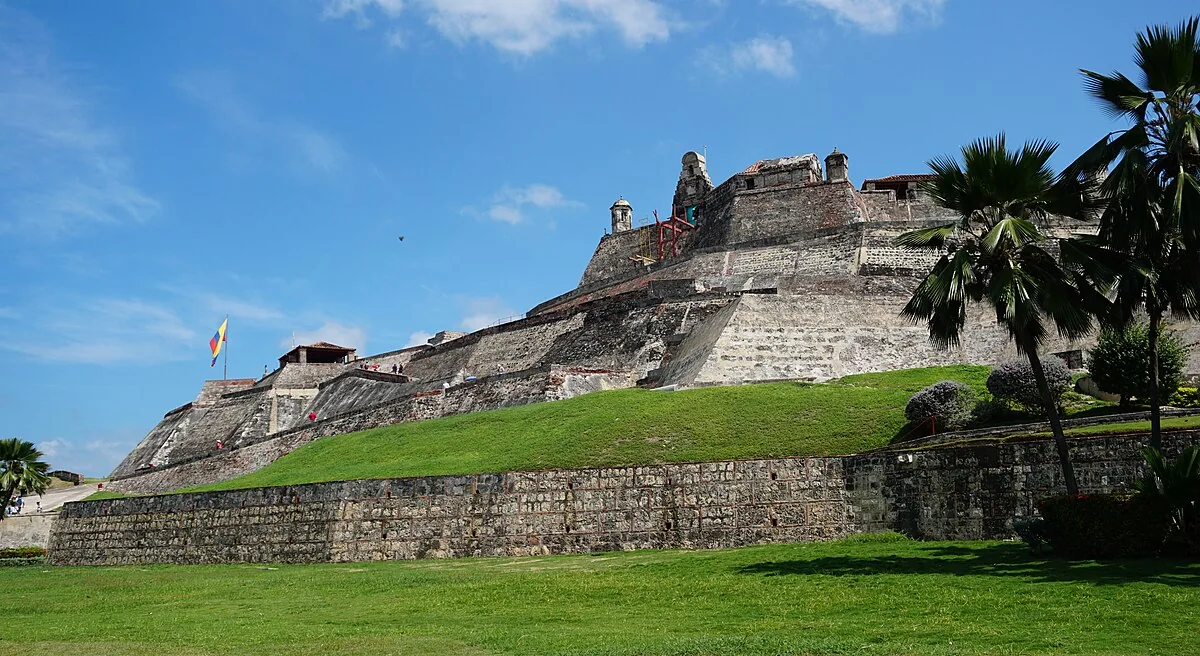
The Castle of San Felipe de Barajas is a massive Spanish colonial fortress overlooking the city of Cartagena on Colombia's Caribbean coast. The largest and most formidable fort the Spanish built in the New World, its sloping ramparts, gun batteries and warren of tunnels defended the wealthy port from pirates and rival empires for centuries.
The Castle of San Felipe de Barajas is a massive Spanish colonial fortress overlooking the city of Cartagena on Colombia's Caribbean coast.
The Fort That Could Not Be Taken
Built and expanded from the 17th century, San Felipe was engineered to be virtually impregnable, with angled walls to deflect cannon fire and a network of tunnels designed so defenders could move unseen and detect enemy mining. Its strength was proven in 1741, when a huge British fleet besieged Cartagena and was repulsed, a famous defence that helped keep the city Spanish. The fort guarded the treasure-rich port at the heart of Spain's American empire.
The Experience
Heading up the great sloping ramparts for sweeping views over Cartagena and the Caribbean, then explore the network of dark, echoing tunnels burrowed through the fortress, designed to confuse and ambush attackers. The scale of the engineering and the stories of siege and defence bring the colonial era vividly to life. The fort is especially atmospheric in the late afternoon light.
Why It Matters
The Castle of San Felipe is the masterpiece of Spanish colonial military engineering in the Americas and a centrepiece of Cartagena's UNESCO World Heritage Site. It symbolises the wealth, conflict and strategic importance of the Caribbean port at the heart of Spain's empire.
The Castle of San Felipe is the masterpiece of Spanish colonial military engineering in the Americas and a centrepiece of Cartagena's UNESCO World Heritage Site.
Why Visit
The largest Spanish fort in the Americas, a mighty Cartagena fortress with sweeping Caribbean views and a labyrinth of defensive tunnels to explore.
✦ Insider Tips
- 1
Explore the network of defensive tunnels inside the fort.
- 2
Climb the ramparts for views over Cartagena and the sea.
- 3
It withstood a major British siege in 1741.
- 4
Visit in cooler hours, as the fort is hot and exposed.