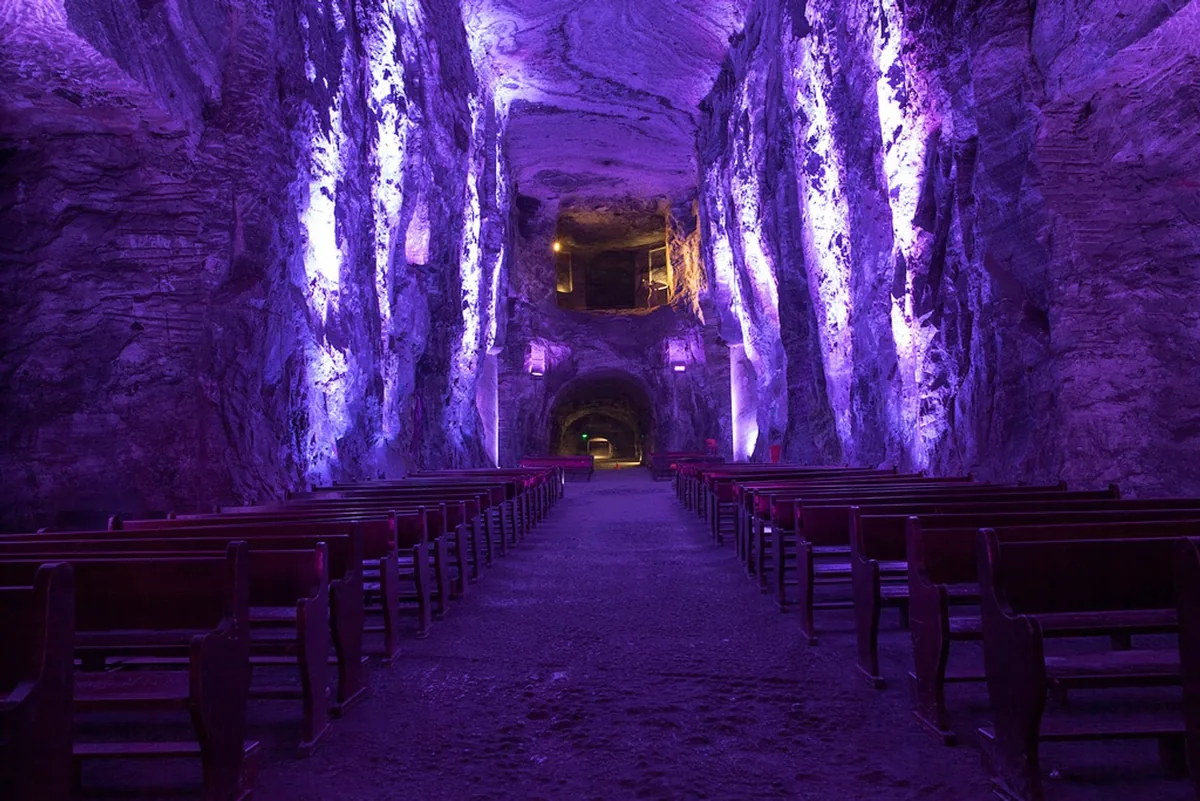
Sculptors carved this entire cathedral, altars and all, 200 metres underground from the rock of a working salt mine.
About Salt Cathedral of Zipaquirá
The salt deposits near Zipaquira have been mined since the era of the indigenous Muisca, and miners traditionally carved a chapel underground. In the 20th century a full cathedral was sculpted within the mine, and after the original was closed for safety, a new and larger Salt Cathedral was inaugurated in 1995. It became a celebrated pilgrimage site and tourist attraction, sometimes called a jewel of modern Colombia.
The Salt Cathedral of Zipaquira is an extraordinary church carved deep underground within the tunnels of a working salt mine near Bogota. Some 200 metres below the surface, sculptors have hewn naves, altars and the Stations of the Cross directly from the ancient halite rock, creating a vast, dimly lit subterranean cathedral that is one of Colombia's most unusual attractions.
A Cathedral Carved in Salt
The cathedral was created within a salt mine that has been worked since pre-Columbian times by the indigenous Muisca people. Miners had long carved a small chapel underground for their devotions, and in the 20th century this grew into a grand cathedral hewn entirely from the salt deposits, formed in a sea bed some 250 million years ago. The fourteen Stations of the Cross, the nave and a giant cross are all sculpted from the rock, lit by coloured light in the darkness.
The Experience
You descend through tunnels deep into the earth, passing the fourteen Stations of the Cross, each carved from the salt and softly illuminated, before reaching the soaring main nave with its monumental cross glowing in the gloom. Guides explain the geology and the carving. The scale, the darkness and the strangeness of a cathedral hewn from salt far underground make it a unique and memorable experience.
Why It Matters
The Salt Cathedral is one of Colombia's most distinctive landmarks and a remarkable fusion of mining heritage, faith and sculpture. Carved from ancient salt deep underground, it draws pilgrims and visitors from around the world and is a symbol of Colombian ingenuity and devotion.
Why Visit
An astonishing cathedral carved 200 metres underground from the rock of a salt mine, with sculpted Stations of the Cross and a glowing nave, near Bogota.
✦ Photo Gallery
Best Season
🌤 Bogota's highland climate is cool year-round, and the cathedral is underground, so it is visitable in any weather. It is busiest on weekends; weekdays are quieter.
Quick Facts
Best time to visit
Bogota's highland climate is cool year-round, and the cathedral is underground, so it is visitable in any weather. It is busiest on weekends; weekdays are quieter.
Getting there
In Zipaquirá, Colombia; reach Zipaquirá first, then continue to the site.
What's nearby
Monserrate is also close by.
Location
Zipaquirá, Colombia
Type
attraction
Coordinates
5.0188°, -74.0093°
Insider Tips
- 1
Follow the carved Stations of the Cross down to the main nave.
- 2
Take a guided tour for the geology and carving history.
- 3
Weekdays are quieter than busy weekends.