A Schwarzenberg prince protected this forest from logging in 1858 as a scientific reference point, to document what the managed forests around it were being changed from. The trees have been growing undisturbed for 166 years. Some are 400 years old.
About Boubín Primeval Forest
Protected since 1858 by Prince Schwarzenberg for scientific reference purposes. Continuous botanical and forestry research since that date makes Boubín one of the most documented old-growth fragments in Europe. The reserve is the oldest protected forest in Central Europe.
The Boubín Primeval Forest, Boubínský prales, is a 46-hectare nature reserve in the Šumava mountain range of South Bohemia, protecting a remnant of old-growth mixed forest that has not been subject to commercial logging since 1858. The reserve contains spruce, beech, and fir trees up to 400 years old, fallen trunks in various stages of decomposition, and a forest floor ecology that represents the baseline condition for Central European montane forest before industrial forestry altered it. Boubín is the oldest protected forest reserve in Central Europe.
“Boubín is the oldest protected forest reserve in Central Europe.”
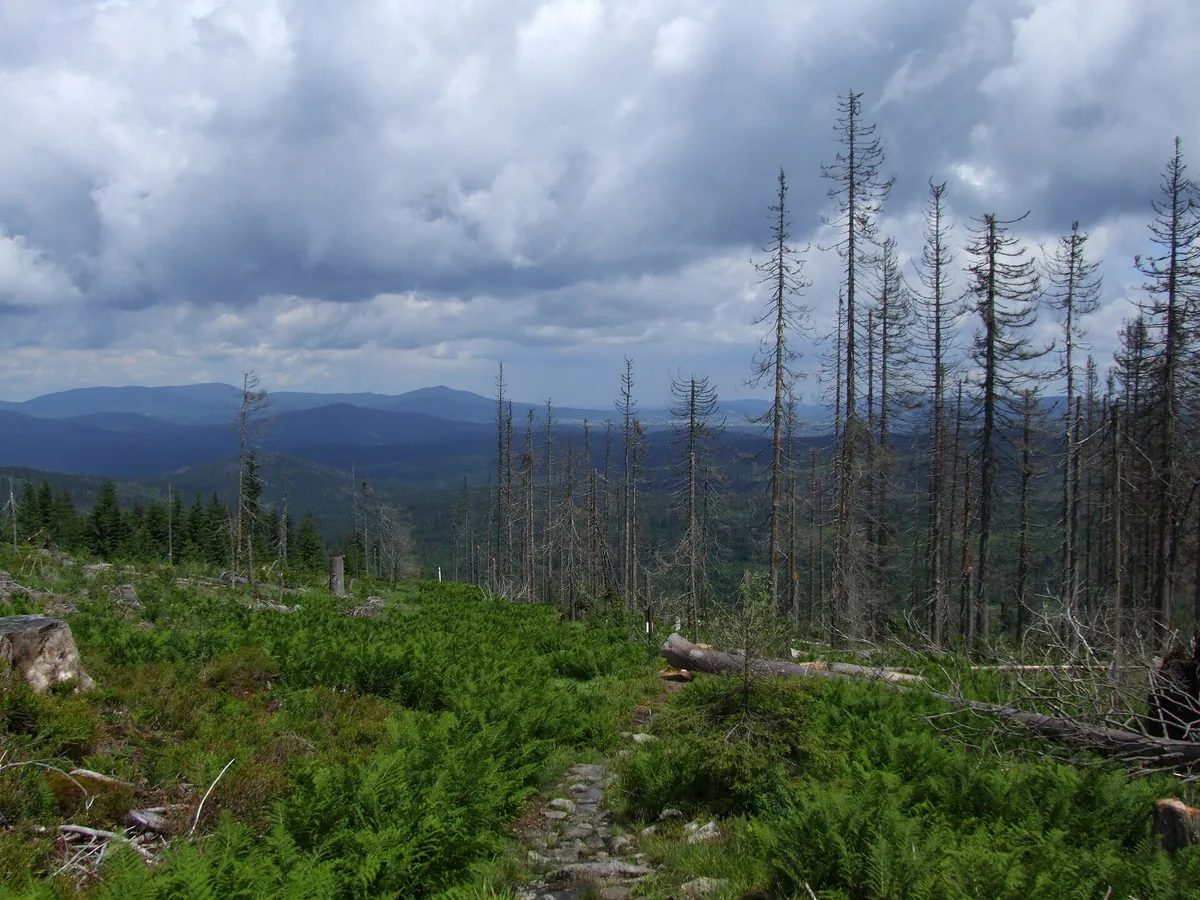
Boubín Primeval Forest, Czechia
was first protected, 1858
The forest was first protected in 1858 by Prince Johann Adolf Schwarzenberg, whose estate managed the surrounding Šumava forests commercially. Schwarzenberg set aside the Boubín summit area specifically for scientific study, the reserve was intended as a reference point for understanding what the managed forests around it were being changed from. Czech botanists and foresters have used it as a research site ever since; the continuity of scientific observation since 1858 makes Boubín one of the most documented old-growth forest fragments in the world. The reserve survived both the twentieth-century timber demands of two world wars and the atmospheric acidification that killed the surrounding spruce monocultures in the 1980s.
A marked circular trail of approximately 5 kilometers rings the reserve and provides views into the interior without entering the strictly protected core. The fallen trunks and standing dead trees visible from the path demonstrate the decomposition cycle that commercial forests interrupt, wood in various stages from fresh fall to soil. The forest floor, with its moss cover and root networks, is visually different from managed forest in ways that become apparent on the walk. The summit of Boubín hill (1,362 meters) has a wooden observation tower with views across the Šumava landscape.
National Park
Boubín is in the Šumava National Park, accessible from Zátoň or Kubova Huť villages. The nearest town with train connections is Vimperk (20 kilometers). A car is the most practical approach; the forest trail begins from the Zátoň parking area.
“Boubín is in the Šumava National Park, accessible from Zátoň or Kubova Huť villages.”
The Experience
A 5-kilometer circular trail around the reserve perimeter showing fallen and standing dead trees in various decomposition stages, old-growth moss-covered forest floor, and a summit observation tower with Šumava landscape views.
Why It Matters
Boubín is both an ecological baseline for Central European montane forest and a scientific archive with 166 years of continuous observation, a place whose value lies precisely in what has not happened to it since 1858.
Why Visit
Old-growth forest is ecologically rare in Central Europe, and the difference between a managed spruce plantation and a 400-year-old mixed forest is visible and physical. Boubín makes the comparison available in a single walk.
Insider Tips
- 1
Walk the perimeter trail slowly and look at the fallen trunks, the decomposition stages are the ecological content of the reserve.
- 2
The summit observation tower is worth the climb for the Šumava panorama.
- 3
Combine with the Šumava National Park peat bogs for a full day in the Šumava old-growth landscape.