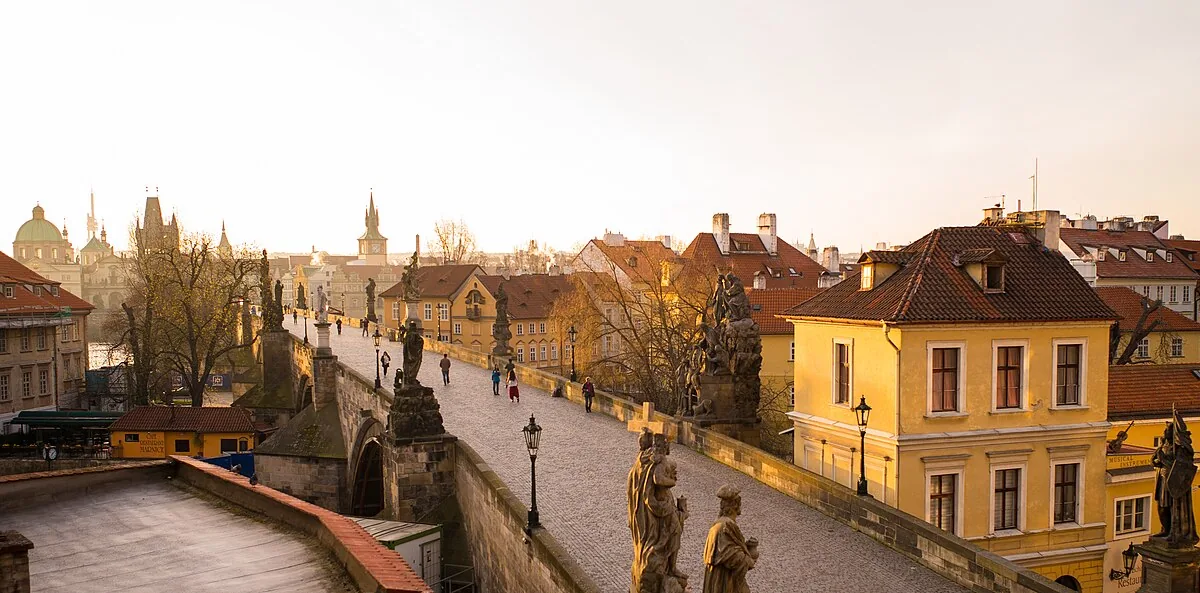
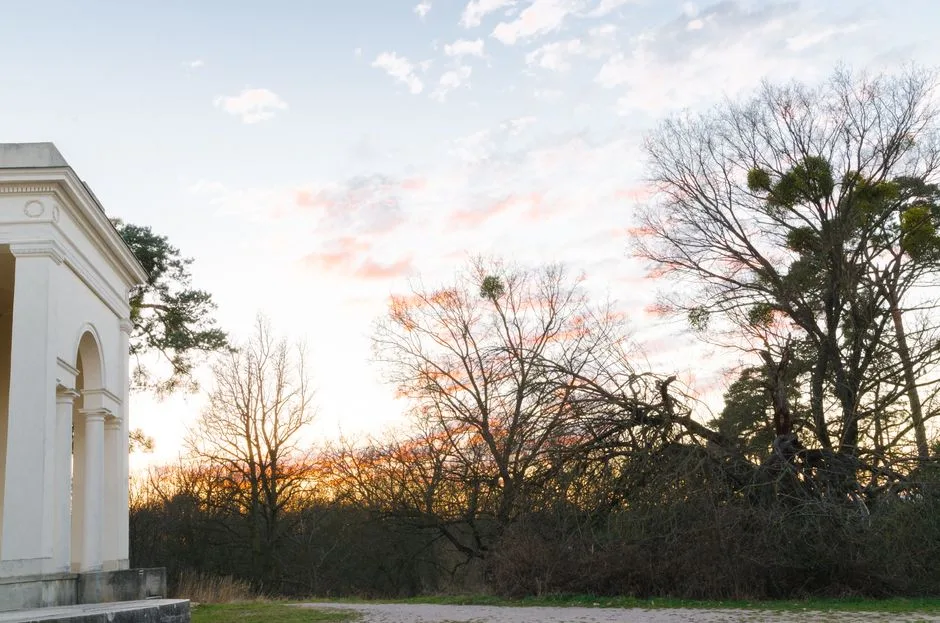
“The world's largest ancient castle complex has been continuously occupied as a seat of power since 880 CE, from Bohemian princes through Holy Roman emperors through the Nazi Protectorate to Václav Havel, who kept an office here after writing plays in prison.”
About Prague Castle
Founded around 880 CE, expanded through the Přemyslid, Luxembourg, and Habsburg dynasties. St. Vitus Cathedral begun 1344, completed 1929. Rudolf II made the castle a Renaissance art center. Josip Plečnik redesigned gardens and courtyards for independent Czechoslovakia in the 1920s.
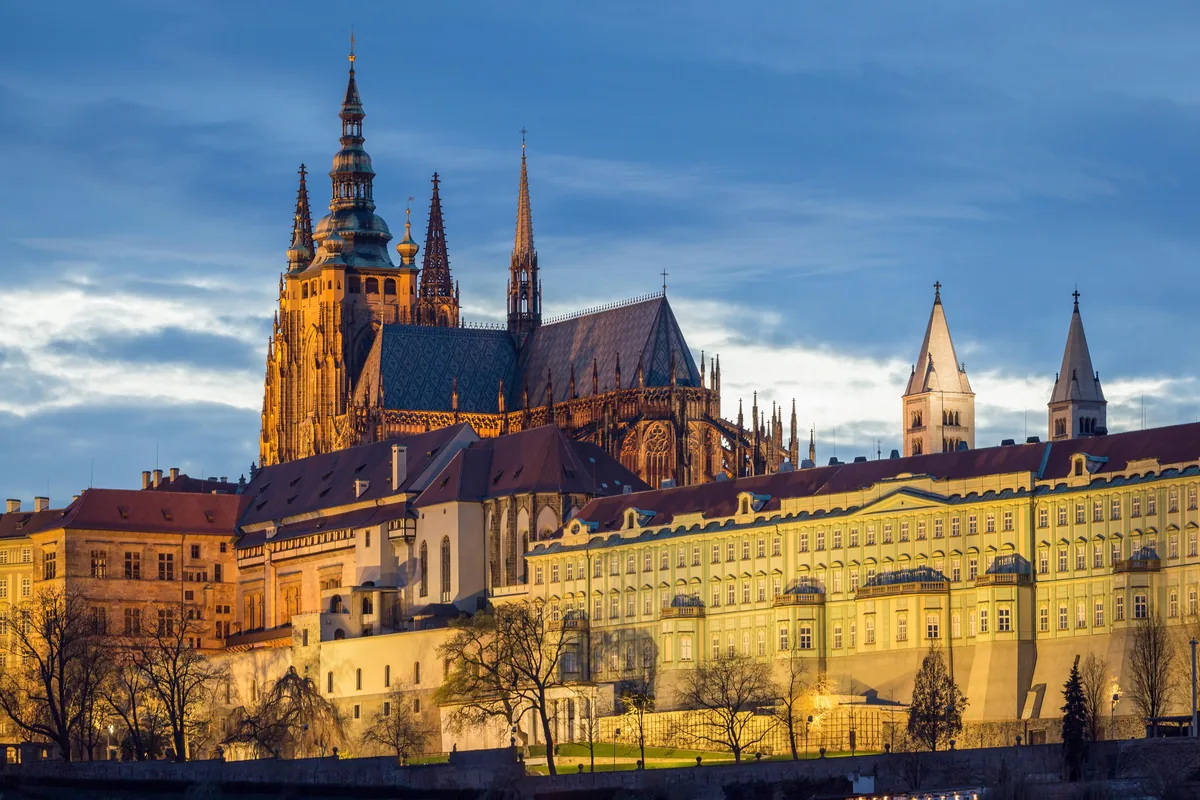
Prague Castle is the largest ancient castle complex in the world, covering 70,000 square meters, and has was the seat of Bohemian kings, Holy Roman emperors, presidents of Czechoslovakia, and presidents of the Czech Republic continuously since the ninth century. The complex contains St. Vitus Cathedral, the Old Royal Palace, St. George's Basilica, the Golden Lane, and multiple palaces, gardens, and galleries within its fortified circuit. The castle and its cathedral dominate the Prague skyline from the Hradčany hill above the Vltava.
George's Basilica, the Golden Lane, and multiple palaces, gardens, and galleries within its fortified circuit.
Commissioned by Prince Bořivoj
The castle's origins date to around 880 CE when Prince Bořivoj built the first fortified seat on the hill. The complex expanded with Bohemia's political significance, Wenceslas I, Charles IV as Holy Roman Emperor, Rudolf II who made it a center of Renaissance art and science, and through the Habsburg period to the first Czechoslovak president Tomáš Masaryk, who commissioned Slovenian architect Josip Plečnik to renovate the gardens and courtyards in the 1920s. The castle was the seat of the Nazi Protectorate administration during the occupation. Václav Havel took his presidential oath here in 1989 and used the castle as a platform for the country's post-communist re-identification with European values.
St
St. Vitus Cathedral, begun in 1344 and completed in 1929, is the dominant interior, the stained glass windows include Art Nouveau panels by Alfons Mucha. The Vladislav Hall in the Old Royal Palace is a Gothic riding hall large enough to host jousting tournaments indoors. The Golden Lane's small colored houses, originally artisan workshops, includes house number 22 where Franz Kafka wrote in winter 1916–17. The Plečnik gardens below the southern walls are the most peaceful part of the complex.
Tram 22 to Pražský hrad or Pohořelec stops.
Metro Line A to Malostranská, then uphill on foot through Malá Strana. The west gate on Hradčanské náměstí is the main entrance.
The Experience
St. Vitus Cathedral's Mucha stained glass, the Vladislav Hall's Gothic riding dimensions, the Golden Lane's colored artisan houses (including Kafka's writing room), and the Plečnik gardens, the complex requires a full day and rewards selective attention.
Why It Matters
Prague Castle is the continuous physical seat of Central European power for eleven centuries and the architectural record of every major political transition in Czech history, from Přemyslid princes to Communist presidents to Václav Havel.
Why Visit
The scale and layering of the complex, nine centuries of construction, renovation, and political overlay on a single hill, is genuinely without equivalent in Central Europe. The cathedral alone justifies the visit; the rest of the complex extends it.
✦ Insider Tips
- 1
Buy the Long Tour ticket to access St. Vitus, the Old Royal Palace, St. George's, and the Golden Lane.
- 2
Start in the cathedral early when the light is best on the Mucha windows.
- 3
The Plečnik gardens on the southern slope are often empty even when the main courtyards are crowded.