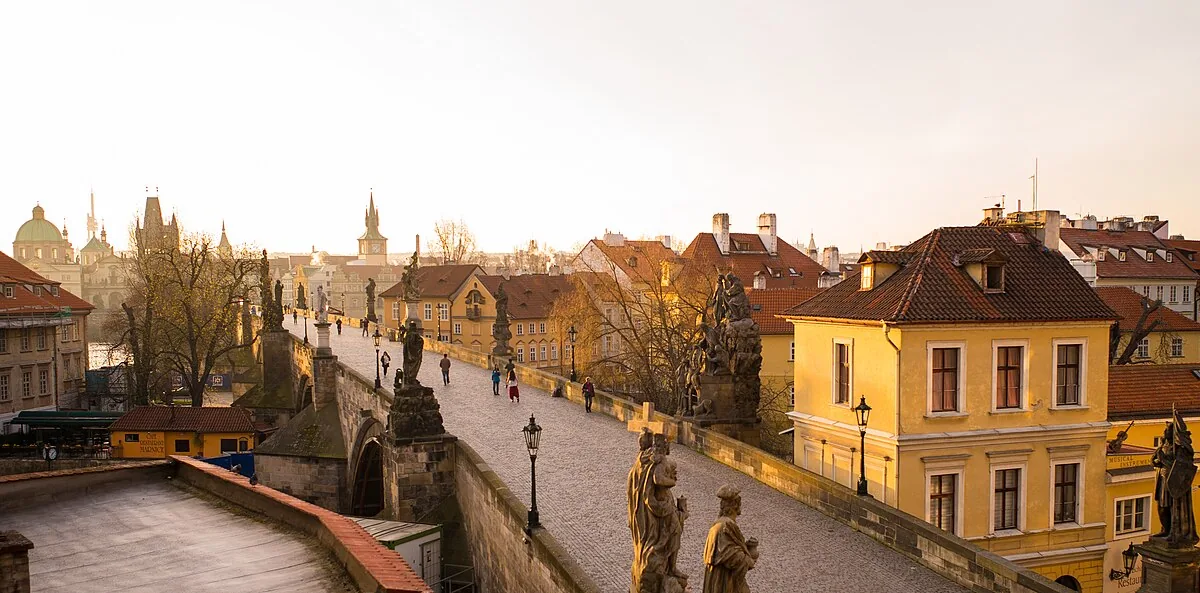
The foundation stone was laid at a date selected by astrologers for its palindromic numerology. The bridge took sixty years to build. The 30 Baroque statues came later, as Catholic propaganda after a religious war. The hour you cross it changes everything.
About Charles Bridge
Commissioned by Charles IV and begun 1357, the bridge replaced an earlier crossing destroyed by floods. Completed in the early 15th century, it served as Prague's only Vltava crossing until 1841. The Baroque statues were added 1683–1714 as counter-Reformation declarations on the city's most-trafficked route.
Charles Bridge in short
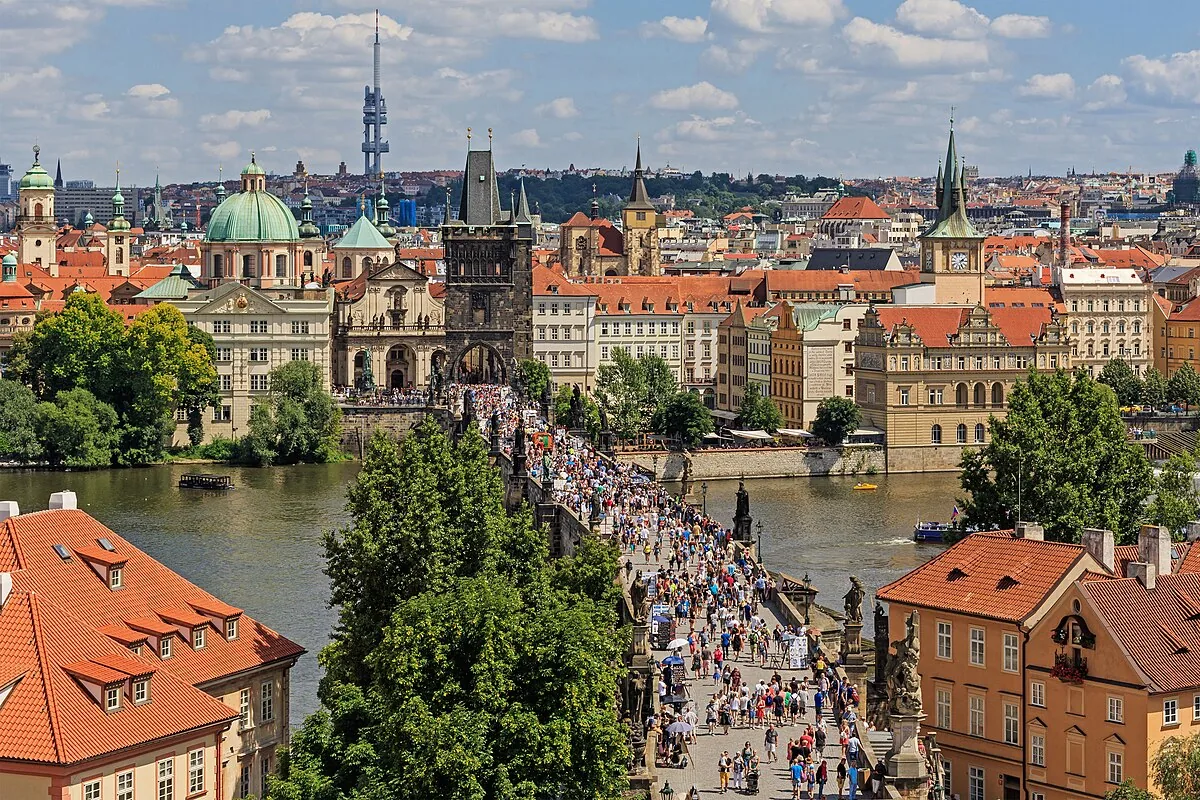
Charles Bridge crosses the Vltava River in Prague and has been the primary stone crossing between the Old Town and Malá Strana since its completion in the early fifteenth century. The bridge is 516 meters long, carried on sixteen arches, and lined on both sides with 30 Baroque statues added between 1683 and 1714, a sculptural program that turned the crossing into a processional route through outdoor sacred art. Millions of people cross it each year; the experience varies entirely depending on the hour.
“Charles Bridge crosses the Vltava River in Prague and has been the primary stone crossing between the Old Town and Malá Strana since its completion in the early fifteenth century.”
Charles Bridge, Czechia
commissioned the bridge, 1357
King Charles IV commissioned the bridge in 1357, replacing an earlier stone crossing that had been destroyed by floods. The foundation stone was laid at a date and time, July 9, 1357 at 5:31am, selected by astrologers for its palindromic numerical significance: 1357935731. Construction took nearly sixty years. The bridge was the only Vltava crossing in Prague until 1841 and was therefore the site of royal processions, public executions, trade traffic, and military crossings for nearly five centuries. The 30 Baroque statues, led by the original Jan Brokoff and Matthias Braun commissions, were additions by the Catholic establishment after the Thirty Years' War, a counter-Reformation statement in stone on the most-trafficked crossing in Bohemia.
At 6am the bridge is quiet enough to hear the river and see the castle towers above the mist. By 9am the tourist density makes forward movement a negotiation. The Baroque statues, most of them copies of the originals now in the National Museum, reward individual attention that the crowd makes difficult. The bridge towers at both ends are climbable; the Old Town tower, built in Gothic style around 1380, provides the classic view down the bridge length toward the castle.
Charles Bridge is at the center of Prague's historic core, connecting Staré Město to Malá Strana. Metro Line A to Malostranská (Malá Strana side) or walk from Old Town Square (10 minutes). No vehicles; pedestrian only.
“Charles Bridge is at the center of Prague's historic core, connecting Staré Město to Malá Strana.”
The Experience
A pedestrian crossing whose character depends entirely on the hour, silent at dawn, dense with visitors by mid-morning. The Gothic Old Town tower is climbable for the canonical view down the bridge toward Prague Castle.
Why It Matters
Charles Bridge has been the physical spine of Prague's public life, processions, executions, commerce, and siege, for six centuries. The Baroque sculptural program is the largest outdoor gallery of 17th-century religious art in Central Europe.
Why Visit
The bridge at dawn, before the tourist concentration builds, is one of Central Europe's genuine early-morning rewards. The rest of the day it remains worth crossing, but crossing it alone, with the castle in the mist, is a different experience.
Insider Tips
- 1
Cross at dawn for the experience; cross again in the evening for the lit castle view, treat them as two different visits.
- 2
Climb the Old Town Bridge Tower for the best architectural view of the bridge length.
- 3
The statues are mostly copies; the originals are in the Lapidárium of the National Museum.