Kutná Hora's silver miners built a church to rival Prague's cathedral and funded it with the same silver that was running out. Saint Barbara took over a century to complete and the tent roofs were added to cover what was still unfinished.
About Saint Barbara Church
Commissioned by Kutná Hora's mining community in 1388, built by the same Prague workshop constructing St. Vitus Cathedral. Construction stalled repeatedly as mine production declined; neo-Gothic completion in 1905. UNESCO World Heritage Site (part of Kutná Hora historic center) since 1995.
About Saint Barbara Church
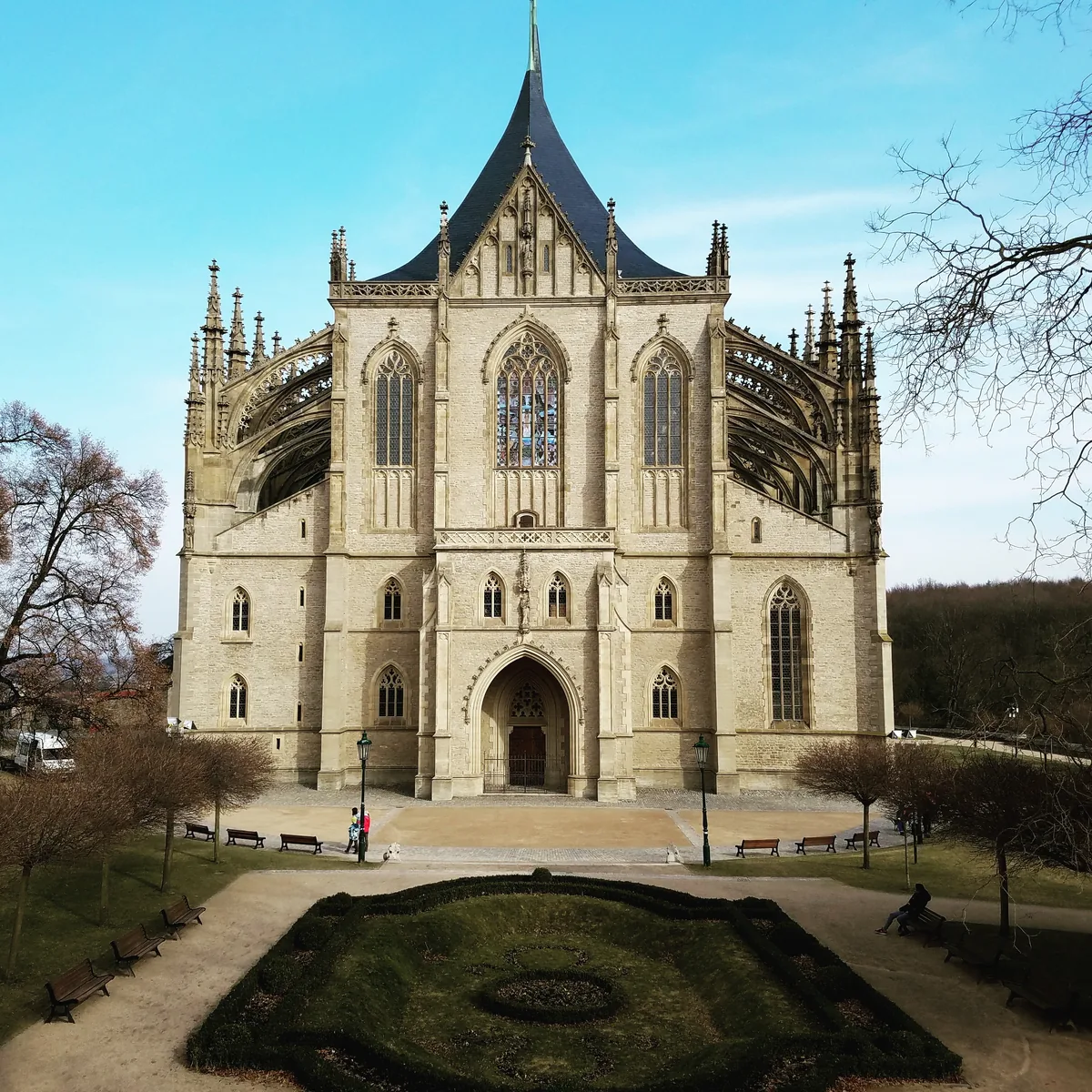
The Church of Saint Barbara in Kutná Hora is one of the finest Gothic churches in Central Europe, a five-aisled cathedral with a distinctive tent-roof silhouette and a ribbed vault interior commissioned by the wealthy silver-mining town as a monument to the patron saint of miners. Construction began in 1388 and continued for over a century, involving the same workshop that was simultaneously building St. Vitus Cathedral in Prague. UNESCO designation in 1995 recognized its significance as part of the Kutná Hora historic site.
Kutná Hora was, in the fourteenth and fifteenth centuries, the second-richest city in Bohemia after Prague, its silver mines supplied the Bohemian royal treasury and financed the Přemyslid and Luxembourg dynasties. The town's wealth funded the competition to build a church that could rival Prague's cathedral, and Saint Barbara was the result: an ambitious five-nave structure with flying buttresses, an elaborate ribbed vault, and frescoes depicting the mining activities that paid for it. Construction stalled repeatedly as mine productivity fluctuated, and the church was completed only in 1905 after neo-Gothic restorations. The tent roofs on the nave were a late addition to weatherproof the still-unfinished structure.
The interior is unusually bright for a Gothic church, the high clerestory windows and white-washed walls keep the nave luminous. The late-Gothic ribbed vault is the primary architectural achievement: a pattern of intersecting ribs that creates a three-dimensional geometry visible from the nave floor. Frescoes in the side chapels depict miners at work, a specific iconographic program documenting the industry that built the church. The approach from the Jesuit College via the Baroque statue-lined terrace gives the church a processional approach that rewards the walk from the town center.
Saint Barbara's is at the western edge of Kutná Hora's historic center, 15 minutes walk from the main square. Kutná Hora is 1 hour by train from Prague's main station.
The Experience
A luminous five-nave Gothic interior with an elaborate ribbed vault, mining-themed frescoes in the side chapels, and a Baroque statue-lined terrace approach, the combination of sacred architecture and documentary industrial imagery is unique in Czech Gothic.
Why It Matters
Saint Barbara is the architectural monument to the medieval silver-mining economy that made Kutná Hora Bohemia's second city, and its mining iconography makes it the only major Gothic church in Europe that documents the industry that funded it.
Why Visit
The ribbed vault, the mining frescoes, and the terrace approach together make Saint Barbara one of the more layered Gothic churches in Central Europe, architecture, economic history, and sacred art in a single building.
✦ Photo Gallery
Best Season
🌤 Year-round; the interior is best in morning light when the clerestory windows illuminate the vault.
Quick Facts
Best time to visit
Year-round; the interior is best in morning light when the clerestory windows illuminate the vault.
Getting there
In Kutná Hora, Czechia; reach Kutná Hora first, then continue to the site.
Location
Kutná Hora, Czechia
Type
attraction
Insider Tips
- 1
Approach on foot from the Jesuit College terrace, the processional approach is part of the architectural experience.
- 2
Look at the side chapel frescoes specifically for the mining scenes, a miner with a candle is the most legible.
- 3
Combine with the Sedlec Ossuary 2 kilometers away on the same day trip from Prague.