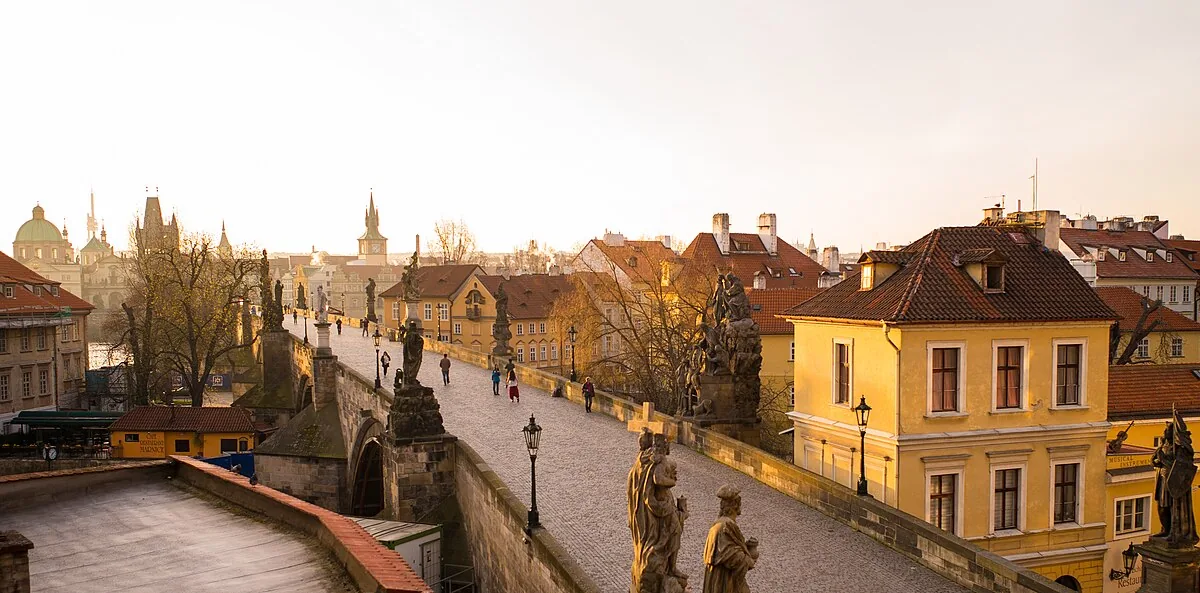
Charles IV's hunting dogs found these springs in 1370. By the nineteenth century, Goethe, Beethoven, and the Austro-Hungarian aristocracy were drinking sulfurous water from porcelain cups while walking 132 meters of covered colonnade. The springs still pour.
About Mill Colonnade
Karlovy Vary's springs were documented from the 14th century and became Europe's most fashionable spa destination in the 18th and 19th centuries. The Mill Colonnade was designed by Josef Zítek and built 1871–1881 at the peak of the town's prosperity, housing five thermal springs.
The Mill Colonnade, Mlýnská kolonáda, in Karlovy Vary is the largest and most architecturally significant of the five covered promenades that channel the town's thermal springs into a walkable spa circuit. Built between 1871 and 1881 to designs by Josef Zítek, the architect also responsible for the Prague National Theatre, the colonnade is 132 meters long, houses five hot springs in carved pavilions, and is the visual centerpiece of the Karlovy Vary spa valley.
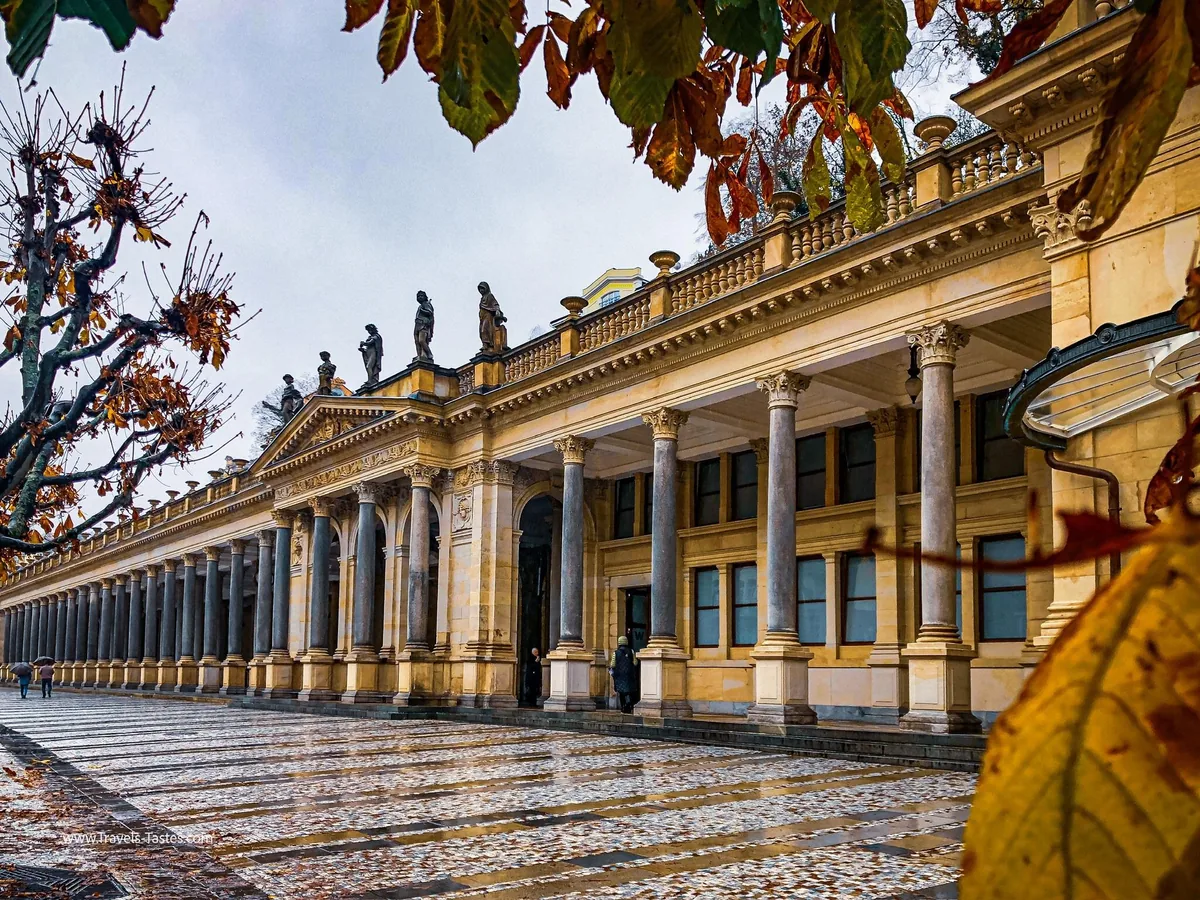
Mill Colonnade, Czechia
discovered its springs, 1370
Karlovy Vary, Carlsbad in German, claims the Holy Roman Emperor Charles IV discovered its springs in 1370 when his hunting dogs fell into the hot water. Whether or not the story is accurate, the town that grew around the springs became the most fashionable spa destination in Europe by the eighteenth and nineteenth centuries, drawing Goethe, Beethoven, Schiller, Peter the Great, and eventually the patients and their accompanying entourages from the Austro-Hungarian aristocracy. The colonnade was built at the peak of this prosperity, when the railway connection (1870) opened Karlovy Vary to a broader clientele and the town needed infrastructure that matched its ambitions. The five springs sheltered under the Mill Colonnade reach temperatures between 53°C and 72°C; the drinking cure, taking the waters in prescribed quantities and walking between springs, was the treatment.
The colonnade is an active spa building, visitors fill the distinctive porcelain cups sold throughout the town and drink from the spring spouts while walking the promenade. The springs taste of salt and sulfur to varying degrees; the scale of drinking required by the traditional cure (up to twelve cups per day) makes the walking colonnade format make practical sense. The surrounding spa valley, with its Secessionist and Baroque buildings lining the Teplá River, is most atmospheric in early morning when the steam from the Vřídlo geyser (separate, near the center) hangs above the valley.
Karlovy Vary is 130 kilometers west of Prague, accessible by direct bus (2 hours) from Florenc bus terminal. The Mill Colonnade is in the spa valley center, walkable from the bus station.
“Karlovy Vary is 130 kilometers west of Prague, accessible by direct bus (2 hours) from Florenc bus terminal.”
The Experience
An active 132-meter spa colonnade where visitors fill porcelain cups from five hot springs and walk the promenade as part of the traditional drinking cure, surrounded by a Secessionist and Baroque spa valley whose thermal steam rises most visibly in early morning.
Why It Matters
The Mill Colonnade is the architectural centerpiece of Europe's most historically significant spa town, the physical infrastructure of a medical-social tradition that drew Central European civilization to the same valley for four centuries.
Why Visit
Karlovy Vary is the only place in Europe where the 18th-century spa culture is still physically enacted, the porcelain cups, the promenade walk, the spring drinking, rather than preserved as heritage. The Mill Colonnade is the best building in which to experience it.
Insider Tips
- 1
Buy a porcelain spa cup in the town center before walking the colonnade, they are sold everywhere and are the correct vessel for the experience.
- 2
The springs taste progressively more sulfurous from one to five; start with the mildest.
- 3
The Vřídlo geyser near the Market Colonnade shoots 12 meters and is free to watch, include it in the colonnade walk circuit.