“The Nazis used Terezín as a transit ghetto for 140,000 people and then invited the Red Cross to inspect their model Jewish settlement. Children in the ghetto produced 4,500 drawings that a teacher hid. Over 33,000 people died here before reaching Auschwitz.”
About Terezín Small Fortress
Built 1780 as a military fortress; used as a political prison since the nineteenth century. Repurposed by the Nazis in 1941 as a Jewish transit ghetto and Gestapo prison. Approximately 140,000 Jews passed through; over 33,000 died in Terezín itself. The site became a National Cultural Monument after liberation.
What Terezín Small Fortress actually is
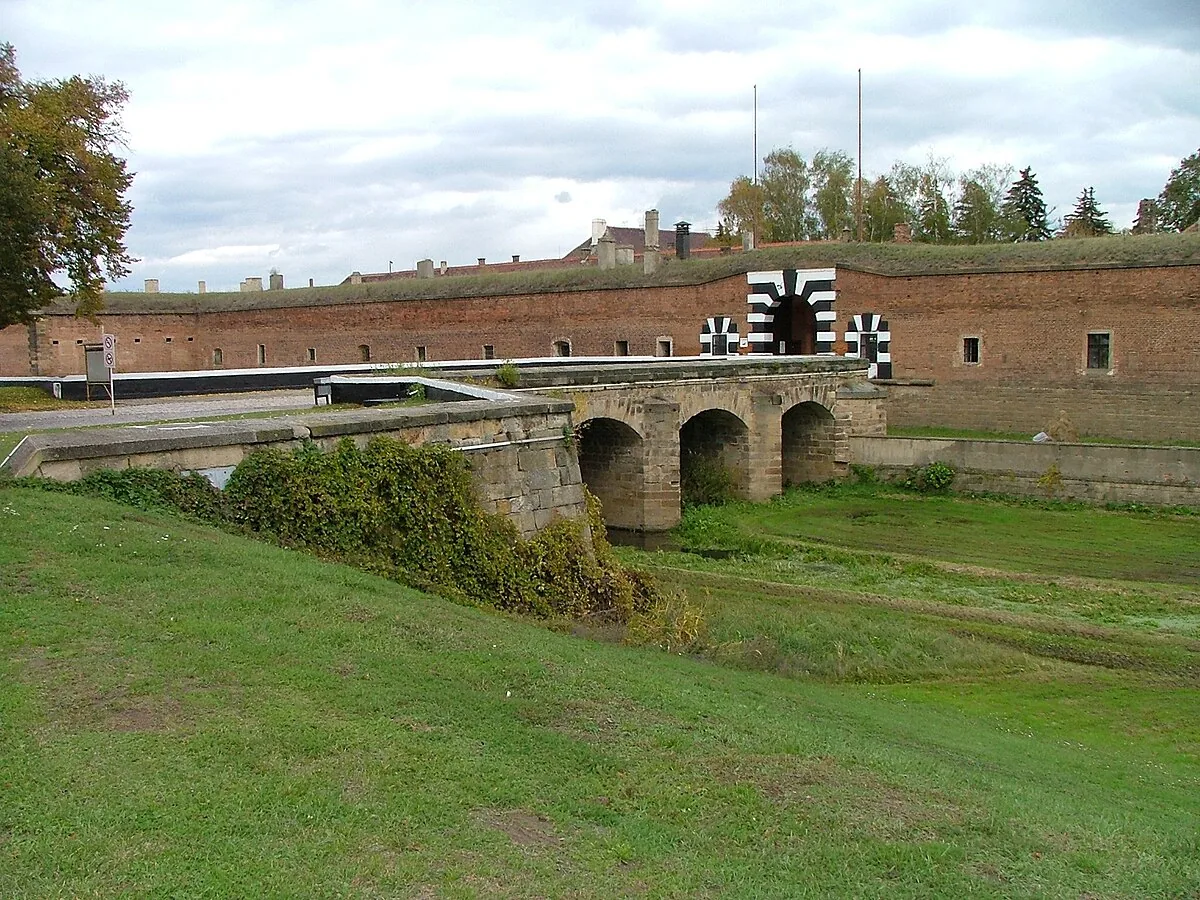
Terezín is a garrison town 60 kilometers north of Prague that was transformed by the Nazi occupation into a transit ghetto and concentration camp between 1941 and 1945. The Small Fortress, Malá Pevnost, was a Gestapo prison; the adjacent Main Fortress held the Jewish ghetto through which approximately 140,000 people passed before transport to Auschwitz and other extermination camps. Over 33,000 people died in Terezín itself. The site is now a National Cultural Monument and memorial.
Terezín is a garrison town 60 kilometers north of Prague that was transformed by the Nazi occupation into a transit ghetto and concentration camp between 1941 and 1945.
Emperor Joseph II, 1780
Terezín was built as a military fortress by Emperor Joseph II in 1780 and was always a prison, Gavrilo Princip, the assassin of Archduke Franz Ferdinand, died in the Small Fortress in 1918. The Nazi administration repurposed the town for the Jewish ghetto in 1941, using it simultaneously as a transit camp and as a propaganda showpiece, the Red Cross was allowed to visit in 1944 after the Nazis staged an elaborate deception that presented Terezín as a model Jewish settlement. Despite the conditions, a remarkable cultural life existed within the ghetto: composers, artists, poets, and performers produced work in Terezín, some of which survived and is now performed. Children in the ghetto produced thousands of drawings that the teacher Friedl Dicker-Brandeis collected and hid; over 4,500 survived.
The Small Fortress is preserved as it was, the cell blocks, the interrogation rooms, the shower facilities used for disinfection rather than gassing, and the prisoner courtyard with the Arbeit Macht Frei gate. The Ghetto Museum in the main town covers the cultural life of the ghetto alongside the deportation statistics. The children's drawings are exhibited in the Magdeburg Barracks. The National Cemetery at the fortress entrance contains the mass graves of prisoners.
Terezín is 60 kilometers north of Prague on Route 8. Buses depart from Prague's Florenc bus terminal (1 hour). The Small Fortress and Ghetto Museum are a 15-minute walk apart.
Buses depart from Prague's Florenc bus terminal (1 hour).
The Experience
The preserved Small Fortress cell blocks and prisoner courtyard, the Ghetto Museum covering the remarkable cultural life alongside the deportation records, and the children's drawings exhibited in the Magdeburg Barracks, a memorial that documents both atrocity and human response to it.
Why It Matters
Terezín is the most documented example of the Nazi deception apparatus, the Red Cross propaganda visit of 1944 is one of the most carefully studied cases of how totalitarian systems manipulate international oversight. The cultural production within the ghetto adds a dimension of human resilience the site does not suppress.
Why Visit
Terezín makes the Holocaust specific rather than abstract, names, numbers, children's drawings, and physical spaces that can be walked through. The combination of atrocity documentation and the evidence of cultural resistance makes it among the most important memorial sites in Europe.
✦ Insider Tips
- 1
Allow a full day, the Small Fortress, Ghetto Museum, and Magdeburg Barracks together require at least four hours.
- 2
The children's drawings in the Magdeburg Barracks are the most affecting part of the site; don't skip them for the fortress.
- 3
The guided tour of the Small Fortress is recommended, the history of individual cells is specific and well-documented.