“Two brothers saved a seventeenth-century Wallachian farmhouse from demolition in 1925 and started Europe's first open-air folk museum. A hundred timber buildings later, farmhouses, mills, a wooden church, the collection is still growing.”
About Wallachian Open Air Museum
Founded 1925 by brothers Bohumír and Alois Jaroněk to preserve Wallachian timber architecture being lost to modernization. Now over 100 relocated buildings across three sections. The museum model influenced open-air heritage preservation across Central Europe.
Overview
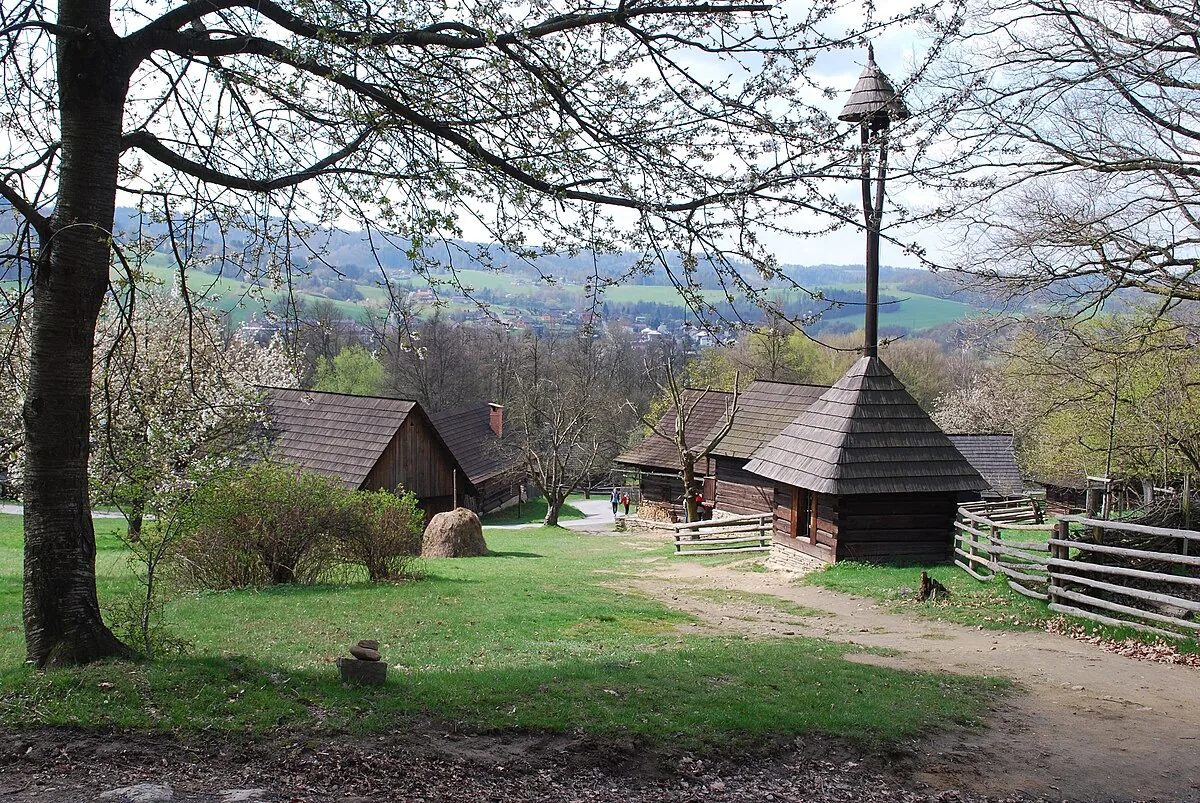
The Wallachian Open Air Museum, Valašské muzeum v přírodě, in Rožnov pod Radhoštěm in the Beskydy Mountains is the largest open-air folk architecture museum in the Czech Republic and one of the oldest in Europe, founded in 1925. The museum consists of three sections with over 100 relocated timber buildings from the Wallachian region of eastern Moravia, farmhouses, mills, smithies, a wooden church, and a market town street, reconstructed in their original positions with period furnishings and working demonstrations.
Origins
Wallachia, Valašsko, is the mountain region of eastern Moravia settled in the sixteenth and seventeenth centuries by Romanian and Carpathian shepherds who brought their distinctive timber construction traditions, folk costumes, and pastoral economy to the Beskydy foothills. The brothers Bohumír and Alois Jaroněk, local intellectuals, founded the museum in 1925 when the original timber buildings were being demolished as farming modernized. The first relocated farmhouse, a seventeenth-century building from nearby Větřkovice, was the nucleus around which the collection grew. By the interwar period the museum already had international recognition as a model of folk heritage preservation. The third museum section, the Mill Valley, was added in the 1980s and contains water mills, a fulling mill, and a bleaching yard demonstrating the wool-processing trades that supplemented the pastoral economy.
The three sections, the Wallachian Village, the Little
Market Town, and the Mill Valley, are connected by a footpath that winds through a forested hillside, giving the museum a landscape setting rather than a campus feel. Working demonstrations of traditional crafts, woodcarving, lace-making, pottery, and smithing, run throughout the year. The wooden church of Saint Anna (1773) is the most architecturally significant building; the interior retains original painted decoration.
Rožnov pod Radhoštěm
Rožnov pod Radhoštěm is in the Beskydy Mountains, 270 kilometers east of Prague. Trains connect from Ostrava (1.5 hours); buses from Brno (3 hours).
The Experience
Three sections on a forested hillside, Wallachian Village, Little Market Town, Mill Valley, with working craft demonstrations, a 1773 wooden church with original painted interior, and period-furnished farmhouses and workshops.
Why It Matters
The Wallachian Open Air Museum is one of the founding institutions of European open-air heritage preservation and the primary documentation of a Carpathian-Moravian folk building tradition that would otherwise be almost entirely lost.
Why Visit
Open-air museums work when they feel inhabited rather than displayed. The working demonstrations, the forested hillside setting, and the scale of the collection give Rožnov a living quality that smaller skanzen museums rarely achieve.
✦ Insider Tips
- 1
Allow three hours minimum to cover all three sections without rushing.
- 2
The Mill Valley section is the least visited and most peaceful, save it for last.
- 3
Check the events calendar before visiting; major folk festivals in summer add demonstrations and music that transform the experience.