“A small Danish town founded by the Moravian Brethren in 1773 preserves an eighteenth-century planned community almost intact, with a graveyard where every stone is identical regardless of the person buried there.”
About Christiansfeld
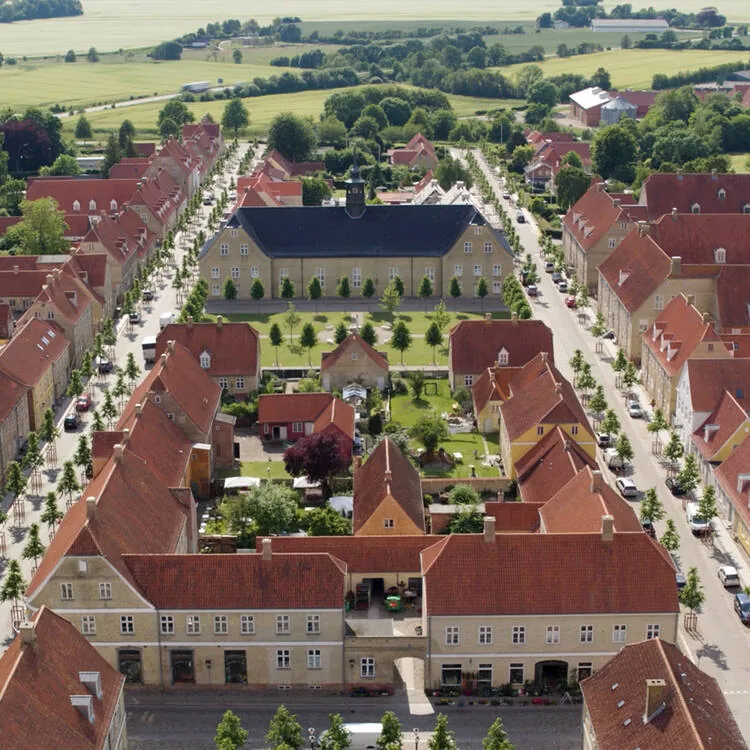
Christiansfeld was established in 1773 with royal permission, part of the Moravian Brethren's network of planned settlements across Europe and America. Its intact urban fabric, church, dormitories, workshops, earned UNESCO World Heritage status in 2015.
About Christiansfeld
Christiansfeld is a small town in southern Jutland that was founded in 1773 by the Moravian Brethren, a Protestant community that had developed a distinctive approach to urban planning, communal living, and religious practice. The town is on the UNESCO World Heritage List, inscribed in 2015 alongside other Moravian settlements in Germany, the United States, and elsewhere. What survives in Christiansfeld is an unusually complete early example of planned urban development guided by religious community principles.
The town is on the UNESCO World Heritage List, inscribed in 2015 alongside other Moravian settlements in Germany, the United States, and elsewhere.
The Moravian Brethren originated in Bohemia in the fifteenth century, were scattered by the Counter-Reformation, and reconstituted themselves in Saxony in the early eighteenth century under the patronage of Count Nikolaus von Zinzendorf. From there, they established settlements across Europe and the Americas, each built on the same planning principles: a central church square, gender-segregated dormitories, communal workshops, and a graveyard where all markers are identical regardless of social status. Christiansfeld was founded with royal permission from Christian VII, whose name it bears.
The experience
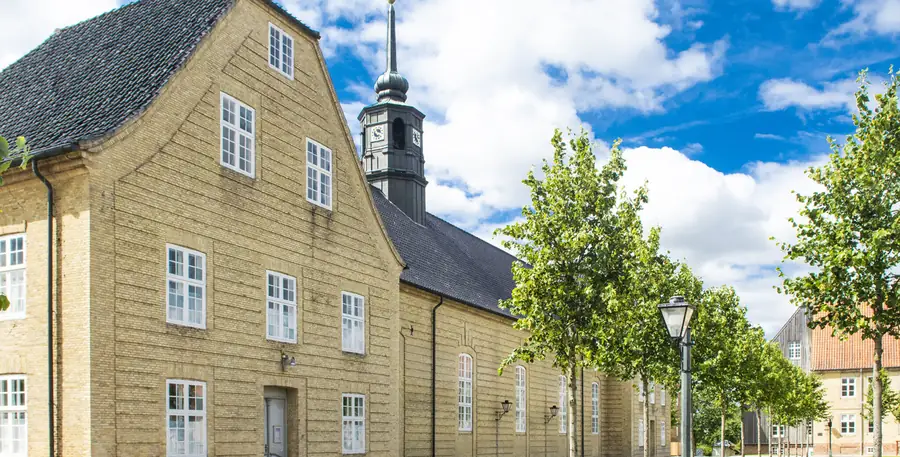
The town center around Brødregade retains its eighteenth-century character almost completely. The church, the Sisters' House, the Brothers' House, and the surrounding residential buildings are all intact and in use. The graveyard, Gudsageren, 'God's Acre', has rows of identical flat white stones that create a powerful visual statement about equality in death. A heritage center explains the Moravian history and the UNESCO context. The town's bakery, still Moravian-run, is known for honeycake that has been made to the same recipe for two and a half centuries. Christiansfeld is in southern Jutland, between Kolding and Haderslev. It's about fifteen minutes from Kolding by car. Local bus connections exist but are infrequent, a car is more practical.
The Experience
Walk Brødregade's unchanged eighteenth-century streetscape, visit the God's Acre graveyard with its rows of identical white stones, explore the heritage center, and buy honeycake from a bakery that has used the same recipe since the town was founded.
Why It Matters
A UNESCO World Heritage Site, one of the most intact examples of Moravian planned settlement in the world, with a continuous living community maintaining the original traditions.
Why Visit
The town is genuinely unusual: a religious community's architectural principles, intact after two and a half centuries, in a country not typically associated with this strand of Protestant history. The graveyard alone is worth the trip.
✦ Insider Tips
- 1
The honeycake at the Moravian bakery is the real thing, buy it fresh rather than pre-packaged if available.
- 2
The God's Acre graveyard is most striking in morning light when the flat stones cast long shadows.
- 3
Combine with Kolding (Koldinghus is nearby) for a fuller southern Jutland day.
- 4
The heritage center provides essential context, visit it first before walking the town.