“Georg Carstensen got the king to lease him land for an amusement park in 1843 by arguing that entertained people forget to do politics. Walt Disney visited before designing Disneyland. The park is still running.”
About Tivoli Gardens
Opened 1843 by Georg Carstensen adjacent to Copenhagen's city center. Closed during German occupation in WWII; reopening after liberation was a civic event. The park's 110,000 decorative lights were among Scandinavia's first large-scale electrical illuminations. Second-oldest operating amusement park in the world.
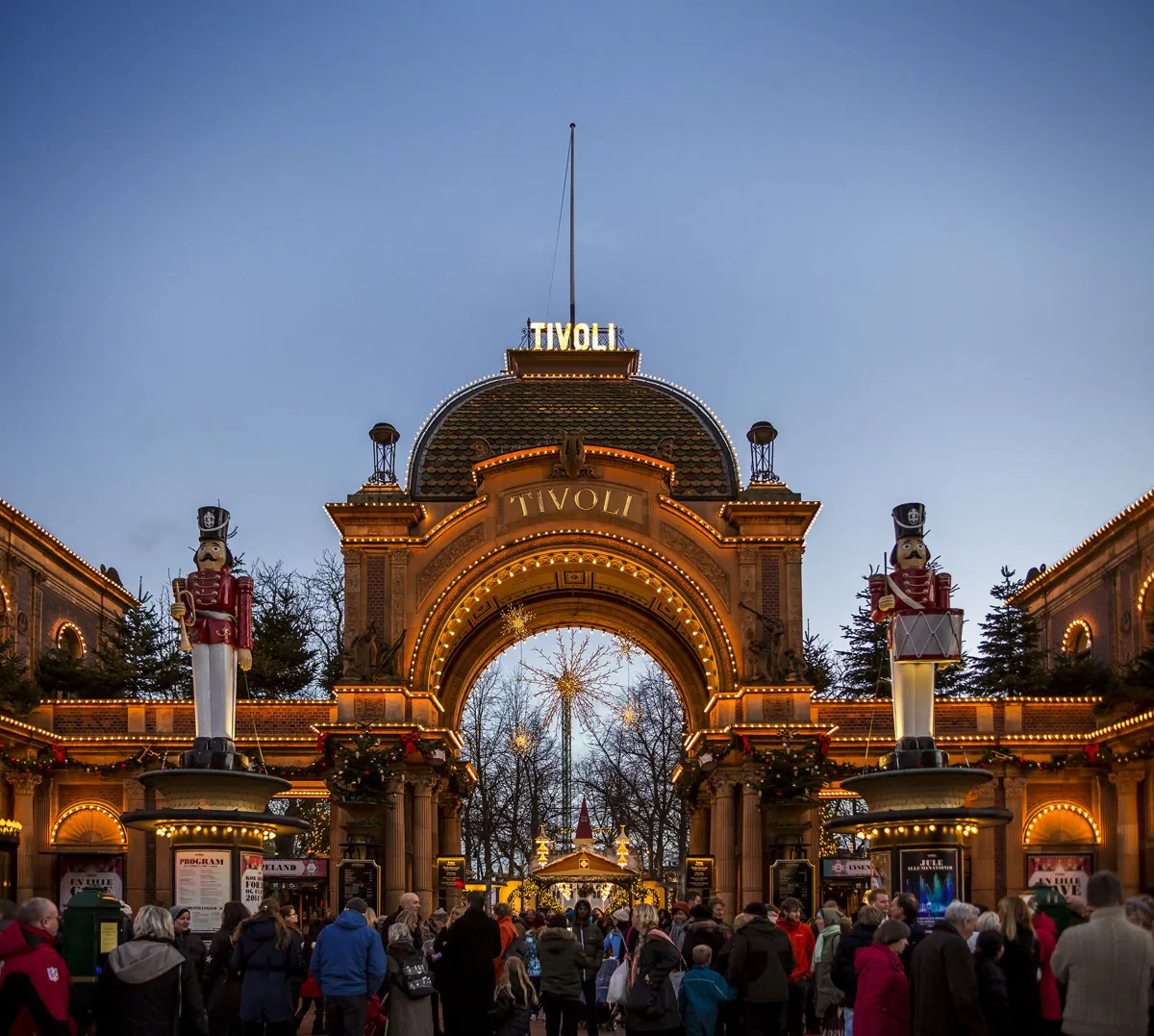
Tivoli Gardens
Tivoli Gardens in central Copenhagen opened in 1843 and is the second-oldest amusement park still in operation in the world. The eight-hectare site, immediately beside Copenhagen Central Station, combines traditional fairground rides, concert venues, restaurants, lake gardens, and seasonal festivals in a layout that has changed slowly enough to feel continuous with the nineteenth century while remaining a functional entertainment venue. Walt Disney visited Tivoli before designing Disneyland and acknowledged it as a primary influence on his concept of a themed park.
Tivoli Gardens in central Copenhagen opened in 1843 and is the second-oldest amusement park still in operation in the world.
him the land, 1843
Georg Carstensen persuaded King Christian VIII to lease him the land in 1843 with the argument that when people amuse themselves they forget to involve themselves in politics, a reasoning the king reportedly found persuasive. The opening park featured a carousel, a roller coaster, a theater, and garden promenades; the format has remained broadly consistent while the specific attractions have changed. Hans Christian Andersen, a contemporary who lived nearby, was a regular visitor. The park was closed by the German occupiers during the Second World War; reopening after liberation was a significant civic moment. Tivoli's illuminations, 110,000 lights covering the garden, were among the first large-scale decorative electrical installations in Scandinavia.
The most distinctive element of Tivoli is the coexistence of the fairground with the garden, flower beds, fountains, and mature trees give the park a visual quality that purely ride-focused parks lack. The Tivoli Concert Hall hosts classical concerts throughout the summer season; the open-air Plænen stage has free evening performances. The Pantomime Theatre, with its original Harlequin performances, runs in the original 1874 building. The Halloween and Christmas seasons transform the gardens with themed decoration. Tivoli is directly across from Copenhagen Central Station (København H), a 10-minute walk from Strøget and the city center. Metro and S-tog connections to the station.
The Experience
A fairground embedded in a garden, rides, the 1874 Pantomime Theatre, classical concerts in the Concert Hall, free open-air performances on the Plænen stage, and flower beds and fountains throughout, with Halloween and Christmas seasonal transformations.
Why It Matters
Tivoli is the foundational model for the themed amusement park, the direct predecessor of Disneyland in concept, combining entertainment, garden aesthetics, and architectural theming in a format that most subsequent parks have imitated.
Why Visit
Tivoli works simultaneously as a fairground, a garden, a concert venue, and a restaurant destination, the layering means it functions differently for different people and at different hours. The evening illumination is the best version of it.
✦ Insider Tips
- 1
An evening visit is significantly more atmospheric than a daytime one, the illumination transforms the park.
- 2
The Concert Hall classical performances often include free open-air overflow seating in the garden; check the program before visiting.
- 3
The Pantomime Theatre is free with park entry and runs on a posted schedule, the Harlequin performances are genuinely charming.