Instead of stairs, a horse-and-carriage ramp spirals up this 17th-century observatory, and a tsar reputedly rode up it.
About The Round Tower
The Round Tower was built between 1637 and 1642 by King Christian IV as part of a complex serving the University of Copenhagen, with the observatory at the top. Its spiral ramp allowed instruments to be hauled up easily. It remains the oldest functioning observatory in Europe, still used by amateur astronomers, and a beloved landmark and viewpoint in the historic centre of Copenhagen.
The Round Tower
The Round Tower in Copenhagen is a 17th-century astronomical observatory in the middle of the old city, famous for the unique spiral ramp that winds up its interior instead of stairs. Built by King Christian IV, it is the oldest functioning observatory in Europe and offers fine views over the rooftops of the Danish capital.
“The Round Tower in Copenhagen is a 17th-century astronomical observatory in the middle of the old city, famous for the unique spiral ramp that winds up its interior instead of stairs.”
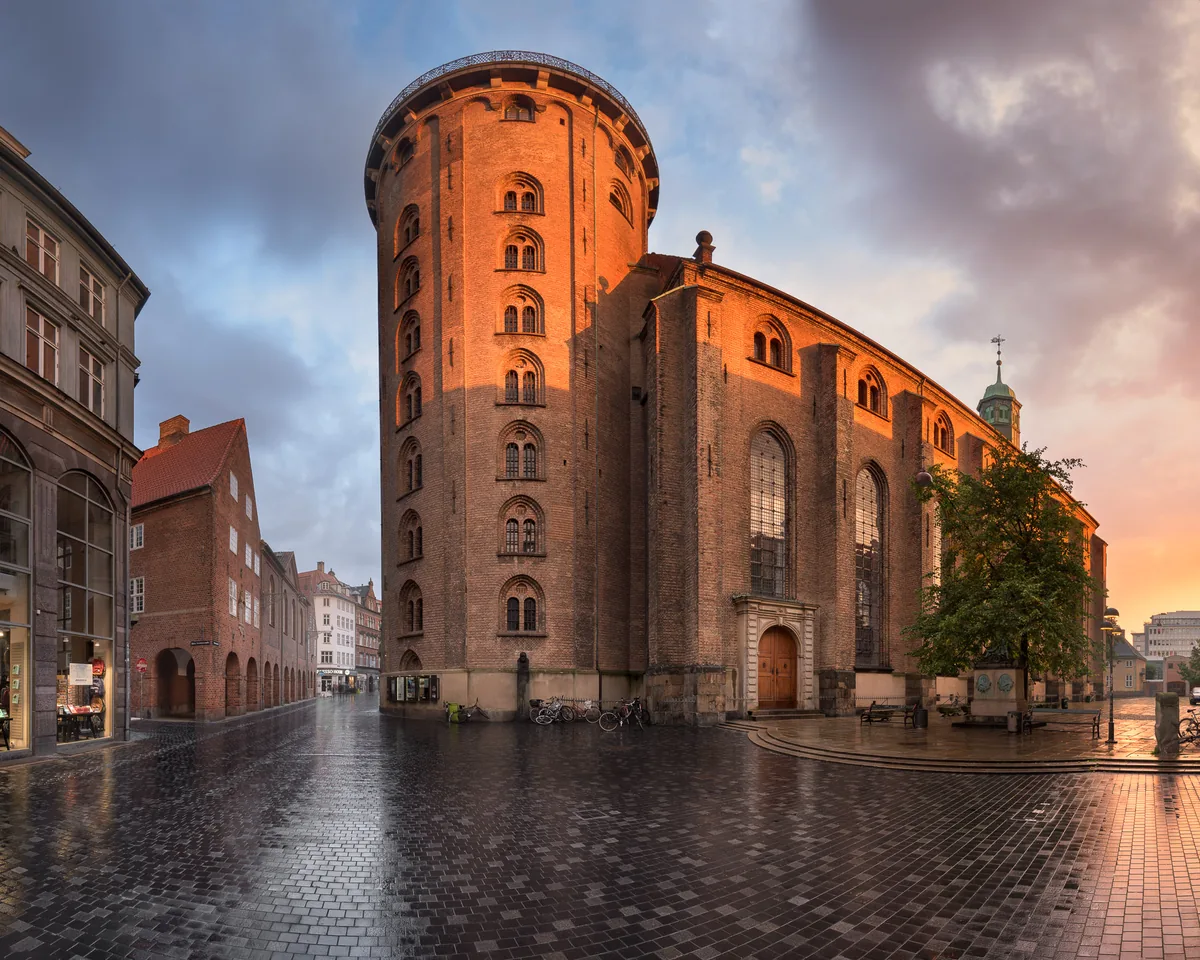
The Round Tower, Denmark
A Ramp, Not Stairs, to the Stars
Completed in 1642, the tower was built as an observatory for the University of Copenhagen, and instead of a staircase its interior holds a wide, gently sloping spiral ramp that coils around a hollow core all the way to the top. The ramp, around 209 metres long, was reputedly designed so that heavy astronomical instruments, and even a horse and carriage, could be brought up to the observatory. A Russian tsar is said to have ridden up it on horseback.
The Experience
You walk up the broad, curving ramp as it spirals around the hollow core, passing a library hall and the old privy, to reach the observatory and the open platform with panoramic views over Copenhagen's towers and rooftops. The novelty of the rampway, the history of the observatory and the city views make the climb enjoyable and easy, suitable for all ages, in central the old town.
Why It Matters
The Round Tower is one of Copenhagen's most distinctive historic landmarks and the oldest working observatory in Europe, a monument to the scientific ambitions of 17th-century Denmark. Its unique ramp and rooftop views make it a charming and memorable stop in the Danish capital.
Why Visit
Copenhagen's 17th-century Round Tower, Europe's oldest working observatory, climbed by a unique spiral ramp to rooftop views over the city.
Insider Tips
- 1
Climb the spiral ramp rather than stairs to the top.
- 2
It is the oldest working observatory in Europe.
- 3
It is central, easy to combine with the old town.