“Ajloun is one of the rare great castles of the Crusader era built by Muslims, not Crusaders, raised by a general of Saladin to watch and block the Frankish armies.”
About Ajloun Castle
Ajloun Castle was built around 1184 by Izz al-Din Usama, a commander under Saladin, to protect the region's iron mines and communication routes and to counter Crusader expansion from the west. It was enlarged in the thirteenth century, damaged by Mongol attack and later earthquakes, and partly restored, standing today as a key monument of Ayyubid military architecture.
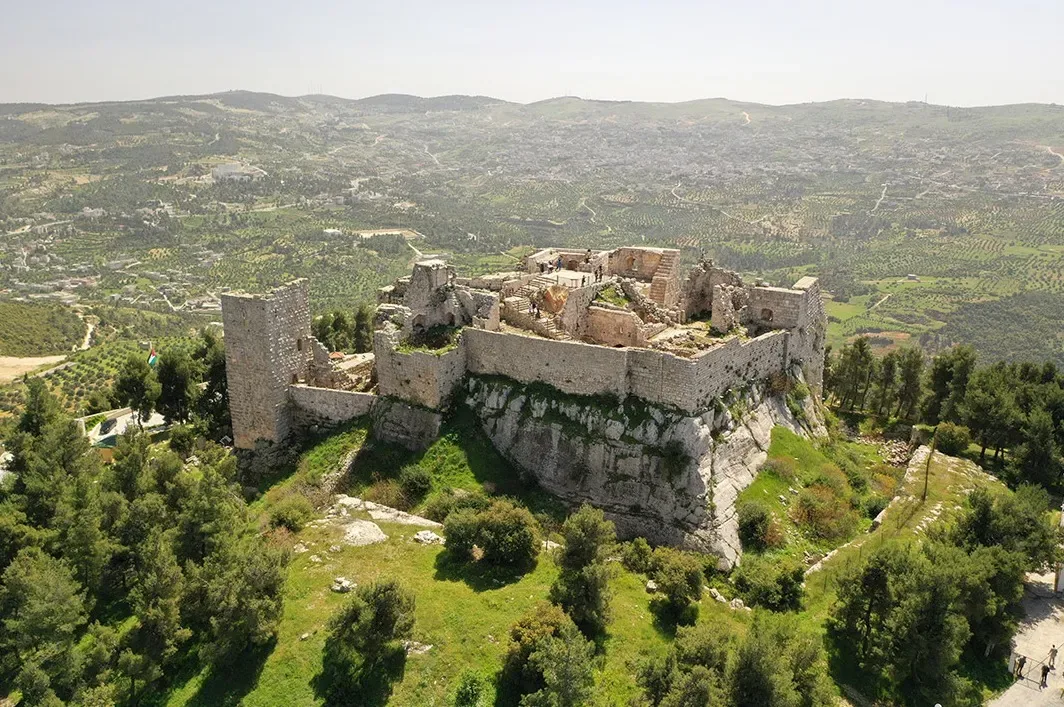
What Ajloun Castle is
Ajloun Castle, Qal'at ar-Rabad, is a hilltop Muslim fortress built in the late twelfth century to guard the region against the Crusaders and to control the iron-mining districts and routes between Jordan and Syria. Unlike most famous castles of the era, it was built by Muslim forces rather than Crusaders, commanded from a height with commanding views over the northern Jordan Valley.
Unlike most famous castles of the era, it was built by Muslim forces rather than Crusaders, commanded from a height with commanding views over the northern Jordan Valley.
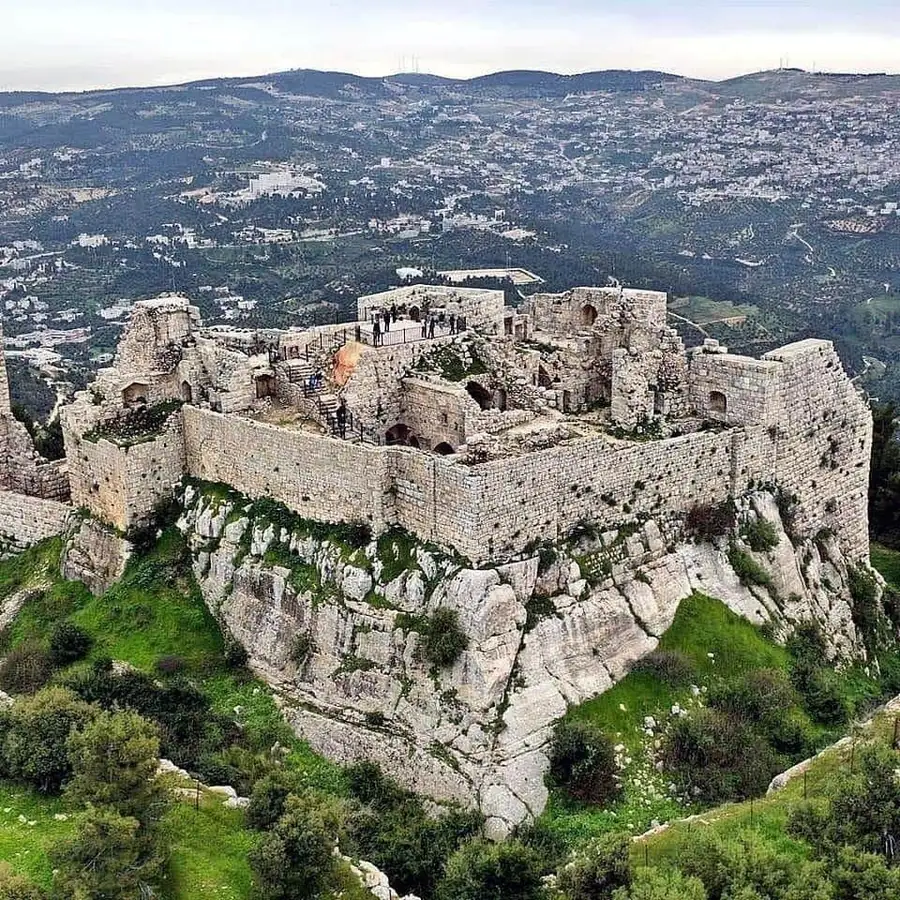
The Fortress
A general of Saladin oversaw its construction around 1184. Its thick walls, arrow slits and towers were expanded over the following decades. From the ramparts the view stretches across green hills toward the Jordan Valley, and a chain of such forts once relayed signals by fire and pigeon.
The Experience
You climb through gates and vaulted halls to the towers and ramparts, where arrow slits frame the green northern hills and, on clear days, the Jordan Valley far below. The castle is compact enough to explore thoroughly, and information panels explain how it formed one link in a chain of forts that relayed warnings across the region.
Why It Matters
Ajloun is a prime example of Ayyubid-era Islamic military architecture and a reminder that the castle-building of the Crusades had two sides. It commands one of the finest viewpoints in northern Jordan.
Ajloun is a prime example of Ayyubid-era Islamic military architecture and a reminder that the castle-building of the Crusades had two sides.
Why Visit
It offers a well-preserved Muslim fortress with sweeping views and a quieter visit than the southern sites, easily paired with Jerash. Climb to the upper ramparts for the valley panorama, and go on a clear day for the long view west.
✦ Insider Tips
- 1
Climb to the upper towers for the panorama across the northern hills to the Jordan Valley.
- 2
Pair it with Jerash, a short drive away, for a full day in northern Jordan.
- 3
Go on a clear day; haze or cloud often hides the long western view.
- 4
The northern hills can be cool and wet in winter, so check the forecast and bring a layer.