“Arab forces with Lawrence of Arabia captured this Red Sea fortress in 1917 by attacking from the desert behind it, where the Ottomans least expected.”
About Aqaba Fortress
The fortress was constructed in its current form by the Mamluk sultans around 1500 as a caravanserai for Mecca-bound pilgrims, and later passed to the Ottomans. During the First World War it became a target of the Arab Revolt, and the 1917 capture of Aqaba, achieved by an overland assault that bypassed the seaward defences, was a turning point. The nearby giant flag commemorates the revolt and its leader.
What Aqaba Fortress is
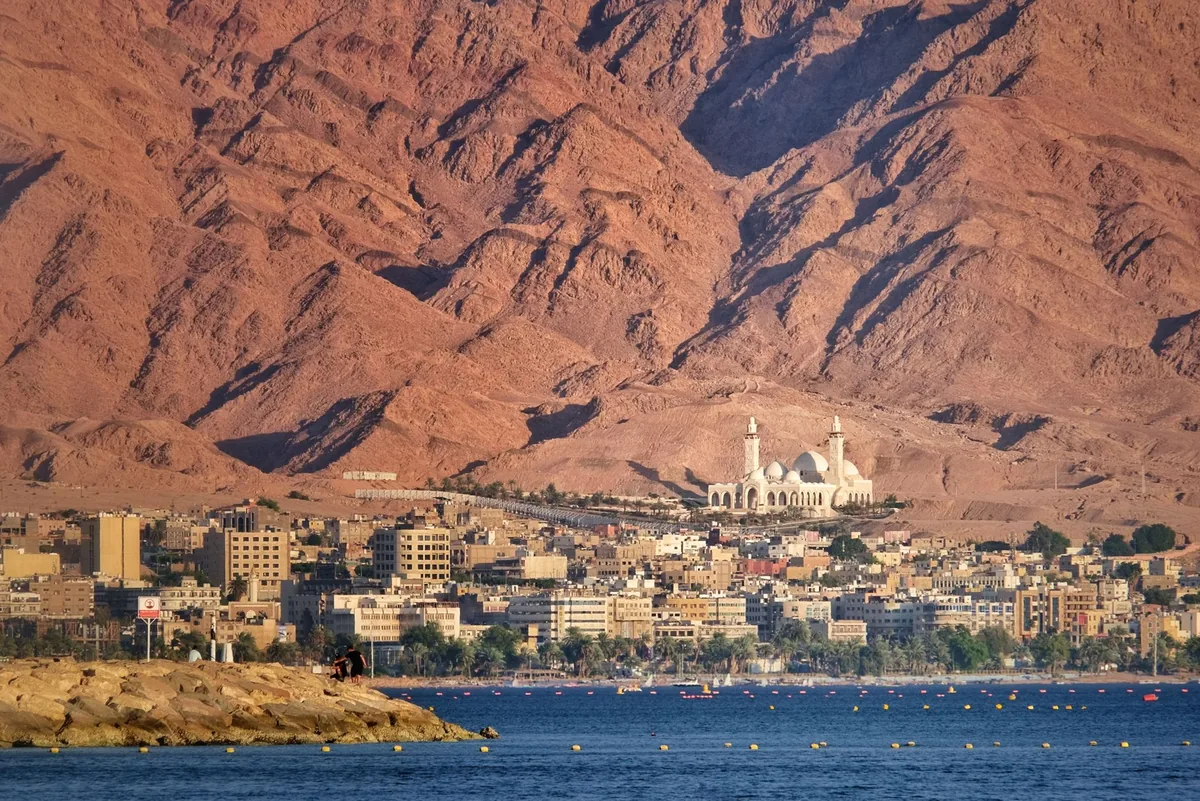
Aqaba Fortress, also called Aqaba Castle, is a historic stronghold near the waterfront of Jordan's Red Sea port city, a square Mamluk-era fortress later used by the Ottomans. It is closely tied to the Arab Revolt of the First World War, and beside it flies a giant flag commemorating that uprising, making it a key historical landmark in this seaside city.
Aqaba Fortress, also called Aqaba Castle, is a historic stronghold near the waterfront of Jordan's Red Sea port city, a square Mamluk-era fortress later used by the Ottomans.
A Fortress of the Arab Revolt
The fortress was rebuilt in its present form by the Mamluks in the early 16th century and was a khan, or caravanserai, for pilgrims travelling to Mecca, before being used by the Ottomans. It gained lasting fame during the Arab Revolt, when Arab forces, supported by T. E. Lawrence, captured Aqaba from the Ottomans in 1917 in a celebrated attack from the desert. The adjacent towering flagpole and flag honour Sharif Hussein, leader of the revolt.
The Experience
Exploring the square fortress with its corner towers, gateway inscriptions and courtyard, set close to the Red Sea shore and overlooked by the enormous Arab Revolt flag on its towering pole, one of the tallest free-standing flagpoles in the world. A small museum nearby adds context. The fort links Aqaba's role as a pilgrim and trade port to the dramatic history of the revolt.
Why It Matters
Aqaba Fortress connects the city's long history as a pilgrimage and trading port to the pivotal events of the Arab Revolt, which helped shape the modern Middle East. Together with the commemorative flag, it is a focal point of Jordanian national history on the Red Sea coast.
Aqaba Fortress connects the city's long history as a pilgrimage and trading port to the pivotal events of the Arab Revolt, which helped shape the modern Middle East.
Why Visit
A historic Mamluk and Ottoman fortress on the Red Sea, famed for its role in the 1917 Arab Revolt, beside one of the world's tallest flagpoles.
✦ Insider Tips
- 1
See the giant Arab Revolt flag on its towering flagpole beside it.
- 2
It was captured in the 1917 Arab Revolt with Lawrence's help.
- 3
A nearby museum adds historical context.
- 4
Combine it with Aqaba's Red Sea beaches and diving.