“The original paving stones of this Roman street still bear the grooves worn by chariot wheels nearly 2,000 years ago.”
About Cardo Maximus
The Cardo Maximus was laid out as the principal north-south street of Gerasa in the Roman period, lined with colonnades and connecting the city's main public buildings, from the oval plaza to the nymphaeum and temples. Beneath it ran a drainage system, and along it stood shops and fountains. Its excellent preservation, including the original paving and chariot ruts, makes it one of Jerash's great attractions.
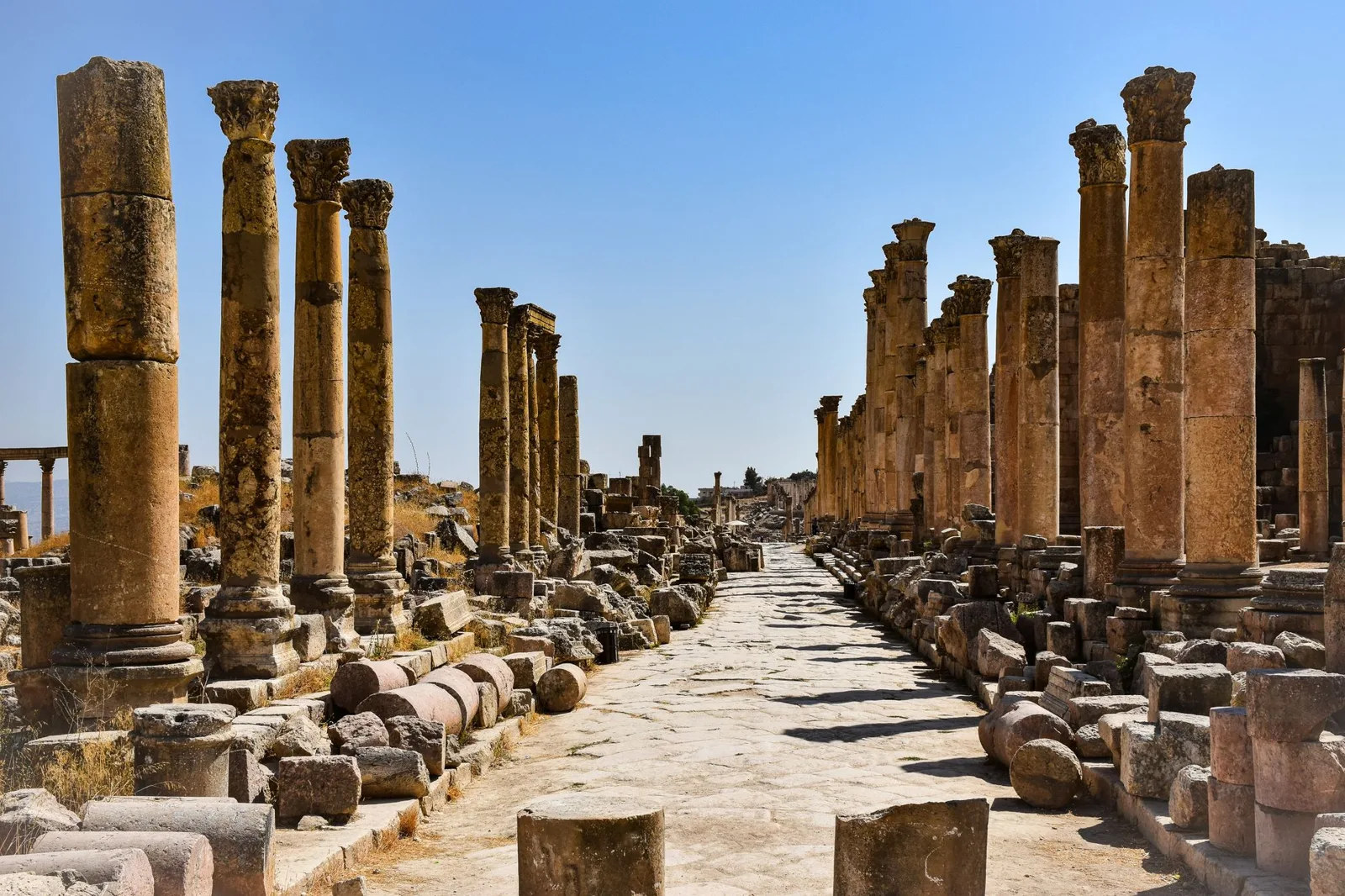
What Cardo Maximus actually is
The Cardo Maximus is the grand colonnaded main street that runs through the heart of ancient Jerash, a long, straight avenue lined with hundreds of columns and paved with the original Roman stones. Stretching for around 800 metres, it was the packed spine of the city, and its remarkable preservation lets visitors walk the same route as the Romans nearly two thousand years ago.
The Cardo Maximus is the grand colonnaded main street that runs through the heart of ancient Jerash, a long, straight avenue lined with hundreds of columns and paved with the original Roman stones.
Chariot Ruts in the Stone
One of the most evocative details of the Cardo is the wear left by daily life: the original paving stones still bear the grooves worn by the wheels of Roman carts and chariots that once rumbled along the street. Lined with columns, shops, fountains and the entrances to temples and markets, the avenue connected the major monuments of Gerasa. An underground drainage system ran beneath it, a mark of sophisticated Roman urban planning.
The Experience
Walking the long avenue between rows of standing columns, the paving underfoot grooved by ancient cart wheels, passing the ornate nymphaeum fountain, the macellum market and steps up to temples. Manhole covers still mark the drains below. Strolling the Cardo gives a powerful sense of moving through a living Roman city, with its shops, traffic and monuments arrayed along the street.
Why It Matters
The Cardo Maximus is the backbone of ancient Jerash and one of the finest surviving Roman streets in the world, vividly illustrating Roman town planning, commerce and daily life. Its chariot ruts and drainage make the ancient city feel startlingly real, anchoring a visit to this superbly preserved site.
The Cardo Maximus is the backbone of ancient Jerash and one of the finest surviving Roman streets in the world, vividly illustrating Roman town planning, commerce and daily life.
Why Visit
The grand colonnaded main street of Jerash, an 800-metre Roman avenue with original paving worn by chariot wheels, lined with columns, fountains and temple entrances.
✦ Insider Tips
- 1
Look down for the chariot-wheel grooves in the paving.
- 2
Spot the manhole covers over the Roman drainage system.
- 3
Walk it in cooler hours, as it is long and exposed.