“This lesser-known canyon hides rare Nabataean wall paintings of vines and birds, a glimpse of how Petra's now-bare interiors were once decorated.”
About Little Petra (Siq al-Barid)
Siq al-Barid served as a satellite of Petra, probably a caravanserai and suburb where trade caravans halted on the routes that made the Nabataeans wealthy. Its dining halls, cisterns and dwellings supported visiting merchants. The frescoes in its Painted House are among the very few surviving examples of Nabataean interior painting, surviving where almost all such decoration in Petra has been lost.
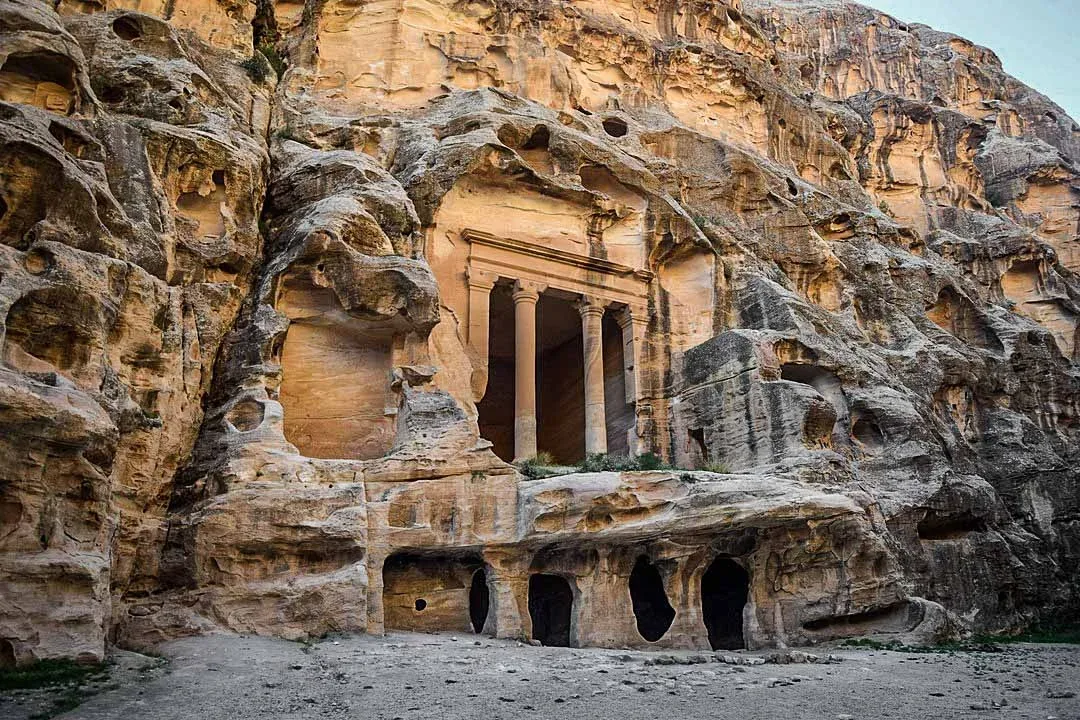
Little Petra (Siq al-Barid)
Little Petra, known in Arabic as Siq al-Barid, the 'cold canyon', is a smaller Nabataean site a short distance north of Petra proper. Carved into a narrow gorge, it features tombs, dining halls, cisterns and temples on an intimate scale, and it is home to one of the few surviving examples of Nabataean painted interior decoration.
Little Petra, known in Arabic as Siq al-Barid, the 'cold canyon', is a smaller Nabataean site a short distance north of Petra proper.
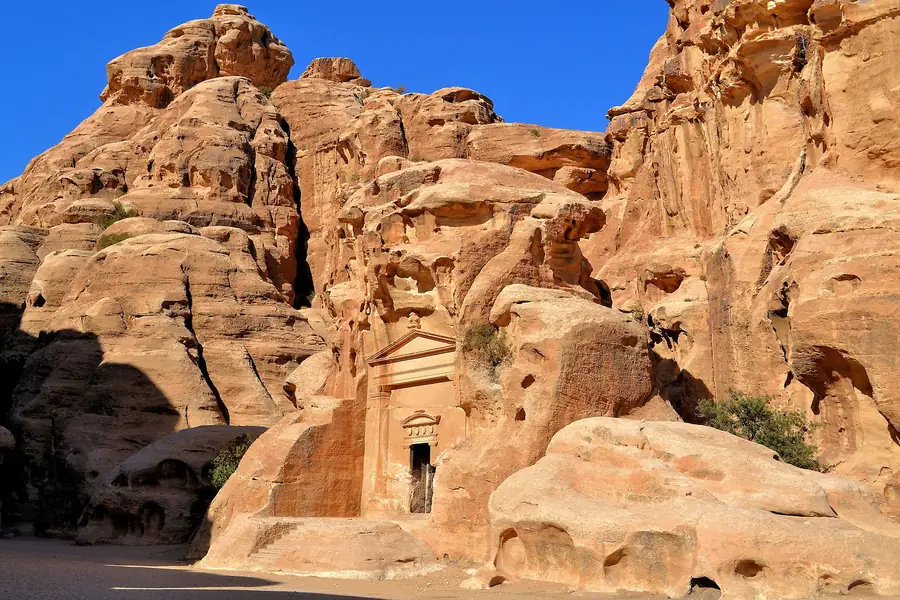
The Rare Painted House
Little Petra is thought to have been a suburb or caravan stop of Petra, where traders on the incense and spice routes could rest, water their camels and do business. Its great treasure is the Painted House, a small biclinium, or dining room, whose ceiling retains rare Nabataean frescoes of vines, birds and figures, hinting at how the now-bare interiors of Petra may once have looked. Stone steps and channels show the same engineering skill seen in Petra itself.
The Experience
You walk into a narrow, shaded gorge lined with carved facades, climb steps between the rock-cut chambers, and enter the small Painted House to see its faded but precious ceiling frescoes. Quieter and quicker to explore than Petra, Little Petra is often combined with a visit to the main city or used as the starting point of the scenic back-door hiking route into Petra.
Why It Matters
Little Petra enriches the story of the Nabataean world, showing how Petra functioned as a hub of long-distance trade with supporting settlements. Its rare surviving frescoes give a unique insight into Nabataean art and the lost decoration of their carved interiors, making it a valuable complement to the main site.
Little Petra enriches the story of the Nabataean world, showing how Petra functioned as a hub of long-distance trade with supporting settlements.
Why Visit
An intimate, quieter Nabataean site near Petra, with carved tombs and dining halls and the rare Nabataean ceiling frescoes of the Painted House.
✦ Insider Tips
- 1
See the rare Nabataean frescoes in the Painted House.
- 2
It is quieter and quicker to explore than main Petra.
- 3
It can be the start of the scenic back route into Petra.
- 4
Entry is often free, unlike the main Petra site.