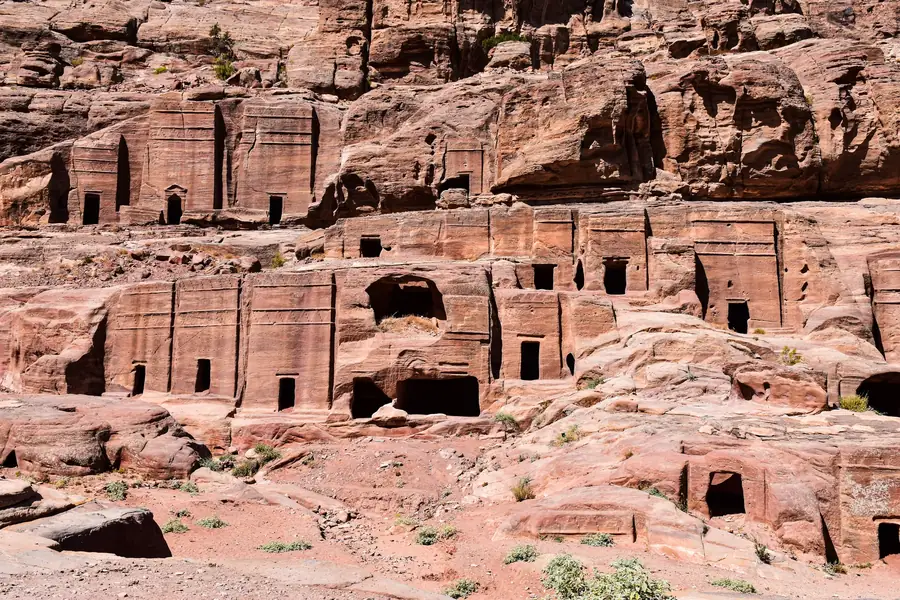
“The Silk Tomb here is named for the swirling bands of natural coloured sandstone streaking across its facade like rippling fabric.”
About Royal Tombs
The Royal Tombs were carved in the 1st century AD for the rulers and elite of Nabataean Petra, their scale reflecting royal status. The Urn Tomb was repurposed as a Christian church in the Byzantine era, an inscription recording its consecration. Each tomb has its own character, from the colour-streaked Silk Tomb to the palatial facade of the Palace Tomb, together forming one of Petra's grandest ensembles.
What Royal Tombs actually is
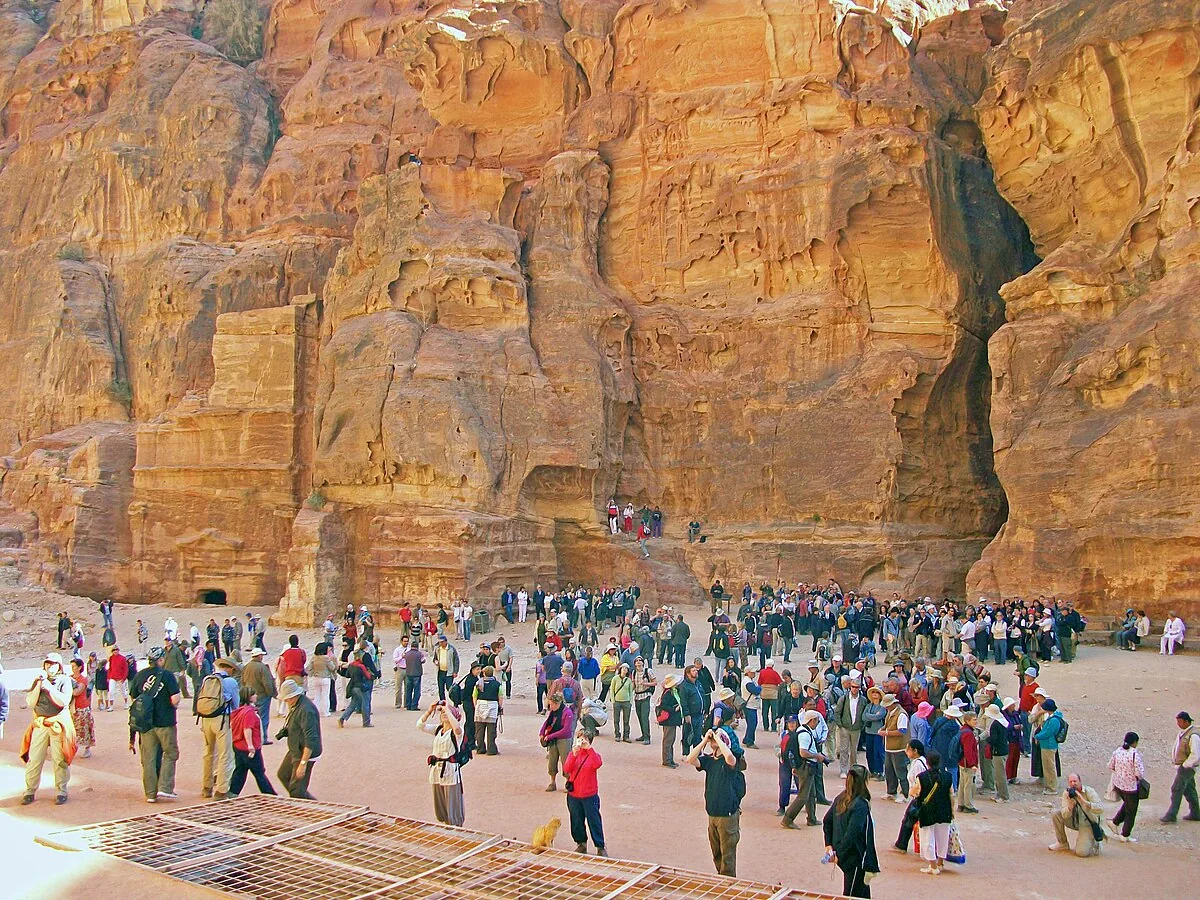
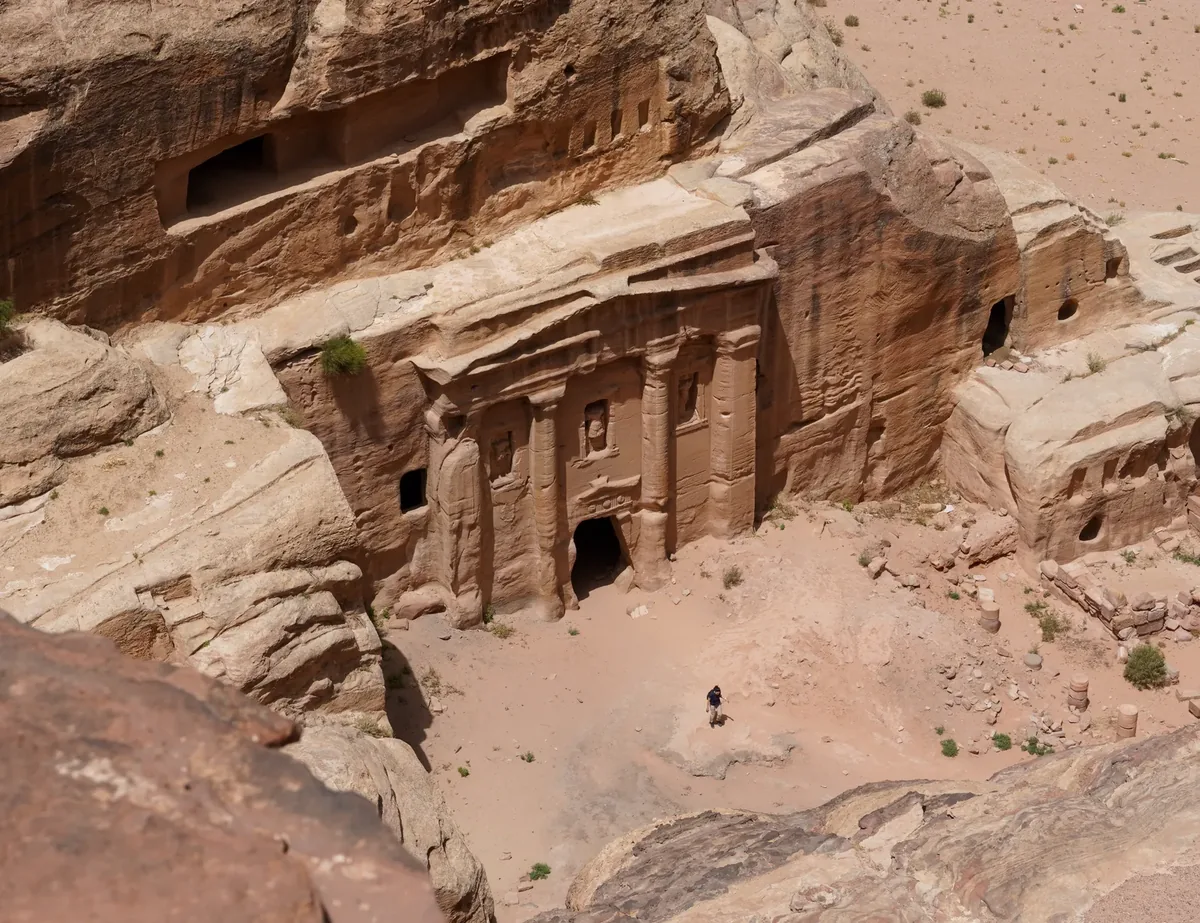
The Royal Tombs are a magnificent row of monumental facades carved into the cliff face of Jabal al-Khubtha in Petra, overlooking the heart of the ancient city. Larger and more elaborate than most of Petra's countless tombs, this group, including the Urn, Silk, Corinthian and Palace tombs, is thought to have held the burials of Nabataean royalty and is among the city's most impressive sights.
The Royal Tombs are a magnificent row of monumental facades carved into the cliff face of Jabal al-Khubtha in Petra, overlooking the heart of the ancient city.
Facades for the Dead Kings
The grandeur of these tombs has led scholars to associate them with the kings and elite of Nabataean Petra. The Urn Tomb, with its great forecourt and vaulted substructure, was later converted into a Byzantine church. The Silk Tomb is named for the extraordinary swirling bands of coloured sandstone across its facade, and the Palace Tomb imitates a multi-storey palace front. Together they form a stately funerary skyline above the city.
The Experience
The route climbs a little above the valley floor to walk along the row of towering facades, their interiors carved deep into the mountain and their stone rippling with bands of red, orange, purple and cream. The light at sunset turns them to fire, and the view back over central Petra is superb. Climbing onward from here leads to a spectacular overlook above the Treasury.
Why It Matters
The Royal Tombs display the wealth and artistry of Nabataean Petra at its height and the way later peoples reused its monuments, as with the Urn Tomb's conversion to a church. As one of the most monumental groups in the city, they are essential to understanding Petra's role as a great desert capital.
The Royal Tombs display the wealth and artistry of Nabataean Petra at its height and the way later peoples reused its monuments, as with the Urn Tomb's conversion to a church.
Why Visit
Petra's grandest group of carved tombs, a row of monumental royal facades streaked with coloured sandstone, glowing spectacularly at sunset above the ancient city.
✦ Insider Tips
- 1
See the Silk Tomb's swirling bands of coloured sandstone.
- 2
Note the Urn Tomb, later used as a Byzantine church.
- 3
Visit in late afternoon for the richest colours.
- 4
Climb on from here for the overlook above the Treasury.