This cathedral was built with the literal stones of the Aztec temples it replaced, and it has been slowly sinking back into the sacred mud of Tenochtitlan ever since.
About Catedral Metropolitana
The cathedral's foundation was laid by order of Hernán Cortés, but the structure we see today was designed by Claudio de Arciniega in the late 16th century. For 240 years, it was a constant construction site, reflecting the changing tastes of the Spanish crown. The final touches, including the clock tower and the central dome, were completed by Manuel Tolsá in 1813. Its history is inseparable from the land; the 1990s restoration revealed that the building was tilting so severely that it required a massive engineering project to stabilize the soil and prevent a total collapse.
Catedral Metropolitana
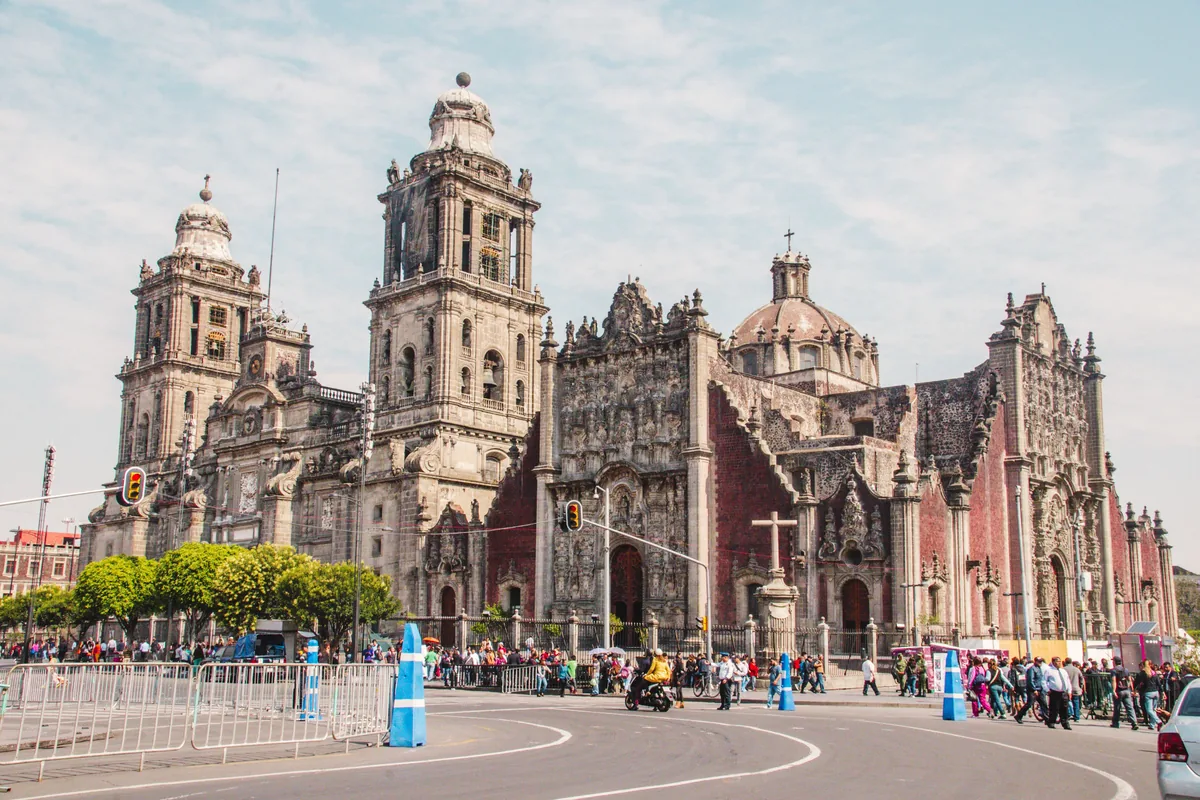
Dominating the northern edge of the Zócalo, the Metropolitan Cathedral is a mountain of stone that took nearly three centuries to complete. It is the largest cathedral in the Americas, a sprawling complex that blends Gothic, Baroque, and Neoclassical styles into a single, cohesive statement of colonial power. The building sits on a precarious foundation of soft lakebed mud, right on top of the sacred precincts of the Aztec Great Temple. This physical layering is evident inside, where a massive pendulum hangs from the dome to track the building's slow, uneven sinking into the earth. The facade is a forest of carved limestone, featuring statues of Hope, Faith, and Charity, while the interior is a cavernous world of gold-leafed altars and hushed, incense-heavy air.
“Dominating the northern edge of the Zócalo, the Metropolitan Cathedral is a mountain of stone that took nearly three centuries to complete.”
Catedral Metropolitana, Mexico
Construction began, 1573
Construction began in 1573, shortly after the Spanish conquest, using stones salvaged from the destroyed temples of Tenochtitlan. The project was so massive that it spanned the entire colonial period, with different architects adding their own stylistic flourishes over 250 years. The Altar of the Kings, an explosion of Churrigueresque Baroque at the rear of the nave, took eighteen years just to carve and gild. Throughout the centuries, the cathedral has survived fires, earthquakes, and the radical secularization of the Mexican state. It remains a functioning heart of Mexican Catholicism, but it also is a museum of the nation’s turbulent history, where the ghosts of the Aztec past literally lie beneath the Spanish tiles.
Walking across the creaking wooden floors
Walking across the creaking wooden floors of the nave, The dizzying height of the vaulted ceilings and the way the light filters through the high, amber-tinted windows. It smells of beeswax, old wood, and the faint, cold scent of stone. The tilt of the pillars, a visual reminder that the entire structure is constantly moving and settling. There is a feeling of vibration of the great bells, the largest of which weighs over thirteen tons, as they toll for midday mass. Simple to walk past is the side chapels, particularly the one dedicated to the Black Christ, which is always surrounded by a sea of flickering candles. The intricate carvings of the choir stalls, made from exotic woods that have darkened to a deep obsidian over time. What sticks with you is standing directly under the central dome and feeling the immense, crushing weight of three hundred years of devotion and stone.
The cathedral is the geographic
The cathedral is the geographic center of Mexico City and is best reached via the 'Zócalo' metro station. Because the surrounding plaza is frequently used for protests, concerts, and festivals, checking the local news for closures is wise. Walking from the nearby Palacio de Bellas Artes along the pedestrian-only Madero Street offers a grand reveal of the twin bell towers. Taxis and ride-shares will struggle with the narrow, congested streets of the Centro Histórico, so the metro or your own two feet are the most reliable modes of transport.
“The cathedral is the geographic center of Mexico City and is best reached via the 'Zócalo' metro station.”
The Experience
The thing that lands is the way the gold leaf on the Altar of the Kings seems to glow even in the dimmest light. You hear a choir practicing in the distance creates a haunting, ethereal echo that fills the vast space. There is a sense of unease and wonder looking at the floor's inclinometer, which shows the building's dramatic list. Most visitors miss the 'Altar of Forgiveness' right at the entrance, which has a fascinating history of being the site where heretics were reconciled. What sticks with you is the view of the Zócalo from the cathedral's front steps, where the modern city meets the colonial past.
Why It Matters
The Metropolitan Cathedral is the seat of the Roman Catholic Archdiocese of Mexico and a UNESCO World Heritage site. It is the premier architectural monument of the colonial era in the Americas. Culturally, it represents the complex, often violent synthesis of indigenous and European traditions that defines modern Mexico.
Why Visit
Visit this cathedral not just for the religion, but for the scale of human ambition. It is a place where you can touch the literal stones of the Aztec empire and see the highest expression of Spanish artistic skill in the same breath. It is a living lesson in how cities are built, destroyed, and rebuilt over time.
Insider Tips
- 1
Book a guided 'Bell Tower' tour to climb the stairs and see the city from the roof; it is the only way to see the massive bells up close.
- 2
Visit in the early morning before 10:00 AM to experience the nave in its most quiet and meditative state.
- 3
Look for the glass floor sections near the altar that allow you to see the original Aztec foundations below.
- 4
Dress respectfully, covering shoulders and knees, to ensure you are allowed to explore the side chapels.
- 5
The Sacristy contains some of the finest colonial paintings in the city, but it often requires a separate, small admission fee.